



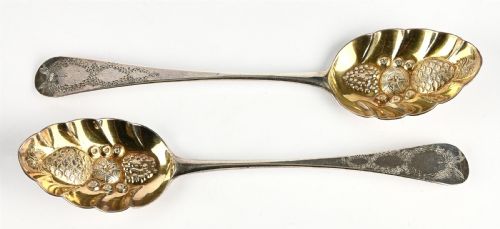


Silver Berry Spoon Pair
These silver berry spoon pair examples bring heavy fruit bowls and lavish tables together with the refined weight of sterling silver and period craftsmanship.
Silver Berry Spoon Pair
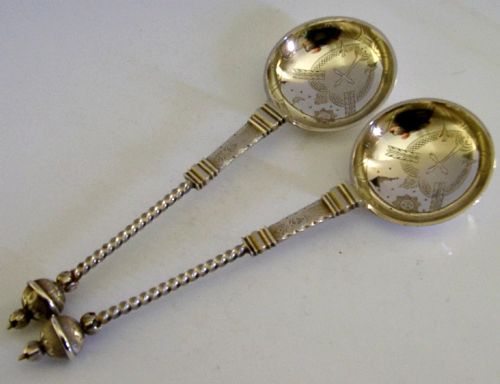
A silver berry spoon pair comprises matching serving cutlery designed specifically for dispensing soft fruits, often featuring generous bowls and decorative finishing. Most examples encountered here hail from the Georgian and Victorian eras, reflecting the domestic habits of those periods.
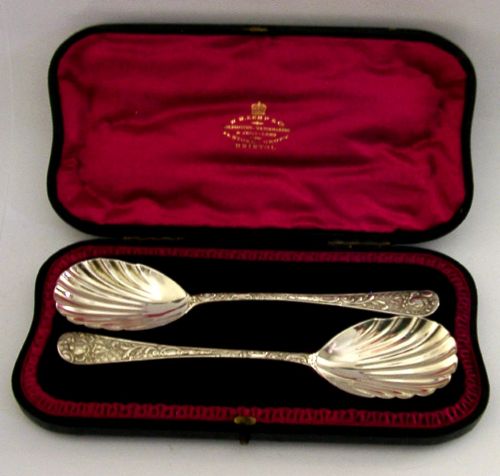
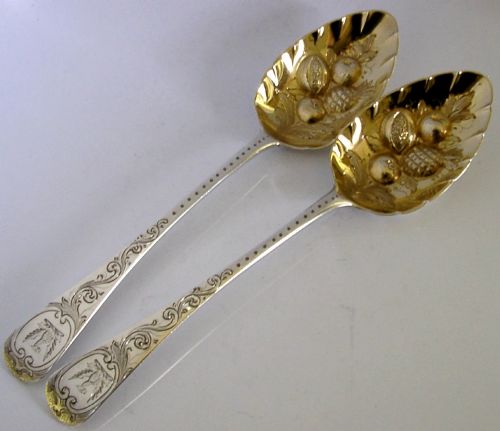
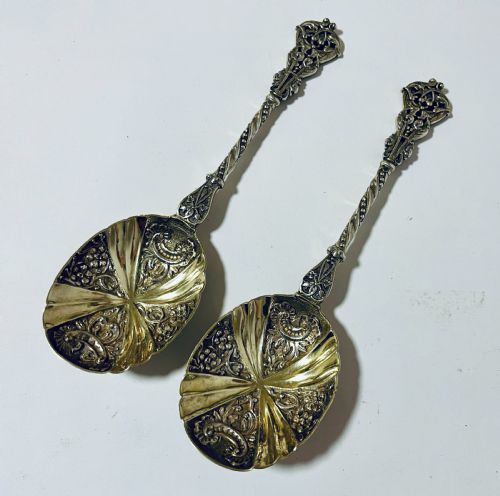
Many pairs arrive in fitted presentation boxes lined with velvet, silk, or satin, indicating their original use as high-end gifts or prized household possessions. The forms range from George III creations bearing family crests to ornate Victorian and Art Nouveau designs with engraved handles.
The objects function primarily as serving cutlery for desserts, trifles, and fruit courses rather than everyday dining. Their origins span English and Irish workshops, showing a clear preference for hallmarked sterling silver throughout the eighteenth and nineteenth centuries.
Materials and Construction
The primary material across all examples is sterling silver, frequently enhanced with gold gilt or silver-gilt finishes that impart a rich tone to the bowl interiors. These metals are shaped and hallmarked according to traditional British standards.
Decorative techniques involve ornate chasing, engraving, and applied crests on the handles, alongside specialised shell-shaped bowls designed to handle soft fruits. Presentation packaging incorporates luxury textiles such as satin, silk, and velvet to house the cutlery securely.
Silver Berry Spoon Pair Retail Price Guide 2026
Typical asking prices for silver berry spoon pair among the pieces listed under this phrase on Sellingantiques today, from the lower quarter to the upper quarter. They describe what is for sale here now, not the wider market.
Listings span the 18th Century through the Victorian era, utilising sterling silver, silver-gilt, and velvet-lined presentation boxes.
Distinctions in Quality
Quality rests heavily on the crispness of the engraving and the depth of the ornamentation across the handle and bowl. Sharp, well-defined motifs executed by skilled silversmiths distinguish superior pairs from simpler production.
The presence of original fitted boxes lined with materials like velvet or silk elevates a set, as does clear hallmarks confirming origin and maker. The integrity of the silver-gilt surface finish also plays a role in the overall execution.
peter and Anne Bateman
The Silver Berry Spoon Pair Glossary
- Sterling silver
- A standard alloy consisting of 92.5 percent silver and 7.5 percent other metals, usually copper, ensuring durability for serving pieces. This composition forms the material basis for nearly all listed cutlery.
- Hallmark
- An official stamp applied to precious metals indicating the standard of purity, the assay office, and the date letter. These marks provide the primary evidence for dating older items.
- Silver-gilt
- Silver that has been coated with a thin layer of gold on its surface. This technique adds warmth and protects the underlying silver from tarnishing.
- Crest
- A heraldic design engraved onto the silver handle to denote family lineage and ownership. These personalisations connect individual pieces to specific historical households.
- Chasing
- A metalsmithing technique where the design is hammered into the front of the metal to create raised ornamentation. It defines the rich surface texture seen on many serving pieces.
Silver Berry Spoon Pair: Frequently Asked Questions
What were berry spoons used for?
These spoons served soft fruits, desserts, and trifles at formal dining tables during the Georgian and Victorian periods. Their large bowls accommodated bulky fruit portions easily.
They often remained stored in fitted presentation boxes until special family meals or dinner parties demanded their use.
Are these spoons made of solid silver?
The listings consist of sterling silver and silver-gilt materials, verified by official assay office hallmarks. These stamps guarantee the metal purity standards of the period.
Gold gilt highlights are frequently applied directly over the silver base to enrich the appearance of the bowls.
How do I date an antique silver spoon pair?
Dating relies on the stamped hallmarks, which record the assay office and the exact year letter assigned to the piece. Stylistic indicators like Art Nouveau curves or Georgian crests offer further clues.
Comparing the engraving style against known period examples helps narrow down the decade of manufacture.
Did these spoons always come in boxes?
Many fine pairs were retailed in custom presentation cases lined with silk, satin, or velvet to protect the polished surfaces. These fitted boxes indicate high-end manufacture and often point to use as wedding or anniversary gifts.
Unboxed pairs were equally common, designed for active service within a family's primary cutlery chest.