





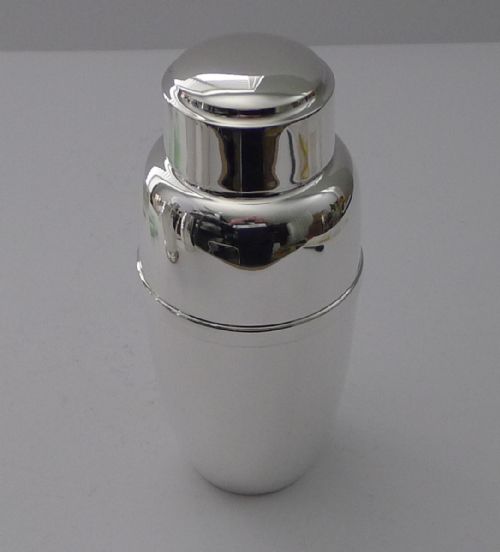


Silver Bar Shaker
A silver bar shaker brings the polished geometry of the twentieth-century cocktail hour straight to the modern sideboard.
Silver Bar Shaker
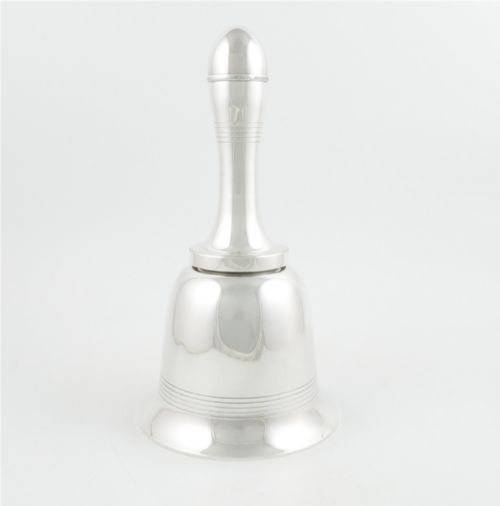
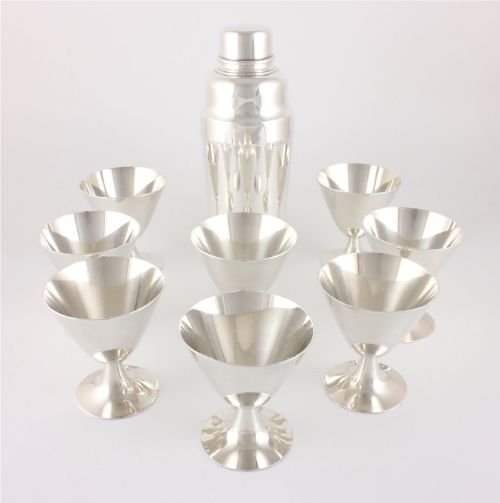
A silver bar shaker is a mixing vessel designed for the preparation of cocktails, emerging most visibly through the twentieth century. These pieces appear predominantly in the Art Deco style, alongside mid-century modern and Italian modernism forms.
The most common form on this page is the silver-plated cocktail shaker, often built with geometric lines or cylindrical bodies. Makers from England, France, Germany, Italy, Switzerland, and America contributed to this varied selection.
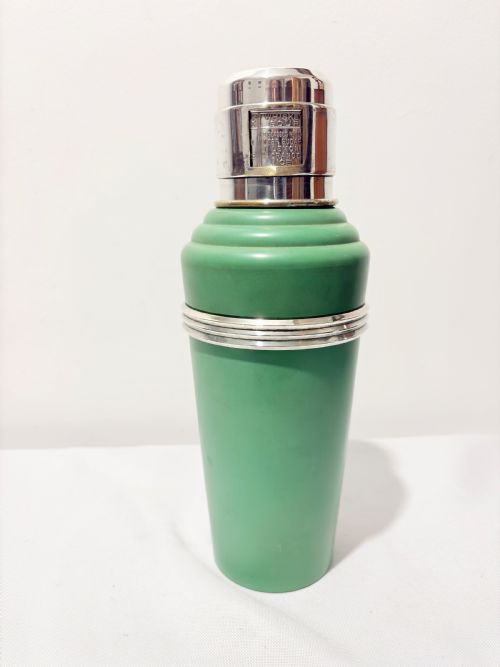
Beyond standard vessels, variants incorporate functional additions such as integral lemon squeezers, rolling mixer recipes, or contrasting materials like green Bakelite and glass bodies.
Materials and Construction
Production relies heavily on silver plate and electroplated nickel silver applied over base metal foundations, though sterling silver examples also exist. Artisans frequently combined these metallic elements with glass bodies, gilt metal accents, and internal or sealing components made of cork and Bakelite.
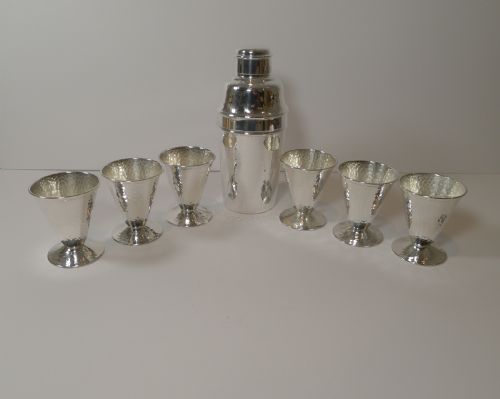
Forming the metal involved spinning, hammering, and stamping techniques to achieve the characteristic streamlined profiles of the period. Surface decoration often includes engraved recipes, menus, or hammered textures integral to the exterior finish.
Silver Bar Shaker Retail Price Guide 2026
Typical asking prices for silver bar shaker among the pieces listed under this phrase on Sellingantiques today, from the lower quarter to the upper quarter. They describe what is for sale here now, not the wider market.
The listings span pieces produced across the 1920s, 1930s, 1940s, 1950s, and 1960s.
Markers of Quality
Quality rests in the weight of the metal and the precision of the fit between the cap, strainer, and body. Thicker silver plate and substantial base metals ensure longevity and a balanced feel in the hand.
Distinction also lies in the crispness of maker marks, the clarity of engraved details such as recipes or panels, and the originality of integrated elements like lemon squeezers or glass inserts.
Hukin Heath·Asprey·Keith Murray·J. B. Chatterley & Sons·James Dixon & Sons·Lino Sabattini·Christofle·William Suckling·Angelletti·C S Green & Co.·Gaskell & Chambers·Carl Deffner·Harrods·Tuttle·Lutz & Weiss
The Silver Bar Shaker Glossary
- Silver Plate
- A thin layer of silver fused to a base metal such as copper or nickel silver. This technique allowed manufacturers to produce durable tableware with the appearance of solid silver.
- Electroplated Nickel Silver
- A copper-nickel-zinc alloy coated with silver through an electrolytic process. It served as a robust foundation for twentieth-century barware.
- Bakelite
- An early form of synthetic plastic utilised for handles, knobs, and decorative bands. Its presence often signals mid-century or Art Deco design periods.
- Integral Lemon Squeezer
- A built-in reamer component fitted within the top section of the shaker. This mechanism permitted direct juicing of citrus fruits straight into the mixing chamber.
- Rolling Mixer Recipes
- A mechanical cylinder or engraved sleeve that displays various cocktail formulas. Users rotated sections of the body to reveal ingredient proportions.
Silver Bar Shaker: Frequently Asked Questions
How do I use a vintage shaker?
Fill the main body with spirits, ice, and mixers, then secure the lid and cap firmly before shaking. Strain the contents directly into a glass using the built-in strainer component.
Ensure you rinse and dry the interior thoroughly after each use to protect the metal plating and any internal cork seals from moisture damage.
Are these shakers leak proof?
Most twentieth-century shakers rely on metal-on-metal friction fits or cork gaskets to seal during use. Older seals can wear over time, so holding the cap securely while shaking is standard practice.
Testing the vessel with cold water will reveal how the particular lid and strainer assembly seats before mixing drinks.
How do I clean silver plate?
Wash the shaker gently in warm soapy water using a soft cloth, avoiding abrasive sponges that can wear away the silver layer. Dry immediately with a lint-free cloth to prevent water spots.
Apply a specialist silver polish sparingly only when necessary, keeping polish away from internal chambers and Bakelite or glass elements.