


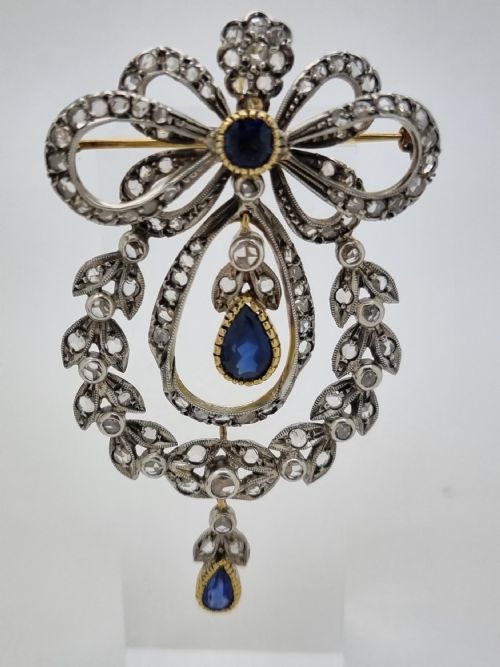
Silver and Stone Brooch
A silver and stone brooch brings together polished metal and mineral or paste settings to form wearable ornaments from the Victorian, Edwardian, and later periods.
Silver and Stone Brooch
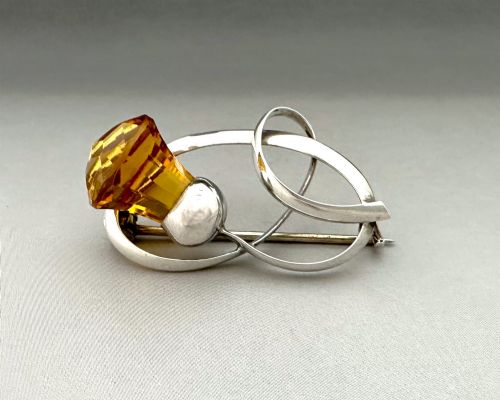
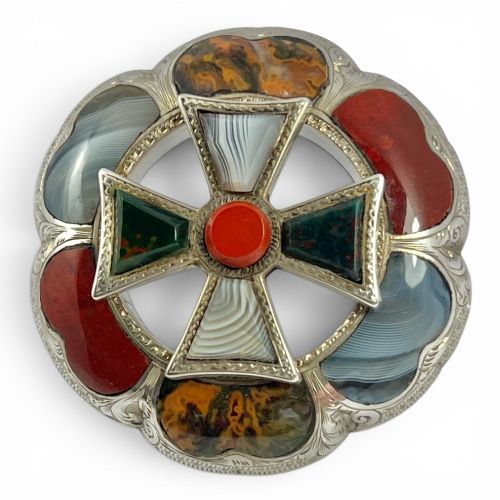
When you search for a silver and stone brooch, you encounter pieces spanning the Georgian, Victorian, Edwardian, Art Deco, and mid-century eras. The selection ranges from Scottish pebble designs and lava cameos to paste-set floral baskets and lizard motifs.
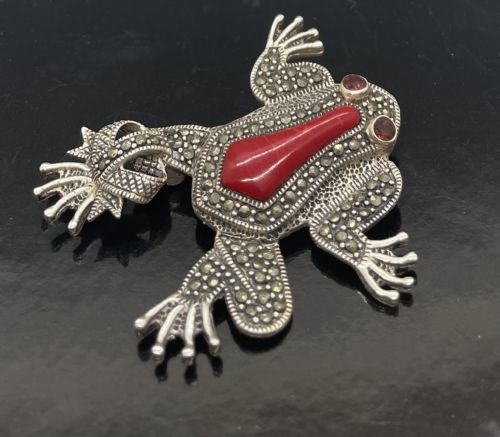
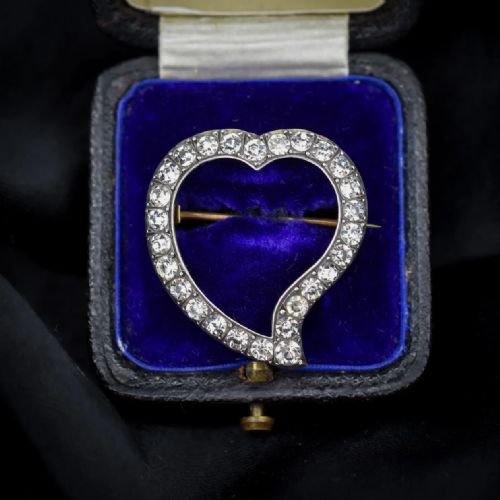
The version you are most likely to meet on this page is a Victorian or Edwardian silver mount holding paste glass, agate, or chalcedony. These encompass figurative designs like frogs and witches hearts alongside traditional floral and crescent shapes.
Makers and origins stretch from local British workshops to 19th-century French ateliers. Some listings include matching jewellery suites or multi-functional items such as pendant-brooch combinations.
How they were made
Makers shaped solid silver, silver-gilt, and occasionally mixed metals with gold to construct the secure mounts for these ornaments. Stones and paste glass were then carefully cut and secured within the metal settings.
Techniques varied from hand-set faceted glass and marcasite encrustations to detailed carving in lava and agate pebbles. Metalwork styles reflect their respective periods, from Georgian revival work to streamlined Art Deco mounts.
Lizards and frogs in sparkly paste managed to climb onto Victorian and mid-century garments and stay there forever.
What varies in quality
The distinction between standard examples and finer work lies in the precision of the stone cutting and the complexity of the silver mount. Hand-carved hardstones and well-matched old cut paste demonstrate greater artisan skill than mass-produced alternatives.
Design execution also dictates standard, where realistic proportions in figurative pieces like lizards and frogs show superior attention to detail. The preservation of original gilding and stone integrity further elevates the quality of an ornament.
The Silver and Stone Brooch Glossary
- Paste
- Faceted glass created to imitate gemstones. It was hand-cut and foiled in older pieces to enhance reflection.
- Marcasite
- Small, polished pyrite stones cut with facets and set closely together in silver. This material provides a dark, metallic sparkle.
- Giardinetti
- A style translating to little garden, depicting flower pots or baskets filled with assorted stones. These designs date back to the Georgian era.
- Chalcedony
- A cryptocrystalline form of silica used frequently in 19th-century carved mounts and pebble jewellery. It offers a smooth, translucent finish.
- Witches heart
- An amulet shape featuring a twisted tail, popular in antique jewellery for warding off evil. It is often set with paste or foil-backed stones.
Silver and Stone Brooch: Frequently Asked Questions
How do I date a silver brooch?
Dating relies on stylistic clues, mounting techniques, and the types of stones utilised in the construction.
Victorian and Georgian pieces often feature closed-back settings and specific motifs like Scottish pebbles, while Art Deco examples display geometric lines.
Can I wear a brooch as a pendant?
Certain historical designs were manufactured specifically as pendant-brooch combinations with hidden loops.
If a piece lacks a built-in loop, conversion requires care to preserve the original antique mount and pin mechanism.
What is Scottish pebble jewellery?
Scottish revival pieces utilise native hardstones such as agate, malachite, and jasper mounted in silver.
Popularised during the 19th century, these items reflect romantic associations with the Scottish Highlands.