



Silver and Glass Noggin
A silver and glass noggin is a miniature spirit vessel designed for single servings, prized for its combination of cut glass and sterling silver mounts.
Silver and Glass Noggin
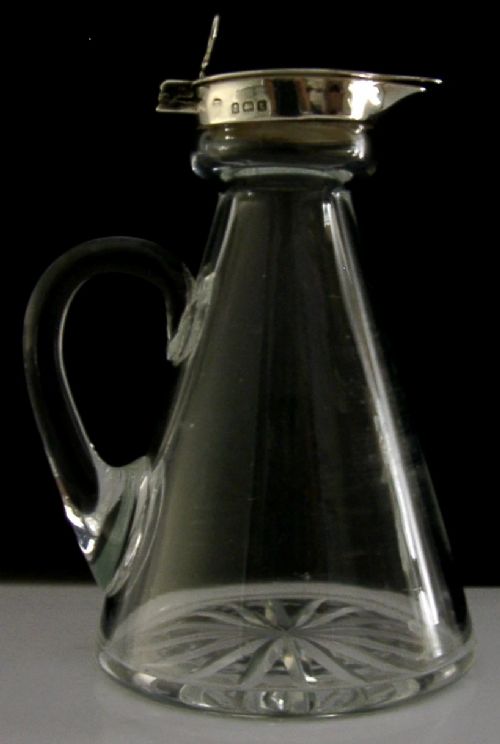
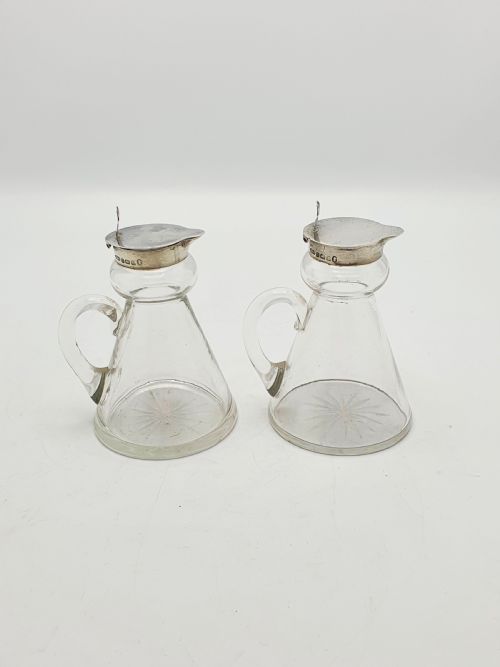
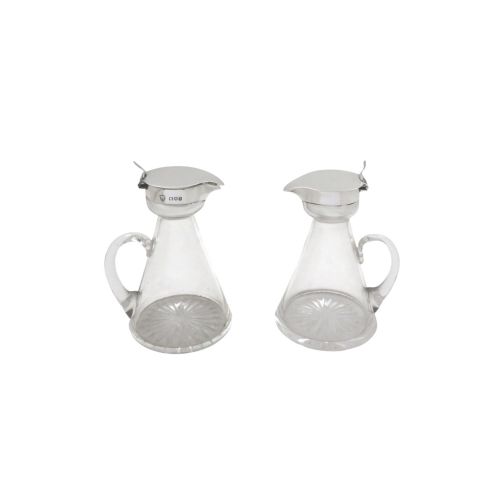
A silver and glass noggin sits on the barware spectrum as a compact decanter or jug, frequently found as single pieces or occasionally in matching pairs. The form serves a practical measure of whisky or other spirits, combining a heavy glass base with a sterling silver collar, handle mount, and hinged lid.
The pieces appearing on this page belong to the Edwardian period and the decades of the 1910s, 1920s, and 1930s under George V. Styles span the robust Edwardian era through to clean-lined Art Deco influences, represented primarily through decanters and whiskey noggins.
Makers and workshops of the early twentieth century produced these vessels to accompany private hospitality trays and smoking tables. A buyer encounters variations from standard single-serve jugs up to larger formats described as claret jugs.
How they were made
The construction of a silver and glass noggin relies on the union of blown or moulded clear glass with fabricated sterling silver mounts. Glass bodies often feature cut patterns that catch the light, providing grip and visual texture below the metallic collar.
Silversmiths secured the metal elements around the glass neck using secure bands, attaching sturdy handles and hinged lids with thumbpieces for one-handed pouring. Hallmarks stamped directly into the sterling silver provide clear markers for the assay year and manufacturing standard.
Silver and Glass Noggin Retail Price Guide 2026
Typical asking prices for silver and glass noggin among the pieces listed under this phrase on Sellingantiques today, from the lower quarter to the upper quarter. They describe what is for sale here now, not the wider market.
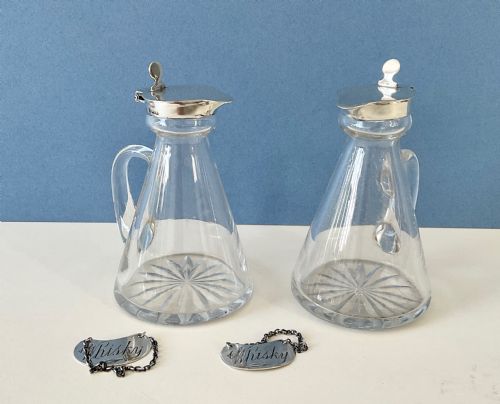
Some noggins arrive wearing tiny matching silver labels around their necks, ensuring nobody confuses their Scotch with the brandy.
What varies in quality
Quality in a silver and glass noggin reveals itself in the weight and clarity of the glass vessel, alongside the thickness and integrity of the sterling silver mounts. Substantial metalwork and crisp hallmarks distinguish finer examples from standard commercial output.
The precision with which the silver collar fits the glass neck and the smooth action of the hinged lid determine the execution of the piece. Matching spirit labels and well-preserved cut glass facets elevate the overall coherence of the barware.
Hukin & Heath
The Silver and Glass Noggin Glossary
- Noggin
- A small mug or vessel used for dispensing a measure of liquor. In this context, it functions as a miniature decanter for whisky.
- Sterling silver
- An alloy of silver containing 92.5 percent pure silver and 7.5 percent other metals, typically copper. This standard material forms the collars, lids, and mounts of the noggins.
- Cut glass
- Glass decorated by grinding and polishing facets or patterns into the surface. Clear glass bodies on these noggins frequently utilise this technique to enhance sparkle.
- Assay mark
- A stamp or series of stamps applied to precious metals to indicate the purity, the assay office, and the year of testing. These marks date the silver mounts accurately.
Silver and Glass Noggin: Frequently Asked Questions
What is a silver and glass noggin used for?
These vessels serve as individual decanters for dispensing a single measure of whisky or other spirits. They originate from an era of private hospitality where hosts poured drinks directly at the table or sideboard.
Today, they function as decorative barware that retains its original utility. Collectors often display them on drinks trays or use them during evening gatherings.
How do I date a silver and glass noggin?
Dating relies primarily on the hallmarks stamped onto the sterling silver mount. These letters and symbols indicate the specific year the silver was tested and assayed.
Stylistic indicators such as Edwardian proportions or 1920s geometric lines also help place the piece within a specific decade. Comparing the glass form and mount style confirms the period.
Are silver noggins found in pairs?
Pairs do appear alongside single pieces, often created for matching service on a hospitality tray. Matching pairs frequently share identical silver mounts and glass cutting patterns.
Single noggins remain common because many were produced and purchased individually over time. Both singular examples and pairs function equally well in modern displays.
How do I clean the glass and silver?
Cleaning requires separating the care of the glass body from the sterling silver mount. Warm soapy water and a bottle brush clear the interior of the glass without disturbing the fixed metal collar.
Silver polish applied sparingly with a soft cloth maintains the shine of the metal elements. Avoiding abrasive cleaners protects both the hallmarks and the clear glass surface.