

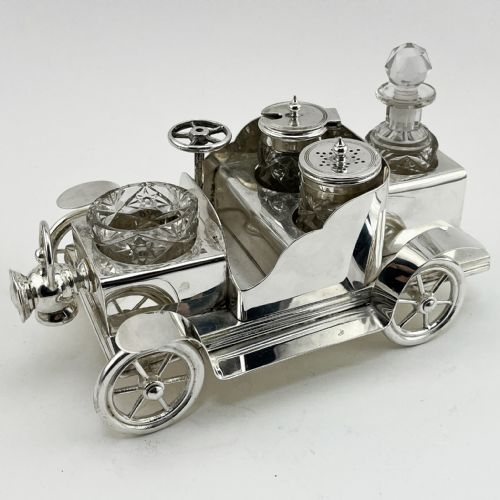


Silver and Glass Castor
A silver and glass castor brings sparkle and utility to the table, combining cut glass vessels with gleaming metal mounts.
Silver and Glass Castor
When you search for a silver and glass castor, you encounter tablewares designed to hold condiments, preserves, and flavourings during meals. The listings here show these pieces primarily taking the form of cruet sets holding multiple bottles, alongside single preserve dishes and novelty pepper pots.
The objects span the Victorian and Edwardian eras, with dates clustering around the late nineteenth and early twentieth centuries. You find items featuring cut glass and cranberry glass paired with silver plate, pewter, and silver gilt mounts.
Cruet sets dominate the selection, often housing several bottles in a fitted frame with a central handle. Preserve dishes also appear, pairing coloured glass bowls with decorative metal baskets.
Materials and construction
Makers combined heavy moulded and cut glass with durable base metals like silver plate and pewter. Glass vessels received deep geometric facets to catch the light, while metal frames provided sturdy support and ornate detailing.
Specialist techniques involved applying thin layers of silver over base metals using early plating methods, alongside creating coloured glass through mineral additions like cranberry and vaseline tints. Silver gilt was also utilised to give interior surfaces a rich gold finish.
Silver and Glass Castor Retail Price Guide 2026
Typical asking prices for silver and glass castor among the pieces listed under this phrase on Sellingantiques today, from the lower quarter to the upper quarter. They describe what is for sale here now, not the wider market.
Victorian makers occasionally turned cruet sets into novelty horse-drawn carriages or sculpted dogs into pepper pots, proving diners enjoyed a touch of whimsy.
Assessing quality
Quality rests upon the crispness of the glass cutting and the weight of the metal framework. Finer examples display deep, sharp facets on the glass bottles and substantial silver plating that resists wear.
Design ambition also separates standard items from superior pieces, particularly in novelty forms such as carriage cruet sets or animal pepperettes. The integration between the glass vessel and its metal mount shows the maker's care.
The Silver and Glass Castor Glossary
- Cruet set
- A fitted stand holding multiple glass bottles or jars for condiments, oil, vinegar, and sauces at the dining table. These frames often include a central carrying handle.
- Silver plate
- A layer of silver bonded to a base metal such as copper or nickel brass, providing the appearance of solid silver at a lower cost.
- Vaseline glass
- A transparent yellowish-green glass produced using uranium dioxide as a colourant, known for glowing under ultraviolet light.
- Pepperette
- A small shaker or pot designed specifically for dispensing ground pepper at the table.
Silver and Glass Castor: Frequently Asked Questions
What is a silver and glass castor used for?
These pieces served practical functions on the dining table by holding and dispensing condiments, sugar, or preserves during meals.
Their combination of glass and metal allowed diners to identify contents easily while adding a decorative element to the table setting.
How do I date a silver and glass piece?
Dating relies on stylistic clues, manufacturing techniques, and the types of materials popular in specific periods like the Victorian or Edwardian eras.
Heavy cut glass combined with ornate silver plate typically points towards the late nineteenth century, while lighter frames often suggest the early twentieth century.
How should I clean silver plate mounts?
Cleaning requires a soft cloth and a mild silver polish formulated specifically for plated items to avoid wearing through the thin silver layer.
Harsh abrasives and chemical dips should be avoided, as they can damage both the metal surface and any coloured glass components.
Are these pieces safe for food use?
While historic glass and silver plate can hold food items, many collectors prefer to use them for display purposes only.
Older silver plate can wear down to reveal the base metal underneath, and certain antique glass types require gentle handling away from modern dishwashers.