




Silver and Blue Jar
These silver and blue jar pieces combine bright enamel or ceramic bodies with precious metal mounts, offering both dressing table utility and distinct period colour.
Silver and Blue Jar
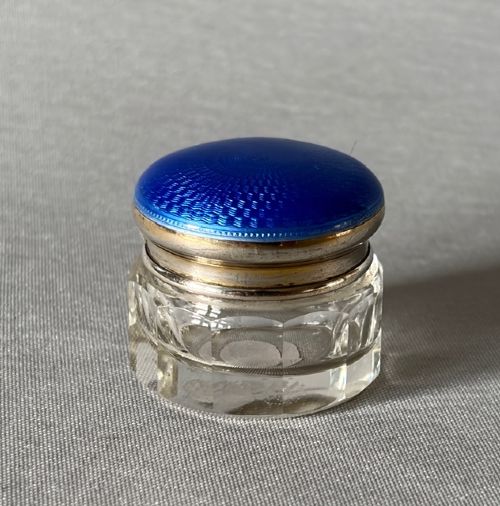
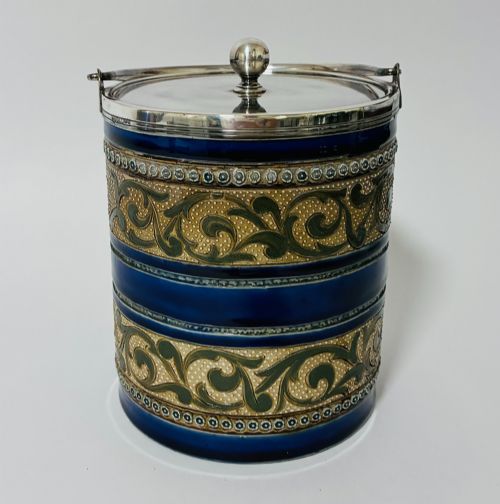
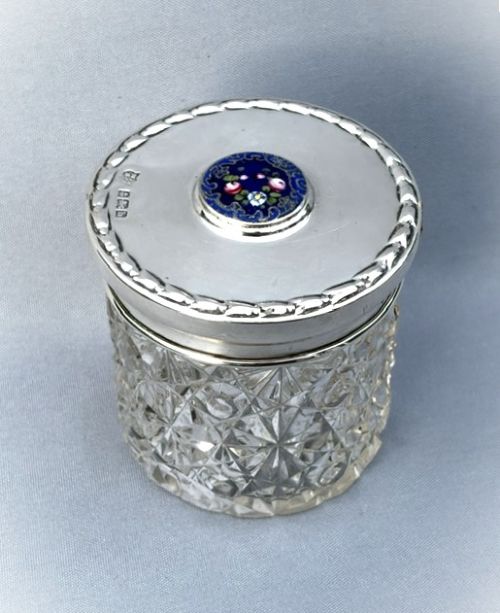
The most common examples on this page are dressing table jars and vanity boxes featuring blue enamel lids, alongside ceramic biscuit barrels with silver-plated mounts. They bridge the gap between practical household storage and decorative display.
Originating from English and French workshops, these items reflect changing domestic habits from the mid-nineteenth century through the interwar years. Each piece demonstrates the period preference for combining tactile materials like glass, stoneware, and precious metal.
Materials and Techniques
The construction of these pieces relies on the pairing of ceramic, glass, or burr wood with sterling silver or silver plate. Cut glass and moulded stoneware form the main bodies, while metals provide structural rims and hinged lids.
Enamel work, particularly guilloche, provides the striking blue decoration found on dressing table pots from the Art Deco era. Artisans applied translucent enamel over engine-turned metal bases to create geometric patterns that catch the light.
Ceramic bodies such as jasperware and flow blue earthenware are fitted with custom metal mounts secured by pins or adhesives. Silversmiths stamped hallmarks onto the metal components to indicate the standard of silver and the year of assay.
Silver and Blue Jar Retail Price Guide 2026
Typical asking prices for silver and blue jar among the pieces listed under this phrase on Sellingantiques today, from the lower quarter to the upper quarter. They describe what is for sale here now, not the wider market.
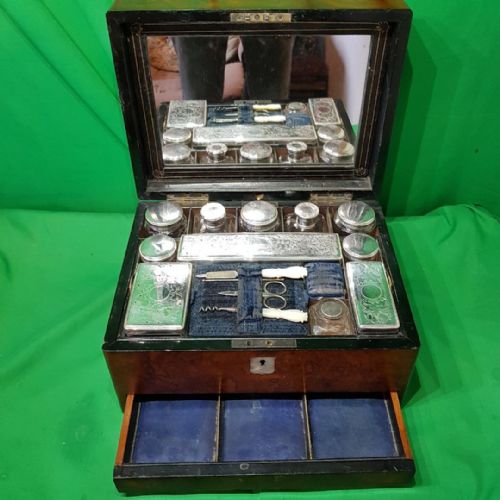
Victorian ladies relied on these velvet-lined travelling sets to smuggle their favourite face powders across bumpy carriage rides without spilling.
Markers of Quality
Quality in these jars rests on the crispness of the metalwork and the preservation of the enamel or ceramic body. Finer examples show sharp engine-turning beneath translucent blue enamel without chips or hairline fractures.
The weight and gauge of the silver or silver plate distinguish superior pieces from standard production. Substantial metal mounts that fit snugly against glass or ceramic rims indicate attentive manufacturing.
Maker marks and clear town assay stamps elevate a piece, confirming the origin and standard of the materials. Well-preserved interior gilt and smooth-operating hinges also separate better workshop output from ordinary items.
Henry Clifford Davis·Doulton Lambeth·Carlton Ware·Wedgwood
The Silver and Blue Jar Glossary
- Guilloche enamel
- A decorative technique where a precise geometric pattern is機械 engraved into metal and then covered with translucent enamel. This creates depth and movement in the blue coloration.
- Jasperware
- A type of stoneware developed by Wedgwood, typically featuring a matte blue background with applied white relief figures. It remains a defining ceramic style of the Victorian era.
- Biscuit barrel
- A covered ceramic or glass container designed to hold dry biscuits on the dining table. They are frequently fitted with silver-plated or sterling swing handles and rims.
- Hallmark
- A series of official marks stamped onto silver items indicating the maker, standard of purity, assay office, and year of manufacture. They provide a reliable method for dating British pieces.
- Flow blue
- A cobalt-blue transfer printing style on earthenware where the colour bleeds slightly into the white glaze during firing. This technique produces a soft, hazy appearance.
Silver and Blue Jar: Frequently Asked Questions
What were silver and blue jars used for originally?
These vessels served various domestic and personal functions depending on their form. Dressing table and vanity jars held powders, pins, and cosmetics for daily grooming.
Larger ceramic examples operated as biscuit barrels on dining tables or sideboards to keep baked goods fresh during tea service.
How do I date a silver and blue jar?
Dating relies primarily on metal hallmarks, ceramic backstamps, and the overall stylistic period. Art Deco pieces display geometric guilloche enamel, while Victorian examples often feature heavy stoneware or cut glass.
Examining the construction methods and any stamped town marks provides a narrower window of manufacture.
Are enamel lids prone to damage?
Enamel can chip or crack if the piece suffers a sharp impact or dramatic thermal shock. The underlying metal expansion can occasionally stress the glass-like coating over decades.
Careful handling and storage away from direct sunlight help preserve the vibrant blue colour and structural integrity of the enamel.
How should I clean my jar?
Maintenance requires gentle cleaning with a soft, damp cloth for both the enamel and ceramic surfaces. Avoid submerging antique wooden or velvet-lined boxes in water.
Silver components benefit from occasional treatment with a specialised non-abrasive polish, keeping the metal away from direct contact with the enamel.