

Silver and Agate
Silver and agate objects combine polished chalcedony and sterling mounts, spanning Georgian vinaigrettes and Victorian Scottish brooches.
Silver and Agate
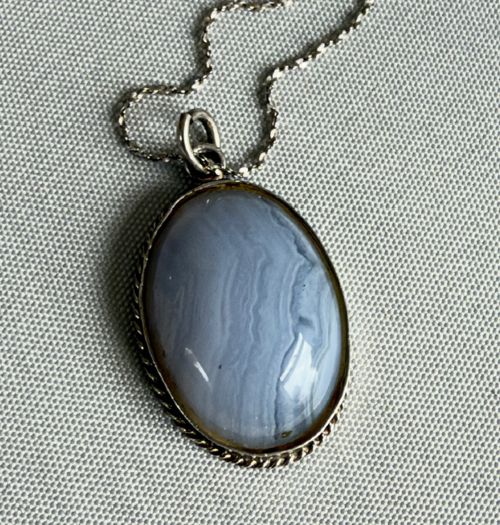
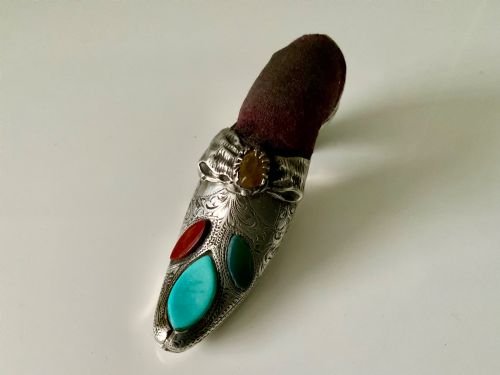
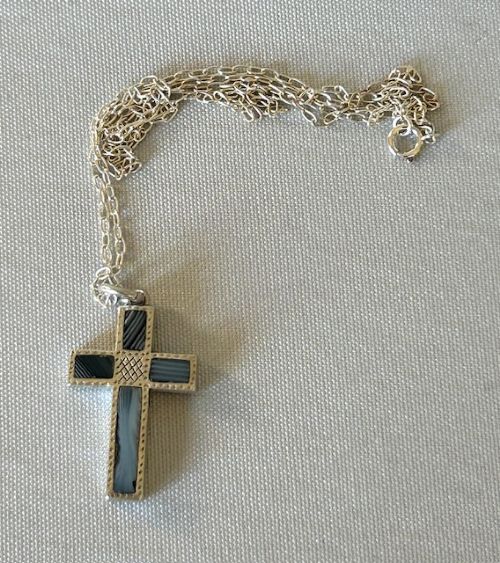
Silver and agate objects span utility and adornment, bringing together polished chalcedony stones and precious metal mounts. A buyer searching this phrase encounters personal accessories and tabletop items, predominantly from the Victorian period through to the twentieth century.
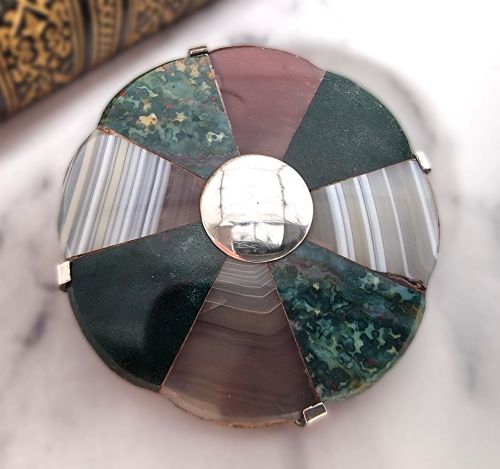
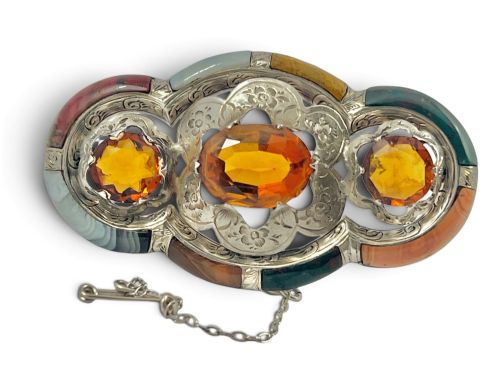
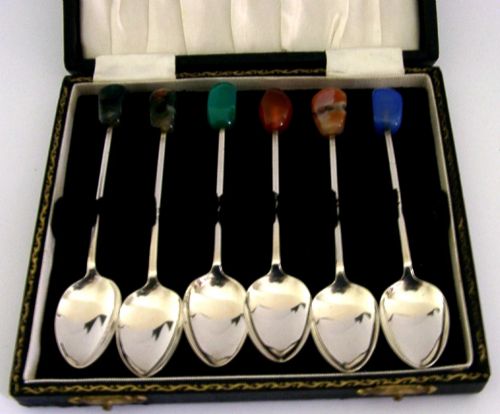
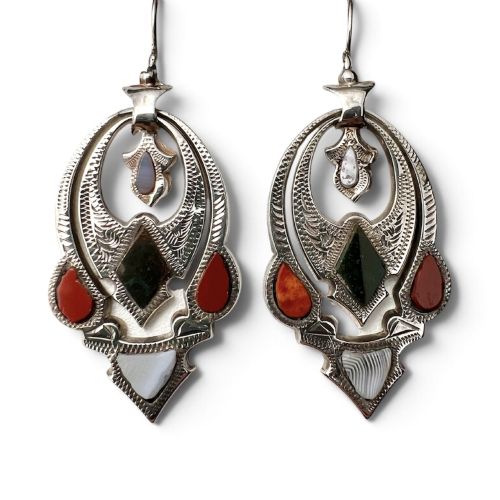
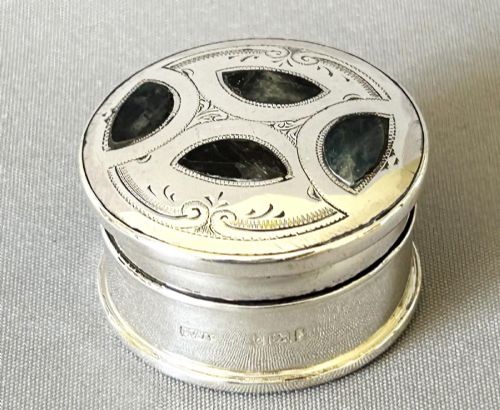
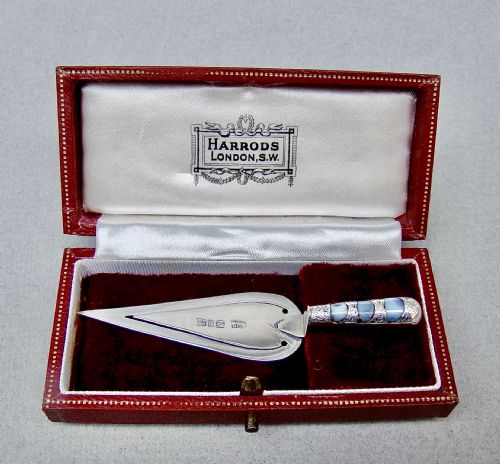
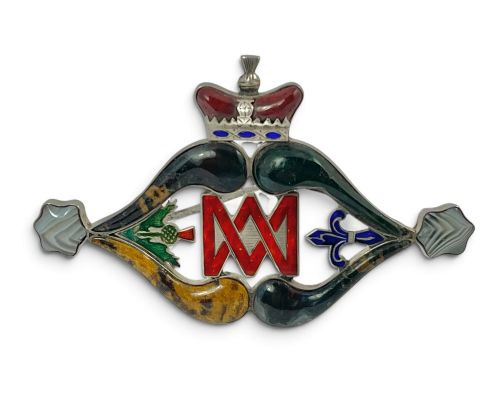
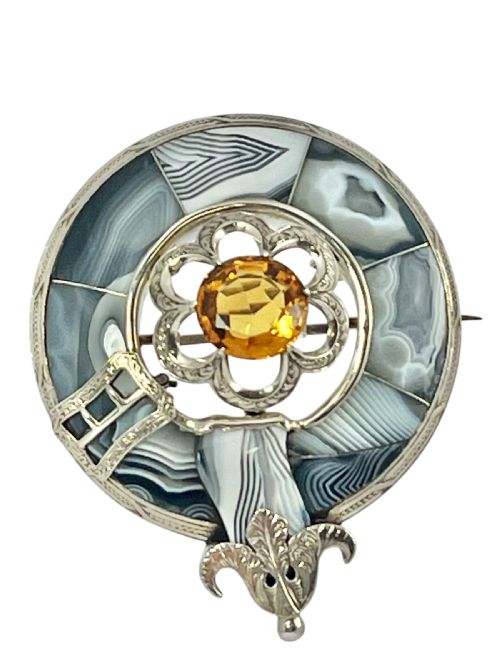
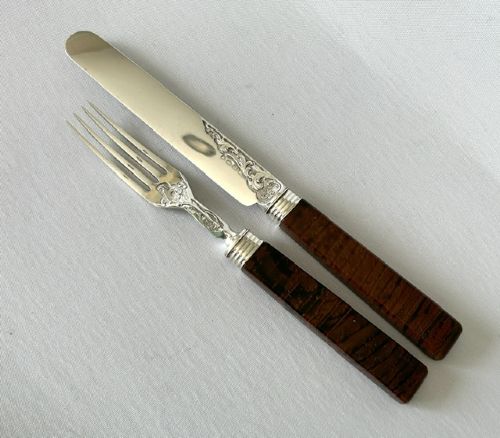
Brooches dominate the selection, often taking the form of shields, swords, or pebble designs linked to the Victorian Scottish Revival. Alongside these wearable pieces sit functional items including vinaigrettes, snuff boxes, pillboxes, cutlery, and bookmarks.
The aesthetic bridges regional traditional crafts and metropolitan silversmithing, connecting nineteenth-century Edinburgh and Birmingham workshops with later twentieth-century idioms. Agate varieties such as Montrose, moss, and banded stones provide natural colour variations within sterling silver settings.
How they were made
Silversmiths shaped sterling silver and silver gilt into enclosures, frames, and cutlery mounts, utilising techniques like casting, engraving, and gilding. Enamel, citrine, and bloodstone occasionally complement the primary stones in these settings.
Lapidaries sliced and polished chalcedony minerals, including agate and jasper, to fit precise bezels and channels within the metalwork. Horn, granite, and velvet also appear as structural or backing components in specific boxes and brooches.
Silver and Agate Retail Price Guide 2026
Typical asking prices for silver and agate among the pieces listed under this phrase on Sellingantiques today, from the lower quarter to the upper quarter. They describe what is for sale here now, not the wider market.
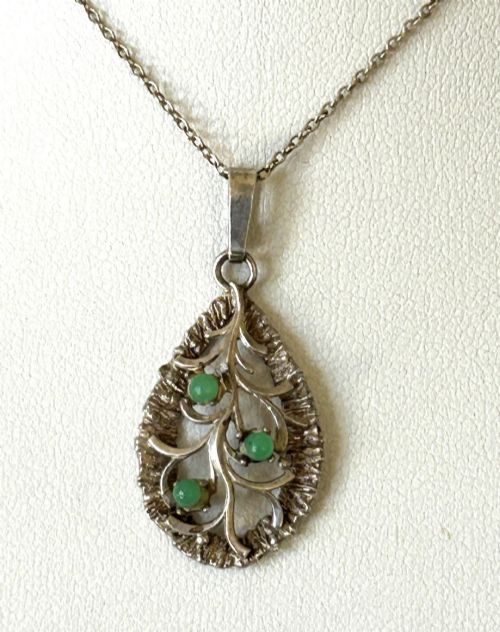
A tiny silver pig charm occasionally hangs out on a split ring alongside an ivy leaf and a bugle.
What varies in quality
The distinction between standard examples and finer pieces lies in the integration of stone and metal, alongside the precision of the lapidary work. Superior items display expertly matched stone sections with high-polish finishes that sit flush within detailed silver mounts.
Maker marks and regional hallmarks elevate an object's documentary interest, with identified Birmingham or London silversmiths indicating established workshop standards. The complexity of the item, such as basket-hilted broadsword kilt pins or articulated vinaigrette grilles, further separates basic utility pieces from masterwork survivals.
Joseph Moore·Vale and John·Crisford and Norris·Moses Brent
The Silver and Agate Glossary
- Agate
- A form of chalcedony quartz displaying natural banding or colour variations. It provides the characteristic colourful panels set into nineteenth-century Scottish jewellery and boxes.
- Vinaigrette
- A small hinged metal box containing a perforated internal grille. It held a sponge soaked in aromatic vinegar for refreshing the user.
- Snuff mull
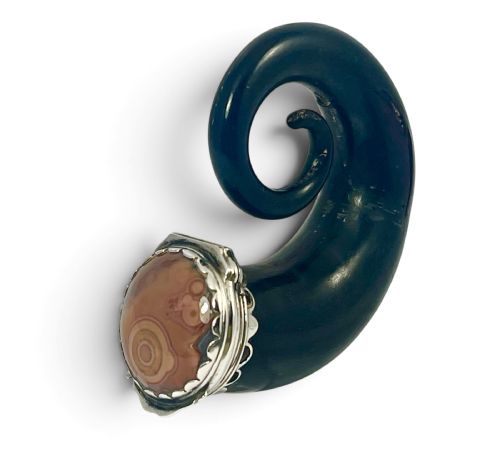
- A small container utilised for holding powdered tobacco. Scottish examples often incorporated animal horn alongside silver mounts.
- Bifurcate
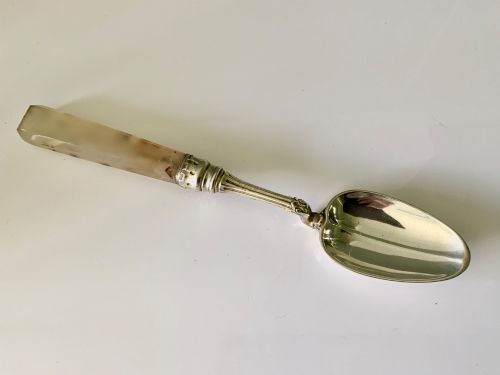
- Divided into two branches or forks. This term describes specific spoon designs found in nineteenth-century cutlery.
- Chalcedony
- A cryptocrystalline form of silica comprising mineral varieties like agate and jasper. It forms the hardstone components of these antique accessories.
Silver and Agate: Frequently Asked Questions
What is a Scottish agate brooch?
Scottish agate brooches are nineteenth-century silver dress accessories featuring polished multi-coloured chalcedony stones arranged in geometric, shield, or sword motifs.
They gained popularity during the Victorian Scottish Revival, often incorporating citrines, granite, or freshwater pearls alongside banded pebbles.
How do I date silver and agate pieces?
Dating relies primarily on official assay office hallmarks stamped into the silver components, revealing specific towns and years of manufacture.
Stylistic indicators, such as Victorian Revival motifs or Edwardian proportions, help narrow the period when maker marks are absent.
What were silver vinaigrettes used for?
Silver vinaigrettes served as personal pocket containers for aromatic vinegar during the Georgian and Victorian eras.
Owners lifted the hinged outer lid to reveal a pierced internal grille, releasing scents intended to combat unpleasant odours in public spaces.
Are all agate stones natural?
Agates utilised in antique silver pieces are natural quartz varieties formed through the deposition of silica in volcanic cavities.
Lapidaries selected stones for their distinct natural banding, moss inclusions, or regional colours like those found in Montrose.