




Silk on Linen Sampler
A silk on linen sampler records needlework skill, often naming the young maker and the date of her labour.
Silk on Linen Sampler
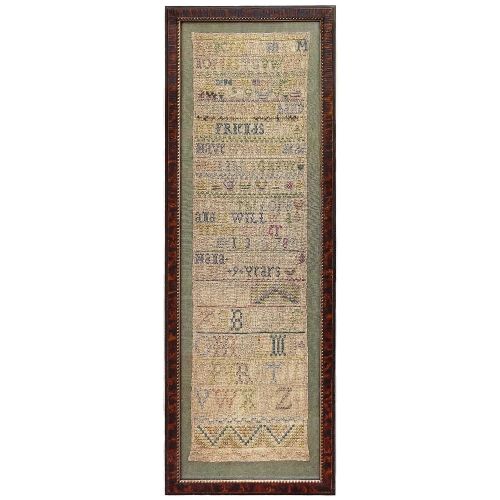
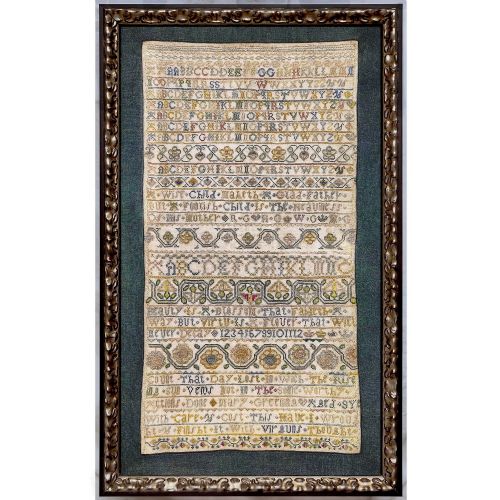
A silk on linen sampler displays stitched alphabets, verses, maps, or motifs worked by hand on a woven linen ground. These textiles survive from the 18th century, the Georgian era, and the 19th century.
Makers often stitched their names, ages, and dates into the fabric, alongside schools such as the Oswestry National School or specific establishments like the Lozells Establishment.
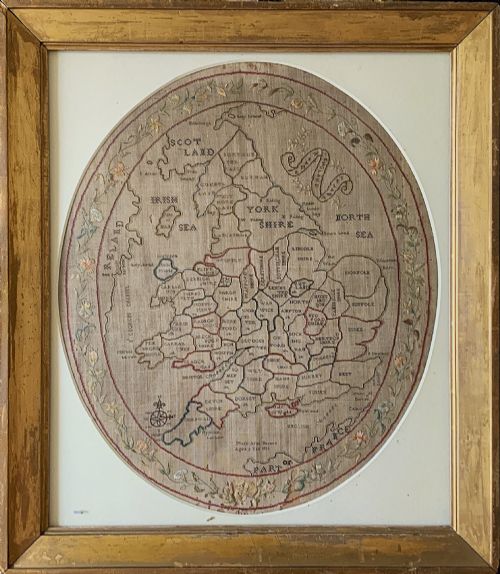
The most common formats on this page range from band samplers and pictorial compositions to cartographic works such as maps of England and Wales.
How they were made
Workers used silk thread, silk floss, and occasionally wool to stitch patterns onto a woven linen foundation. Frames incorporate wood, gilt wood, and glass to protect the delicate needlework.
Stitching techniques vary from simple cross-stitch and band work to detailed pictorial embroidery and cartographic outlines created by young makers under instruction.
Silk on Linen Sampler Retail Price Guide 2026
Typical asking prices for silk on linen sampler among the pieces listed under this phrase on Sellingantiques today, from the lower quarter to the upper quarter. They describe what is for sale here now, not the wider market.
Listings feature textiles from the 18th century, the Georgian period, and the 19th century, utilising linen, silk, wool, and gilt wood frames.
What varies in quality
The distinction between pieces rests on the complexity of the design, such as a detailed map of England and Wales versus a simpler alphabet band sampler. The clarity of the stitching and the preservation of the silk thread on the linen ground also set examples apart.
Documentation contributes to the interest of a piece, particularly when the maker's full name, age, year, and school or location remain clearly legible within the textile.
Hana Chamberlin·Mary Banion·Mary Greening·Jane Wettmore·Louiss Elkins·Elizabeth Horn·Ann Hodson·Mary Mason·Martha Hall·Rachel·Sarah Reading·Susan Mary Williams·Mary Pinfold
The Silk on Linen Sampler Glossary
- Band sampler
- A long, narrow textile displaying horizontal rows of different embroidery stitches, alphabets, and geometric patterns. These early pieces served as reference models for stitchers.
- Cartographic sampler
- A needlework map displaying geographical regions, such as England and Wales, executed as an educational exercise for young scholars.
- Linen
- A strong textile woven from flax fibres that provides the foundational ground for the silk embroidery threads.
- Silk floss
- An untwisted or lightly twisted silk thread that yields a flat, glossy finish across pictorial and lettered motifs.
- Needlework
- The comprehensive term for decorative sewing and textile art created by hand using a needle.
Silk on Linen Sampler: Frequently Asked Questions
What is a silk on linen sampler?
A silk on linen sampler is a historic textile piece where a young maker used silk thread to stitch alphabets, verses, or maps onto a woven linen foundation.
These pieces record dates and names, reflecting needlework education during the Georgian and 19th-century periods.
How old are these samplers typically?
The pieces listed span from the late 17th century through the 18th century, the Georgian era, and into the 19th century.
Many examples preserve specific dates stitched directly into the textile by the maker.
What subjects do the samplers show?
Subjects include traditional band patterns, religious texts such as the Lord's Prayer, and educational geography projects like maps of England and Wales.
Some pieces record specific institutions, including the Oswestry National School and the Lozells Establishment.
How should I display a framed sampler?
Samplers require protection behind glass within their wood or gilt wood frames to shield the delicate silk threads from dust and direct light.
Displaying them away from direct sunlight preserves the original colours of the linen and embroidery.