




Signed Victorian Seascape
A signed Victorian seascape captures maritime life and coastal weather through the direct hand of a nineteenth-century painter.
Signed Victorian Seascape
A signed Victorian seascape brings coastal views, harbour scenes, and open waters into focus through nineteenth-century paintings. These works capture ships at sea, fishing boats on beaches, and dramatic coastlines across Britain and beyond.
The pieces on this page are predominantly watercolours on paper and oil paintings on canvas, signed by the artists who painted them. They date from the nineteenth century into the early twentieth century, reflecting the era's deep engagement with maritime subjects.
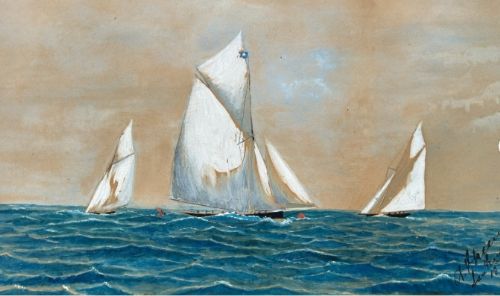
Buyers will find familiar coastal locations like St Ives, Whitby, and Brighton, alongside vessels ranging from racing yachts to merchant ships and old hulks. Each signed Victorian seascape preserves a specific moment of maritime history through the artist's personal observation.
How they were made
Watercolour pigment on paper formed the basis for many coastal sketches and finished works, allowing artists to capture shifting light on water quickly. Oil paint applied to canvas offered deeper texture and durability for turbulent seas and heavy skies.
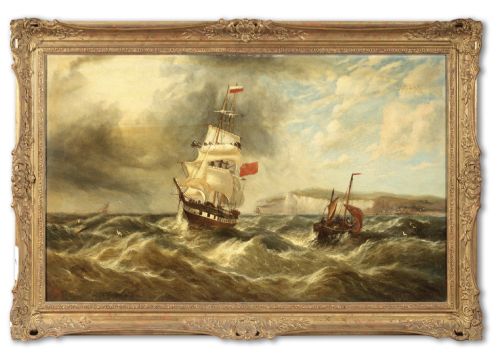
Gilded wood frames completed the presentation of these paintings, protecting the edges of the canvas or paper while adding weight and presence to the finished artwork.
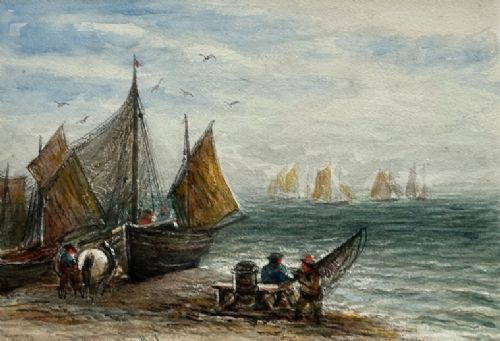
Artists often faced salt spray and shifting tides on location to catch fishing boats spreading their nets.
What varies in quality
The strength of the composition and the handling of light and atmosphere distinguish the finest paintings from routine topographical records. Artists who command a deep understanding of marine architecture and water movement produce works with lasting visual conviction.
The clarity and legibility of the signature, alongside the original condition of the paper or canvas, influence the standing of each piece. Strong provenance and framing contemporaneous with the painting further elevate the work.
James Orrock·William Banks Fortescue·John Rose Miles·Bernard Benedict Hemy·William Frederick Settle·Frederick William Booty·Kate E Booth·Frank Wasley·William Langley·W H Grey·William James S Crampton
The Signed Victorian Seascape Glossary
- Seascape
- A painting depicting the sea, coastal views, ships, or maritime activity. These works range from calm harbours to stormy open waters.
- Watercolour
- A paint consisting of pigment suspended in a water-soluble vehicle, typically applied to paper. It allows for translucent washes of colour.
- Oil on Canvas
- Pigment mixed with a drying oil, applied to a stretched canvas support. This technique provides rich colour depth and textural variation.
- Maritime Art
- Artwork that depicts or draws inspiration from the sea, ships, and coastal life. It encompasses both naval engagements and everyday fishing scenes.
Signed Victorian Seascape: Frequently Asked Questions
What subjects appear in these seascapes?
The paintings show coastal views, fishing boats, merchant ships, and harbours across various weather conditions. Scenes range from calm seas to rough coastal waters.
Specific locations include British and international coastal spots, capturing everyday maritime life and naval vessels of the period.
How do I care for watercolour and oil paintings?
Watercolour paintings require protection from direct sunlight to prevent fading of the pigments on paper. They benefit from stable indoor humidity levels.
Oil paintings on canvas are generally more resilient but should also avoid damp environments and direct heat sources to protect the canvas and frame.
How are these artworks framed?
Many pieces retain their original gilded wood frames, which complement the nineteenth-century aesthetic of the paintings. These frames provide structural support and enclose the artwork.
Some works may have later framing suited to conservation standards while maintaining a traditional appearance.
How do I identify the artist?
Artists typically signed their work directly on the front of the canvas or paper, often near the lower edge. Signatures may appear as full names, initials, or monograms.
Examining the style, subject matter, and period details helps confirm the attribution alongside the visible signature.