




Signed Satsuma Pottery
Signed satsuma pottery pieces are finely painted Japanese earthenware ceramics bearing artist signatures, prized for their intricate enamel and gold details.
Signed Satsuma Pottery
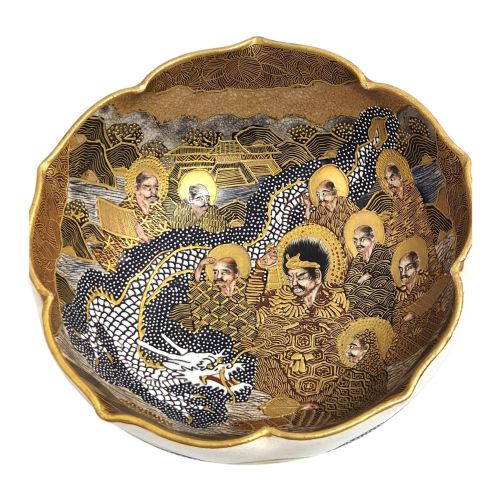
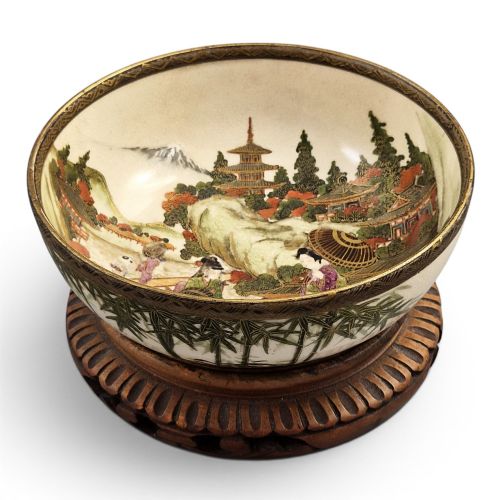
Signed satsuma pottery comprises decorative vessels and bowls originating from Japan during the nineteenth century and the Edwardian period. Buyers searching this phrase seek authentic marked examples of Satsuma ware, which typically display complex figural or floral designs.
The objects available on this page include vases, decorative bowls, incense burners, and sugar bowls from Japanese production centres such as Kyoto. These pieces reflect the Meiji period aesthetic through densely patterned surfaces enriched with colour and gold leaf.
Vessels range from monumental display pieces to delicate miniature vases. Most examples encountered here date from the late nineteenth century and feature specific artist signatures alongside traditional Shimazu clan crests.
Materials and Techniques
These items are constructed from earthenware bodies that provide a porous base for subsequent decoration. Artisans applied smooth glazes before painting intricate motifs across the ceramic surface using coloured enamels.
Gilt and gold leaf were frequently added to highlight specific borders and patterns, creating a contrasting metallic sheen against the matte or glossy ground. Wood is also present among the materials used to mount or accompany the ceramic objects.
Signed Satsuma Pottery Retail Price Guide 2026
Typical asking prices for signed satsuma pottery among the pieces listed under this phrase on Sellingantiques today, from the lower quarter to the upper quarter. They describe what is for sale here now, not the wider market.
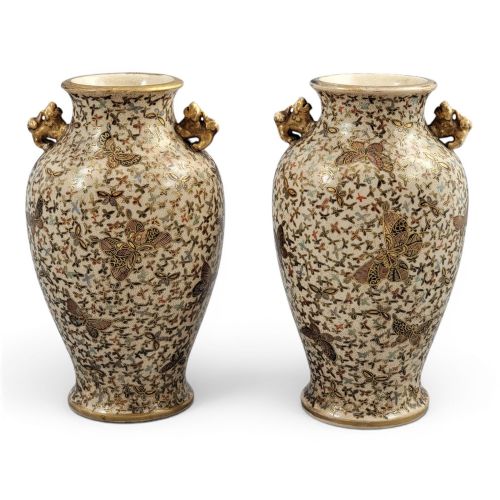
Some miniature vases are so densely patterned with tiny butterflies that counting them all requires a magnifying glass.
Distinctions in Quality
Quality in these ceramics rests upon the precision and complexity of the enamel work and the clarity of the artist signature. Superior pieces exhibit microscopic attention to detail in floral or butterfly motifs without crowding the composition.
The application of gold leaf and the richness of the cobalt blue or underlying glaze also determine the visual impact of a vessel. Well-executed pieces balance extensive surface decoration with disciplined spacing and balanced proportions.
Kozan·Kinzan·Chosei·Kinkozan·Nikko·Kizan·Tagawa·Shozan
The Signed Satsuma Pottery Glossary
- Satsuma
- A type of Japanese earthenware originating from Satsuma Province, traditionally characterised by a crackle glaze and detailed enamel painting. It later expanded to production centres in Kyoto.
- Koro
- A traditional Japanese incense burner typically supported on three legs and fitted with a pierced cover. These vessels allowed fragrant smoke to filter through decorative openings.
- Shimazu Crest
- The heraldic symbol of the Shimazu clan, featuring a cross within a circle, frequently found on Satsuma ceramics produced under their patronage. Its presence indicates a connection to the clan's historical sphere of influence.
- Meiji Period
- The era in Japanese history spanning from 1868 to 1912, marked by the opening of trade with the West and a flourishing of decorative arts for export. Ceramics from this time often combine traditional motifs with elaborate craftsmanship.
Signed Satsuma Pottery: Frequently Asked Questions
How do I read a Satsuma signature?
Artist signatures on these ceramics are usually hand-written in kanji characters on the base, often accompanied by a studio mark or the Shimazu family crest. Translating these marks requires identifying the specific character combinations used by Meiji period workshops and individual ceramists.
Because many artists used similar naming conventions or studio titles, consulting specialised reference books helps attribute a piece accurately to a known Kyoto or regional maker.
What is the Shimazu crest?
The Shimazu crest depicts a circle enclosing a cross, representing the historical ruling clan of the Satsuma domain. Its inclusion on ceramic bases signifies a direct link to the heritage and patronage associated with the region.
Not all Satsuma pottery bears this mark, but those that do often indicate higher-grade production intended for official presentation or international exhibition during the late nineteenth century.
How should I display Satsuma pottery?
These delicate earthenware pieces require stable placement away from direct sunlight to preserve the vibrant enamel colours and gold leaf details. Displaying them on flat surfaces prevents accidental tipping, especially for taller vases and incense burners.
Due to the porous nature of the earthenware body and the fine surface decoration, these items are best kept purely for decorative display rather than daily utilitarian use.
Are miniature Satsuma vases authentic?
Miniature Satsuma vases were produced in large numbers during the Meiji period to satisfy the Victorian demand for small, highly detailed Japanese curiosities. Despite their small scale, authentic examples exhibit the same meticulous enamel and gilt painting techniques found on larger vessels.
Examining the base for a clear artist signature or studio mark assists in confirming the period origin of these diminutive decorative ceramic pieces.