

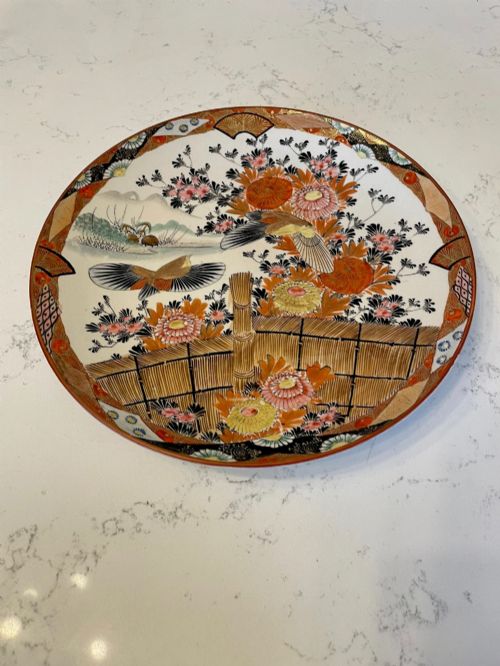
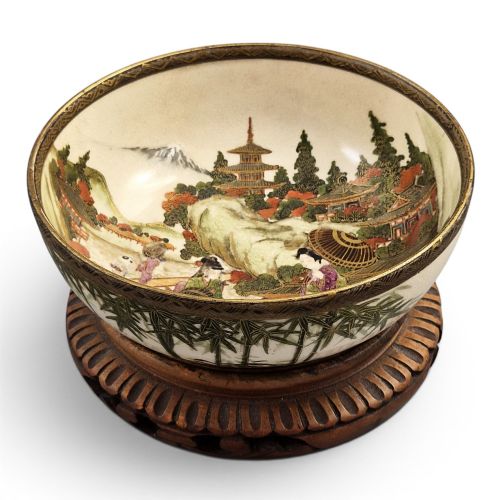
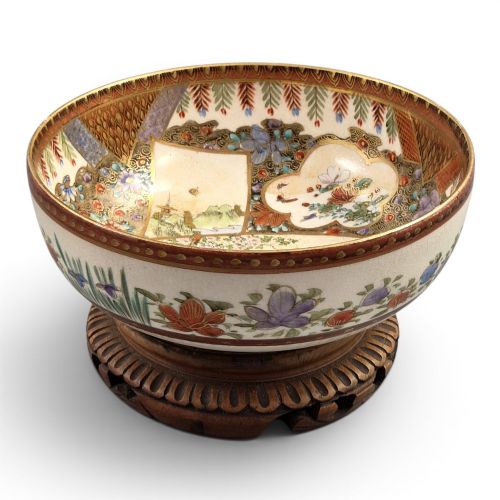

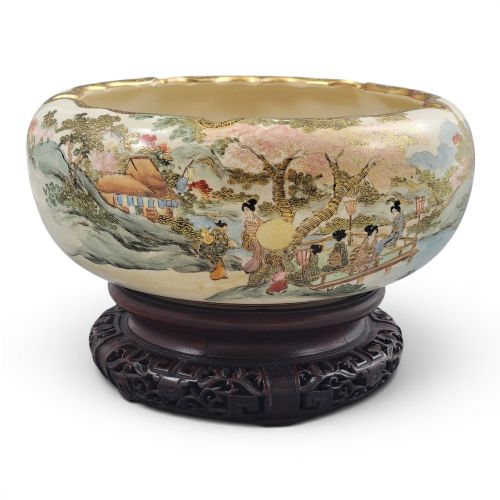


Signed Porcelain Bowl
A signed porcelain bowl carries the maker's brush or seal, marking individual artistry across Japanese and English ceramics.
Signed Porcelain Bowl
When searching for a signed porcelain bowl, collectors encounter diverse traditions ranging from Meiji period Japanese Satsuma and Kutani wares to early twentieth-century Royal Worcester pieces. These decorative bowls and cabinet plates showcase distinct artistic signatures, crests, and studio marks applied by hand.
The pieces appearing on this page span the nineteenth century through the mid-twentieth century, including Edwardian examples and traditional English formats alongside Japanese studio ceramics. Forms include shallow decorative dishes, boat-shaped bowls, and specialised vessels such as brush washers.
Makers and studios ranged from prominent Kyoto workshops to renowned English porcelain manufacturers, each employing their own distinct decorative vocabulary. Whether finished with intricate enamel and gold leaf or traditional cobalt blue and gilt, every signed porcelain bowl reflects the specific aesthetic of its origin.
How they were made
Makers shaped these vessels from ceramic bodies before applying detailed hand painting, often utilising overglaze enamel and gold leaf to build rich surface patterns. Techniques varied between traditions, from the dense pictorial scenes of Japanese Satsuma earthenware and porcelain to the fine botanical and figurative painting of English works.
Kiln firing set the glaze and metallic gilding, after which artists added signature ciphers, seals, or painted names to authenticate the piece. Some works incorporate moulded elements, rope-edge borders, or applied figural details that required separate crafting before final assembly and firing.
Signed Porcelain Bowl Retail Price Guide 2026
Typical asking prices for signed porcelain bowl among the pieces listed under this phrase on Sellingantiques today, from the lower quarter to the upper quarter. They describe what is for sale here now, not the wider market.
The documented objects span Japanese Meiji period Satsuma and Kutani wares alongside traditional English cabinet plates and decorative bowls.
What varies in quality
Quality in these pieces rests upon the precision of the hand painting, the clarity of the signature, and the refinement of the ceramic body. Master works demonstrate exceptional brush control in miniature figural or floral scenes, maintaining crisp detail across complex gilt and enamel ornamentation.
The distinction between standard production and top-tier execution also lies in the richness of the palette and the preservation of the delicate gilding over time. Pieces bearing clear attribution to renowned masters or specific prominent studios generally command greater attention from collectors.
Shozo·Kozan·Shizan·Kinkozan·Royal Worcester·Nikko·Shozan
The Signed Porcelain Bowl Glossary
- Satsuma
- A type of Japanese earthenware and porcelain typically featuring a crackled cream glaze decorated with polychrome enamels and gold leaf. These works often carry signatures from Kyoto studios and master artisans.
- Kutani
- A style of Japanese ceramic known for bold, expressive overglaze painting and extensive use of gold leaf. Pieces from this tradition frequently depict detailed narrative scenes or stylised natural motifs.
- Overglaze enamel
- A decorative technique where coloured glass fluxes are painted on top of a fired glaze and fixed with a lower-temperature second firing. This method allows for brilliant hues and raised surface textures.
- Gilt
- Gold applied to the surface of porcelain or ceramic in leaf or liquid form to highlight rims, handles, and decorative motifs. It adds a reflective quality that complements intricate enamel work.
- Suiban
- A shallow Japanese basin traditionally used for arranging flowers or serving as a brush washer. These vessels often feature sculptural elements or figures climbing along the rim.
Signed Porcelain Bowl: Frequently Asked Questions
What makes a signed porcelain bowl valuable?
Value in a signed porcelain bowl derives from the reputation of the artist or studio, the intricacy of the hand painting, and the overall condition of the piece. Master signatures from renowned Meiji period workshops or established English porcelain factories indicate superior craftsmanship.
The presence of fine gilding, well-preserved enamels, and documented historical attribution further elevate the standing of an individual bowl among collectors.
How do I identify the signature on a bowl?
Signatures on these bowls typically appear on the base as painted kanji characters, studio crests like the Shimazu family mark, or handwritten artist names in gilt or enamel. English pieces often feature printed or painted factory ciphers alongside the artist's personal signature.
Matching these marks against historical records helps date the piece and identify whether it originated from a specific Kyoto studio or a major European manufacturer.
How should I display a signed bowl?
Display these bowls in secure environments away from direct sunlight to protect delicate enamel colours and gold leaf from fading over time. Utilising stable plate stands or dedicated cabinet shelving ensures the piece remains safe from accidental knocks.
Because many of these items function as decorative cabinet plates or shallow display vessels, placing them at eye level allows viewers to examine the fine brushwork closely.
Can these bowls be used for food?
Most antique signed porcelain bowls are intended for decorative display rather than daily culinary use, particularly those featuring delicate overglaze enamels and raised gold leaf. Using them for serving can lead to abrasion of the hand-painted surfaces and wear on the antique glaze.
Gentle dry dusting is generally recommended for cleaning, avoiding harsh detergents that might harm historic pigments or exposed ceramic bodies.