


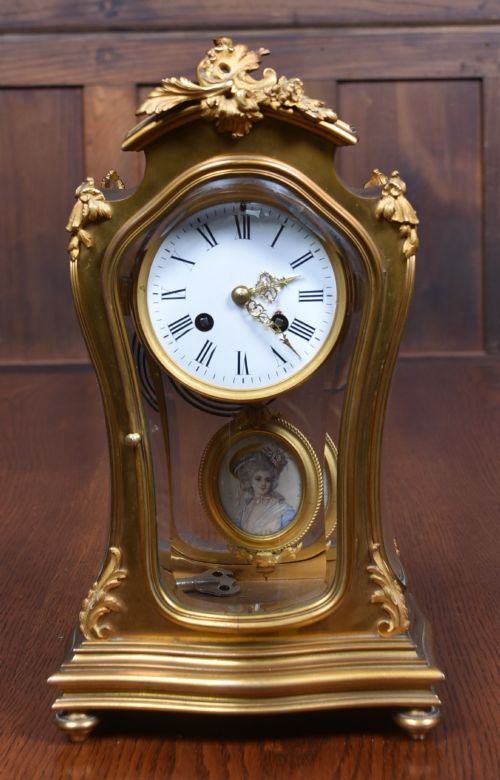


Signed French Glass
Signed french glass pieces span decorative vases, clocks and bowls from the late nineteenth century through the Art Deco era, offering collectors authentic maker signatures and distinctive craftsmanship.
Signed French Glass
Signed french glass encompasses decorative objects carrying maker signatures, most frequently found in forms such as opalescent glass bowls, crystal vases and figural clocks from periods including the Art Deco and Art Nouveau movements. Buyers searching for signed french glass encounter works originating from prominent twentieth-century French glassmakers alongside nineteenth-century pieces incorporating signed glass and enamel elements.
The selection ranges from large crystal vessels and opalescent cherry-pattern bowls to desk clocks and perfume bottles featuring distinct artist or factory signatures. These items reflect the shifting aesthetic movements of their production dates, moving from nineteenth-century revival styles toward sleek geometric Art Deco designs.
How they were made
Makers utilised glass-moulding and free-blowing techniques, often combining crystal and opalescent glass with metal mounts in brass, gilt bronze and ormolu. Acid-etching, grey staining and enamelling were applied to surfaces to create depth and contrast within the designs.
Signatures were typically etched, engraved or moulded directly into the glass body during production, or inscribed onto attached metal dials and plaques.
Signed French Glass Retail Price Guide 2026
Typical asking prices for signed french glass among the pieces listed under this phrase on Sellingantiques today, from the lower quarter to the upper quarter. They describe what is for sale here now, not the wider market.
Periods represented span from the nineteenth century through the nineteen-fifties, with concentrations in the nineteen-twenties and nineteen-thirties.
What varies in quality
Quality rests upon the clarity and weight of the glass, the precision of moulded details such as opalescent fruit or floral motifs, and the legibility of the signature itself. Finer examples display crisp relief work and harmonious integration between the glass body and any metal or enamel framing.
The execution of secondary elements, including decorative bronze mounts or hand-painted enamel highlights, distinguishes standard production pieces from higher-tier artistic outputs.
Daum·G Vallon·Lalique·P.M.Favre·Sabino·Legras
The Signed French Glass Glossary
- Opalescent glass
- Glass that diffuses light and exhibits milky, translucent colour variations, frequently utilised in twentieth-century decorative bowls and vases. This effect changes appearance depending on the angle of illumination.
- Art Deco
- A design style prevalent in the nineteen-twenties and nineteen-thirties characterised by geometric symmetry, stylised motifs and streamlined forms. It succeeded the more organic curves of Art Nouveau.
- Ormolu
- Gilded bronze mounts and decorative elements applied to furniture, clocks and decorative objects. The technique involves coating base metal with a layer of finely ground gold mercury amalgam.
- Enamel
- A glassy substance fused to metal surfaces through firing for decorative colour and pattern. It appears on miniature paintings, clock faces and small decorative accessories.
- Crystal
- High-clarity glass containing metal oxides that increase refractive index and weight. It provides the heavy, clear base used in significant twentieth-century vases and vessels.
Signed French Glass: Frequently Asked Questions
How do I spot a genuine signature?
Signatures on these pieces appear as acid-etched marks, engraved lettering or moulded reliefs directly within the glass surface, corresponding to the production methods of the period.
Compare the lettering style and placement against documented examples from the specific maker to verify authenticity.
What periods do these pieces come from?
The inventory spans the nineteenth century through the Art Deco movement of the nineteen-thirties, with particular representation from nineteen-hundred to nineteen-thirty.
Styles shift from nineteenth-century revival designs through Art Nouveau curves to geometric Art Deco forms.
How should I clean opalescent glass?
Clean opalescent glass gently using lukewarm water and mild soap with a soft cloth to avoid scratching the surface or damaging delicate moulded details.
Avoid abrasive cleansers and submerge metal-mounted items with caution to protect subsidiary materials.
Are all signed pieces made entirely of glass?
Many objects combine glass with other materials such as brass, gilt bronze, marble and wood, particularly in clocks, mirrors and display pieces.
The signature itself may occasionally appear on a metal dial, enamel miniature or frame rather than the glass body.