
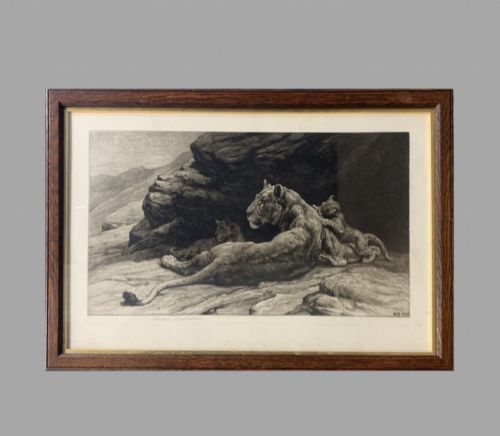


Signed Etching Print
A signed etching print carries the hand of the artist straight onto the paper, offering a direct link to early twentieth-century printmaking.
Signed Etching Print
A signed etching print combines drawn line and printed impression, emerging mostly from the Victorian era through to the mid-twentieth century. These works capture subjects ranging from river reaches and architectural views to wildlife and figures.
Most examples found here date from the early decades of the twentieth century, reflecting Edwardian and Art Deco tastes. Makers often produced limited editions, signing their proofs in pencil beneath the plate mark.
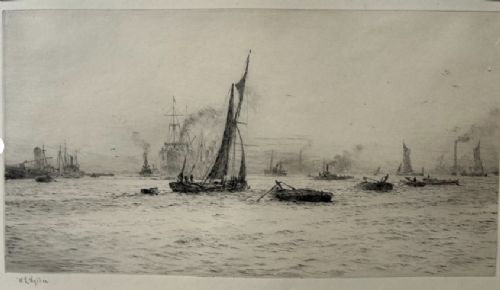
The selection ranges from traditional British maritime scenes to continental modernism and animal studies. Each piece preserves the distinct character of the copper or zinc plate from which it was pulled.
How they were made
Makers prepared metal plates by covering them with a protective ground, through which they drew their designs with a fine needle. Acid then bit the exposed lines into the metal, creating the troughs that held the ink during the printing process.
Printers transferred the inked image onto heavy paper or delicate vellum using a rolling press under considerable pressure. Many plates received added touches of drypoint or aquatint to build tone, depth, and shadow.
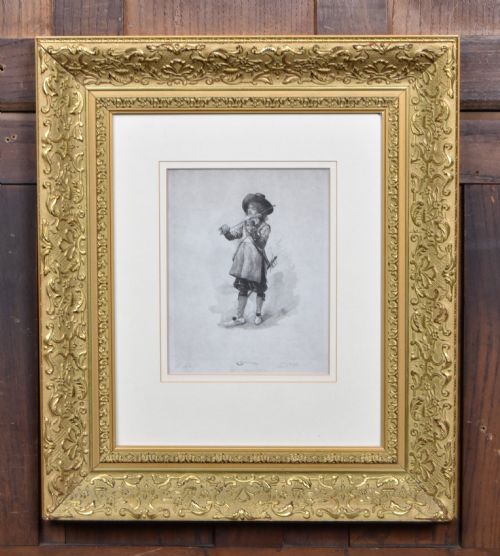
Framing often involved glass and wood, sometimes enhanced with gilt or gold leaf to set off the monochrome or subtle colour of the impression.
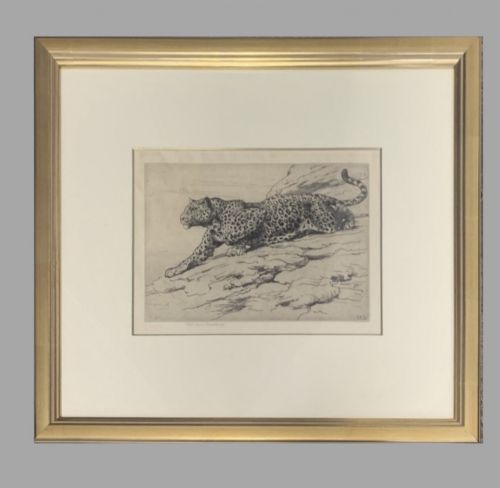
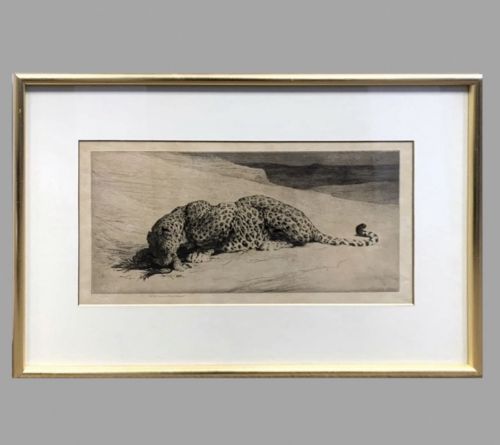
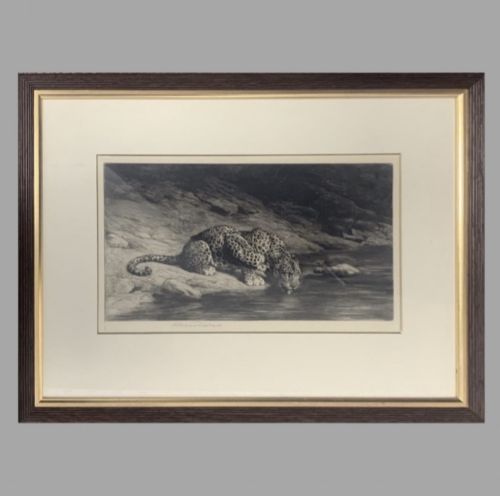
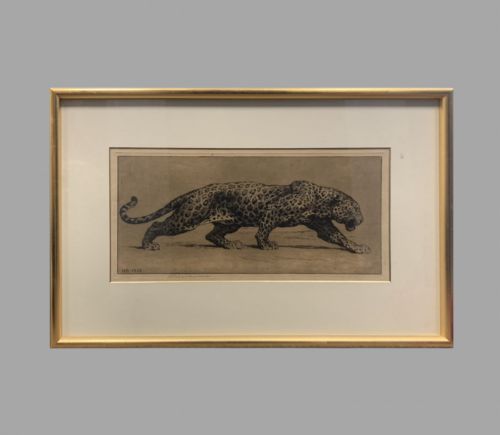
Big cats feature often, with Herbert Dicksee capturing leopards resting on hillsides and wandering through jungles.
What varies in quality
Quality rests in the crispness of the plate mark and the clarity of the inked line. Strong impressions retain deep blacks and delicate hatching without blurring.
The presence of an authentic pencil signature and a stated limited edition status elevates the standing of the work. Early artist proofs pulled directly by the hand of the creator command particular attention.
The choice of support material also plays its part, with fine vellum and high-grade paper preserving the subtleties of the original etching far better than lesser sheets.
William Lionel Wyllie·Herbert Dicksee·Anne Goldthwaite·John Merrifield·Augustus Edwin John·R.P. Phillimore·Edgar J. Maybery·Louis Icart·Albert Terry·Norman Janes·Frank Greenwood·CB Prescott·Deidre Borlase
The Signed Etching Print Glossary
- Etching
- A printmaking technique where acid bites lines into a metal plate to hold ink. This method allows for fine, fluid lines that mimic hand-drawn sketches.
- Artists Proof
- An impression printed for the artist to check the state of the plate before the main edition is run. These early proofs are typically signed in pencil.
- Drypoint
- A method of scratching directly into the metal plate with a sharp needle without using acid. This raises a burr of metal that gives the printed line a rich, velvety appearance.
- Vellum
- A fine material made from prepared calfskin used as a support for special print runs. It accepts ink with exceptional clarity and tone.
- Plate mark
- The indentation left in the paper by the edges of the metal plate under the pressure of the printing press. Its presence confirms a genuine intaglio print.
Signed Etching Print: Frequently Asked Questions
What is a signed etching print?
A signed etching print is a work of art pulled from an etched metal plate and autographed by the artist in pencil. These pieces represent a direct collaboration between the draughtsman and the printing press.
Collectors prize them for the individuality of each impression and the personal validation of the maker's signature beneath the image.
How should I frame an etching?
Etchings require framing behind glass with acid-free mounts to protect the paper and ink from light and moisture damage. Keeping the paper away from direct contact with the glass preserves the delicate surface.
Proper conservation framing ensures that both the paper support and any handwritten pencil signatures remain stable for decades.
How do I spot a limited edition?
Limited editions usually display a fraction written in pencil near the lower margin, such as thirty out of one hundred. This numbering indicates the total number of prints authorised by the maker.
Artist proofs appear alongside these editions, marked as such to denote impressions reserved outside the standard run.
Are all etchings black and white?
While most traditional etchings rely on black ink on white or cream paper, some incorporate subtle hand-colouring or aquatint tones. Artists like those working in later decades explored coloured inks to shift the mood of the print.
Monochrome remains the dominant mode, relying on line density rather than hue to create shadow and light.