




Signed Art Pottery
Signed art pottery brings together individual studio creation and maker marks, offering distinct ceramic forms from the nineteenth and twentieth centuries.
Signed Art Pottery
Signed art pottery comprises decorative bowls, vases, plaques, and sculptures carrying the personal mark or signature of the maker. These pieces reflect individual studio production rather than anonymous factory output.
The selection ranges widely across stylistic movements, incorporating Japanese Meiji period ceramics alongside British Arts and Crafts, Art Nouveau, and Art Deco works. European earthenware and porcelain from the nineteenth and twentieth centuries also appear frequently.
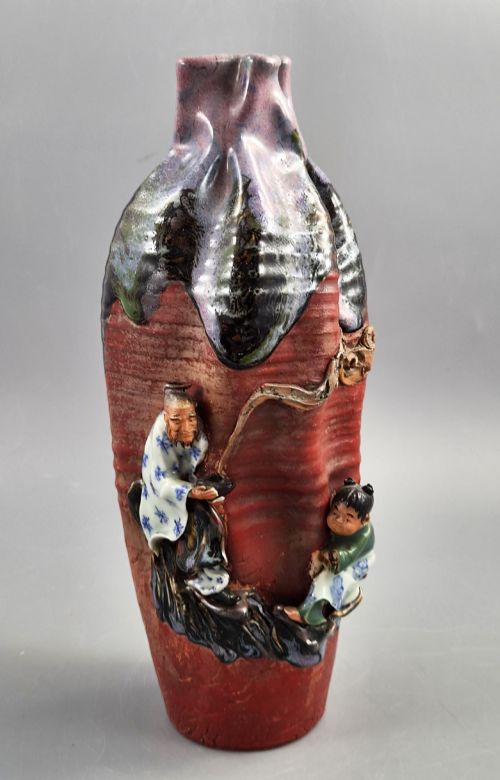
Buyers encounter distinct regional traditions, from Kyoto Satsuma bowls and Japanese Sumida Gawa wares to Staffordshire tubelined chargers and French terracotta busts.
Materials and construction methods
Potters utilised earthenware, terracotta, porcelain, and fine bone china as the primary body materials, shaping them into vases, plaques, and sculptural forms. Glazes, enamel, and cold paint provide the surface colour and finish.
Techniques span handpainting, tubelined designs, impasto floral application, and elaborate glaze effects such as lavender flambé. Makers signed their work directly into the damp clay or painted signatures onto the glazed base.
Signed Art Pottery Retail Price Guide 2026
Typical asking prices for signed art pottery among the pieces listed under this phrase on Sellingantiques today, from the lower quarter to the upper quarter. They describe what is for sale here now, not the wider market.
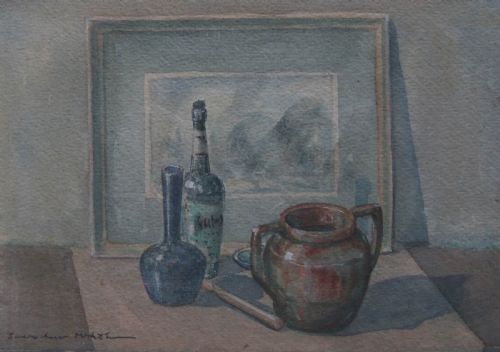
Form types recorded across the inventory include vases, decorative bowls, chargers, sculptures, wall art, and fine art watercolours.
Distinctions in quality
Quality rests upon the crispness of the modelled form and the control shown in handpainted or tubelined decoration. Pieces with balanced compositions and clear, deliberate brushwork stand apart from simpler commercial outputs.
The clarity and depth of the glaze application also define the better examples, where specialist finishes like flambé or cobalt blue and gilt decoration remain uniform and secure across the ceramic body.
William Moorcroft·Charlotte Rhead·Frederick H Rhead·William Yale·C Ravier
The Signed Art Pottery Glossary
- Tubelined
- A decorative ceramic technique where liquid clay is squeezed through a nozzle onto the body to form raised outlines before colouring. This method creates defined borders for coloured enamels.
- Flambé
- A variegated, unpredictable glaze effect achieved by high-temperature reduction firing in a kiln. It produces rich, streaked colour transformations.
- Impasto
- Paint or slip applied thickly to a surface, standing out in relief from the background. It adds tactile depth and texture to floral or figurative designs.
- Satsuma
- A type of Japanese earthenware originating from Satsuma Province, traditionally characterised by an ivory crackle-glaze and elaborate polychrome and gilt decoration.
- Suiban
- A shallow Japanese basin or tray traditionally used for flower arrangement or as a brush washer. These ceramic vessels often feature sculptural elements.
Signed Art Pottery: Frequently Asked Questions
How do I identify a genuine signature?
Signatures on art pottery appear either incised directly into the wet clay before firing or painted on the base in enamel or pigment. Maker marks often include initials, full names, or factory ciphers alongside pattern numbers.
Comparing the handwriting and positioning of the signature against known examples from the same potter helps confirm authenticity.
What periods do these pieces cover?
The available pieces span from the nineteenth century through the Edwardian era into the Art Deco and mid-twentieth-century periods. Styles range from Victorian plaques to Japanese Meiji wares and 1930s European modernism.
Each period brings distinct stylistic traits, from the heavy floral impasto of the late Victorian era to the geometric lines of Art Deco.
How were decorative plaques used?
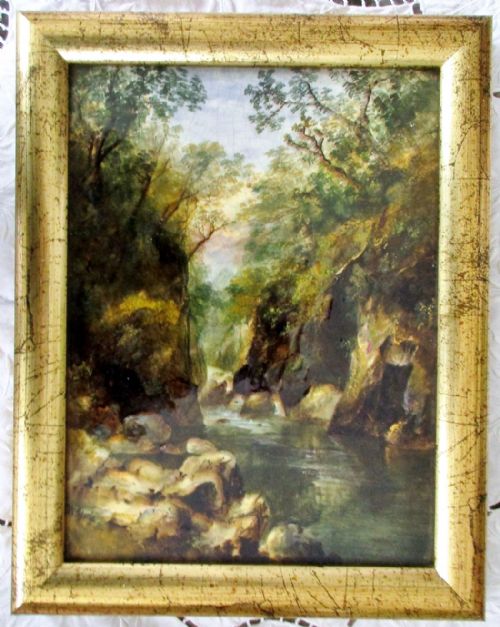
Ceramic plaques served as fine art display items intended to be hung on walls or framed, much like canvas paintings. Factories such as Copeland and Italian workshops produced these detailed pictorial scenes.
Painters signed their work directly onto the ceramic surface, recording landscapes or figurative subjects with detailed brushwork.
What is the difference between earthenware and porcelain?
Earthenware is a porous, opaque ceramic body fired at lower temperatures, often used for terracotta busts, majolica, and slipware. Porcelain and fine bone china use refined clays fired at much higher temperatures to achieve a vitrified, non-porous finish.
Both materials support painted and glazed decoration, but porcelain offers a finer, more resonant white body.
How should I display art pottery at home?
Display these pieces on stable surfaces away from direct foot traffic, particularly for sculptural items with delicate projections like climbing figures or raised handles. Vases and decorative bowls function well on mantelpieces or cabinets where adequate lighting highlights the glaze.
Wall plaques require secure fixings suited to the weight of the ceramic body.