



Shop Counter Drawers
Shop counter drawers are utilitarian storage units salvaged from commercial interiors, prized by collectors for their honest industrial character and robust everyday practicality.
Shop Counter Drawers
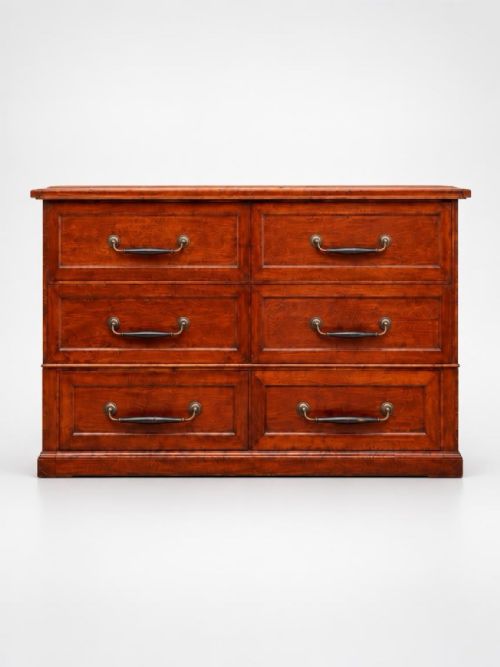
Shop counter drawers encompass multi-drawer banks, haberdashery cabinets, and drapers tables designed for commercial trade during the nineteenth and early twentieth centuries. These pieces originate from domestic and continental European workshops, spanning Victorian, Edwardian, and Art Deco periods.
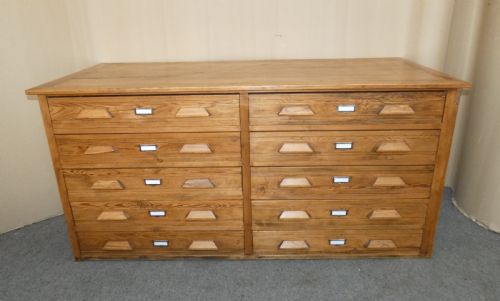
The most common formats encountered here are pine shop fittings with numerous small compartments, alongside oak and mahogany haberdashery counters. Buyers select these items to anchor modern kitchens, workspaces, or living areas with genuine historical utility.
Forms range from counter-top display units to large floor-standing banks of fifty drawers, reflecting the varied merchandise they once organised, from sewing cottons to butcher goods.
How they were made
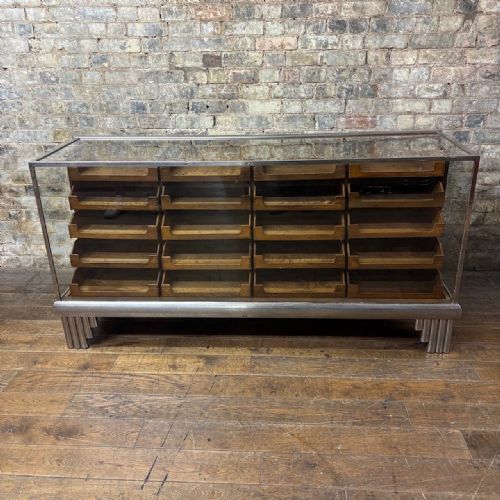
Construction relies heavily on durable timbers such as pine, oak, and mahogany, chosen for their ability to withstand heavy daily commercial use. Workshops integrated brass pulls, iron brackets, and glass viewing panels to facilitate efficient browsing and stock retrieval.
Surfaces frequently display original paint finishes in white, cream, or green, alongside polished hardwoods and bleached oak. Metal elements like chrome appear on later twentieth-century pieces, marking a shift toward industrial utility.
Shop Counter Drawers Retail Price Guide 2026
Typical asking prices for shop counter drawers among the pieces listed under this phrase on Sellingantiques today, from the lower quarter to the upper quarter. They describe what is for sale here now, not the wider market.
One persistent multi-drawer pine fitting holds fifty individual compartments, secretly dreaming of a Victorian haberdasher's entire ribbon collection.
What varies in quality
Quality rests on the integrity of the original timber and the retention of authentic factory or shop hardware, such as brass label holders and turned pulls. Pieces with undisturbed original painted finishes command attention over stripped surfaces.
Proportion and scale dictate desirability, with larger multi-drawer banks and specialised haberdashery display units demonstrating superior architectural presence compared to simpler domestic conversions.
Dudley & Co·G H Gledhill Halifax·Chadwick’s·Trussant & Cie
The Shop Counter Drawers Glossary
- Haberdashery cabinet
- A specialised glazed or multi-drawer display unit originally utilised in shops selling sewing materials and small textiles. These pieces are particularly sought after for modern home organisation.
- Bank of drawers
- A large assembly of numerous small drawers housed within a single heavy frame. This format was essential for sorting small inventory in nineteenth-century retail environments.
- Shop fitting
- Custom furniture and fixtures built specifically for commercial interiors rather than domestic spaces. They are characterised by robust construction and utilitarian detailing.
- Drapers table
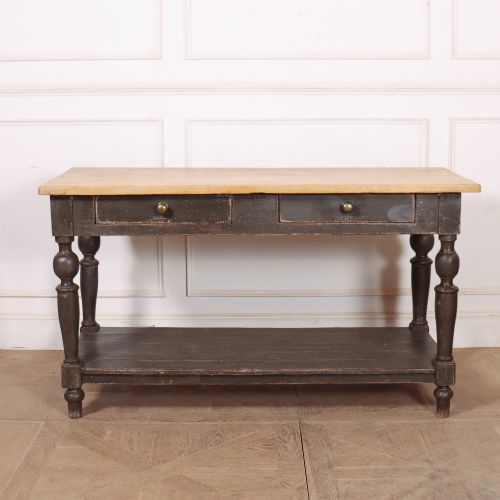
- A long wooden table or low counter utilised in fabric and clothing shops for measuring and displaying cloth. Examples frequently incorporate lower shelving or banks of small drawers.
- Till
- A secure cash box or counter-top housing for money handling, often featuring integrated mechanical elements and maker plaques. These items represent specialised commercial metalwork.
Shop Counter Drawers: Frequently Asked Questions
How were shop counter drawers used?
These units served merchants and shopkeepers as functional storage and display counters for small merchandise, ribbons, and fabrics. Multiple small drawers kept inventory organised and accessible during busy retail transactions.
Over time, many of these fixtures transitioned from working commercial environments into domestic interiors, where their compartmentalised design proved ideal for modern collections.
Are these pieces from period shops?
The selections derive from late nineteenth and early twentieth-century retail spaces, spanning Victorian, Edwardian, and Art Deco eras. They originate from British, French, and Hungarian commercial workshops.
Makers such as Dudley & Co and G H Gledhill Halifax illustrate the professional manufacturing standards of the period.
How do I integrate them at home?
Shop counter drawers suit kitchens, studios, and living spaces as islands, sideboards, or console tables. Their numerous compartments provide practical storage for everyday items and collections.
Placing a large bank of drawers against a plain wall allows the original painted pine or polished mahogany to stand out as a focal point.
How do I distinguish Victorian from Art Deco examples?
Victorian pieces often feature painted pine, heavy brass handles, and traditional panel work typical of nineteenth-century shop fittings. They lean towards vernacular utility and classic proportions.
Art Deco items introduce streamlined profiles, oak and chrome combinations, and metal accents that reflect twentieth-century commercial modernisation.