



Sheraton Revival Armoire
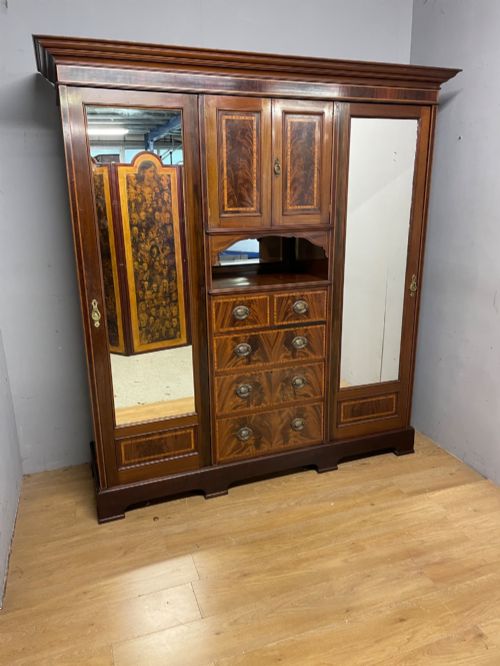
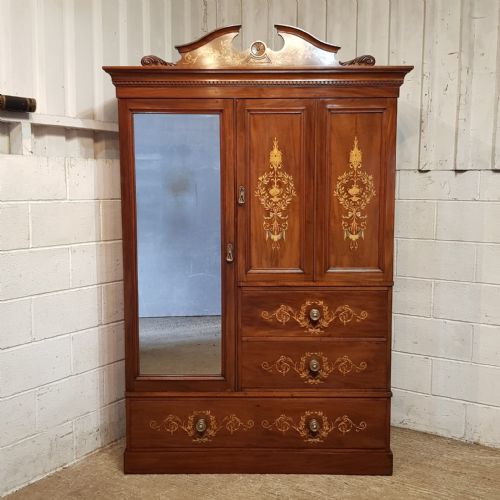
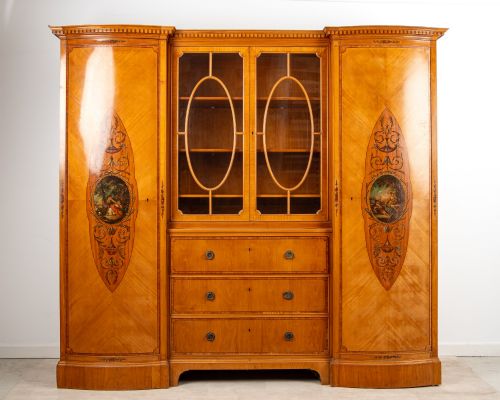
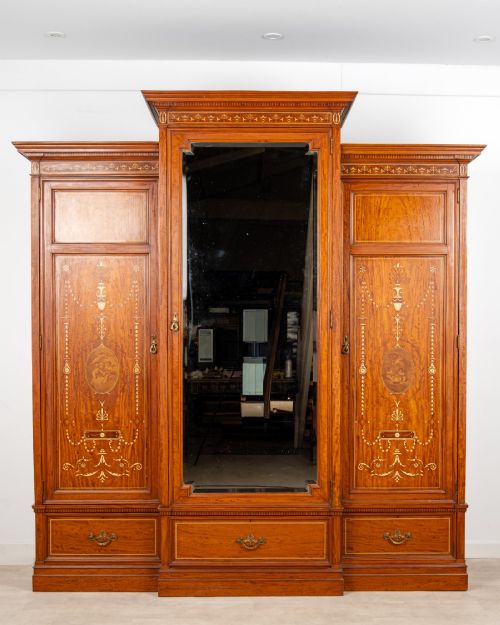
These Sheraton Revival armoire examples bring refined late nineteenth and early twentieth century neoclassical grace into the bedroom.
Sheraton Revival Armoire
A Sheraton Revival armoire is a large storage piece built during the late Victorian, Edwardian, and nineteen hundreds periods, taking inspiration from eighteenth century neoclassical design. When you search for a sheraton revival armoire, you encounter wardrobes and compactum cabinets that range from double door formats to large triple section and breakfront layouts.
Makers such as Maples and Co contributed to this repertoire, producing substantial bedroom suites and multi-section storage units. The overarching aesthetic relies on balanced proportions, symmetrical paneling, and delicate decorative banding.
Materials and construction
Makers constructed these wardrobes using primary timbers of mahogany and satinwood, enhanced by contrasting inlay work in boxwood and rosewood. Structural hardware incorporated cast brass for handles, hinges, and hanging fittings.
Surface decoration frequently relied on fine marquetry, stringing, and hand-painted panels inserted into timber door frames. Glazed sections utilised glass panes set within slender wooden muntins to form bookcase or display compartments.
Sheraton Revival Armoire Retail Price Guide 2026
Typical asking prices for sheraton revival armoire among the pieces listed under this phrase on Sellingantiques today, from the lower quarter to the upper quarter. They describe what is for sale here now, not the wider market.
Several pieces include hand-painted panels, proving that nineteenth century cabinet makers occasionally moonlighted as gallery artists.
Assessing quality in these pieces
Quality rests on the crispness of the inlaid stringing and the depth of the timber selection, such as figured mahogany or smooth satinwood. Superior examples demonstrate meticulous hand-painting and balanced proportions across multi-door breakfront or compactum layouts.
Construction integrity distinguishes standard production from finer workshop outputs, visible in the snug fit of panel doors and the integration of large mirrored glass. Pieces bearing documented maker attribution command particular attention for their verified workshop origin.
Maples and Co
The Sheraton Revival Armoire Glossary
- Armoire
- A large freestanding cupboard or wardrobe used primarily for hanging and storing garments. These pieces often feature double or triple doors enclosing hanging space and internal drawers.
- Compactum
- A multi-functional wardrobe combining hanging space, shelves, and internal drawers within a single unified cabinet. This form maximises bedroom storage efficiency.
- Inlay
- A decorative technique where contrasting strips of timber such as boxwood or rosewood are inserted into recesses in the primary wood surface. It creates geometric borders and classical motifs.
- Marquetry
- Elaborate decorative veneer work arranged in pictorial or symmetrical patterns using various coloured woods. It defines the surface ornamentation of finer neoclassical revival furniture.
- Breakfront
- A large piece of furniture whose central section projects forward from the flanking outer sections. This architectural form adds visual depth and grandeur to large wardrobes.
Sheraton Revival Armoire: Frequently Asked Questions
What is a sheraton revival armoire?
A sheraton revival armoire is a large late nineteenth or early twentieth century wardrobe or compactum inspired by the neoclassical furniture designs of eighteenth century designer Thomas Sheraton.
These pieces typically feature symmetrical facades, classical stringing, and refined timber veneers such as mahogany or satinwood.
How were these large wardrobes used?
These pieces served as primary bedroom furniture for storing garments, linens, and personal items before fitted closets became standard in homes.
They provided dedicated hanging space behind large doors, alongside internal shelving, sliding trays, and fitted drawers.
How do I date an Edwardian wardrobe?
Dating relies on examining construction methods, timber choices, and decorative motifs characteristic of the period between eighteen eighty and nineteen hundred. Late Victorian and Edwardian pieces often combine traditional mahogany or satinwood carcasses with machine-planed internal components and cast brass hardware.
How do I style a large armoire today?
Position the piece against a substantial bedroom wall where its height and width can serve as a focal point without crowding the room. Allow the natural grain of the mahogany or satinwood and the delicate inlaid details to stand out against neutral wall colours.