


Sheraton Hall Table
A sheraton hall table brings refined neoclassical lines to an entryway, offering a practical surface with crisp inlay and tapered legs.
Sheraton Hall Table
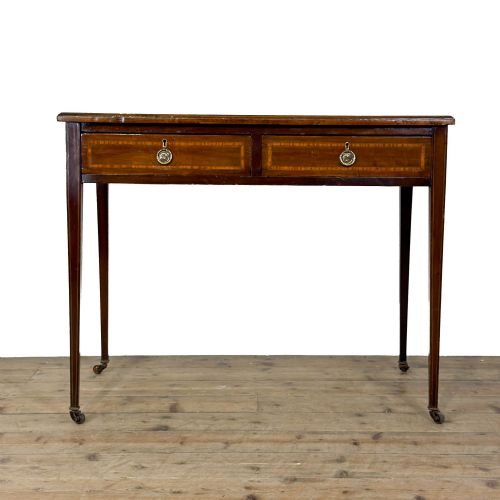
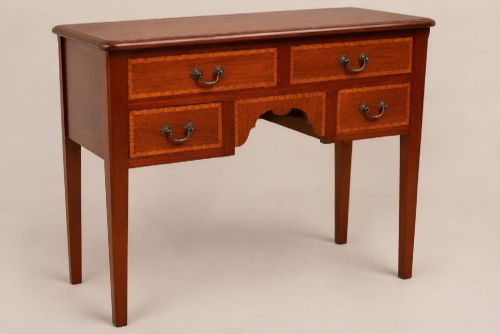
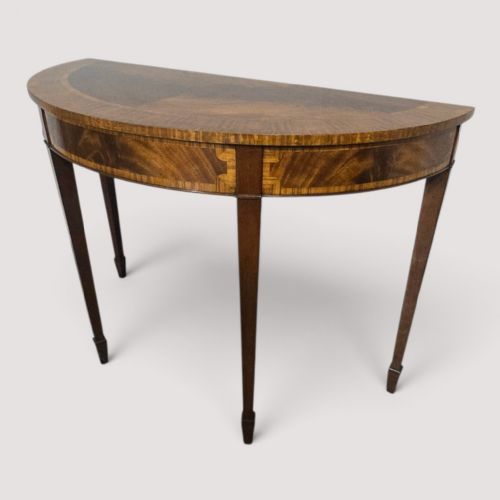
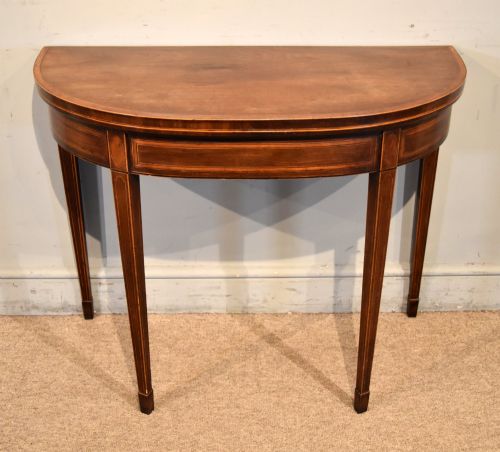
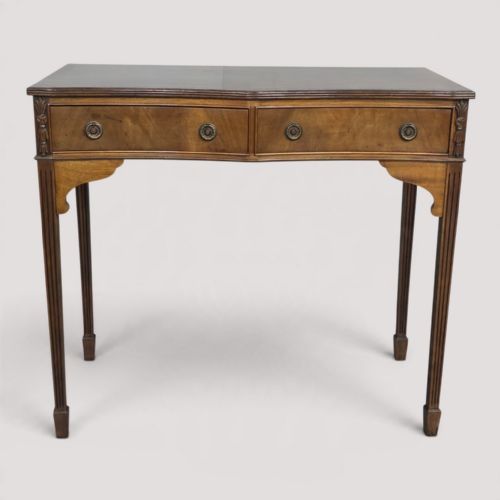
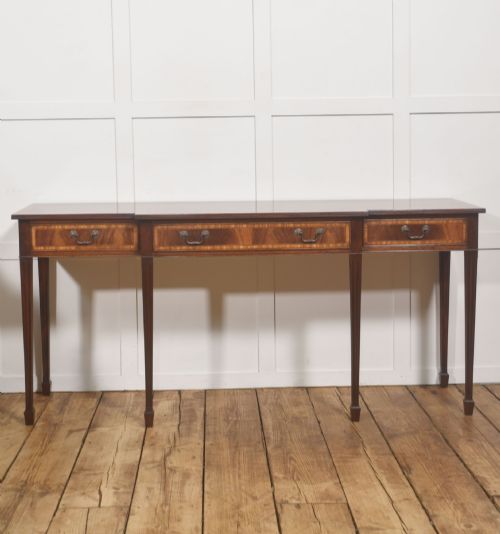
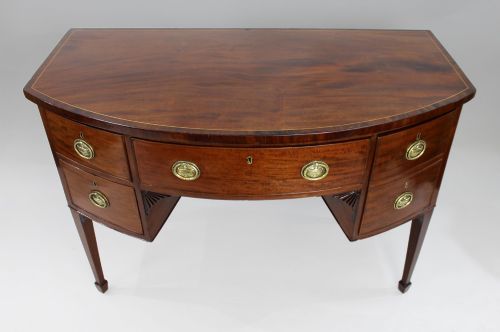
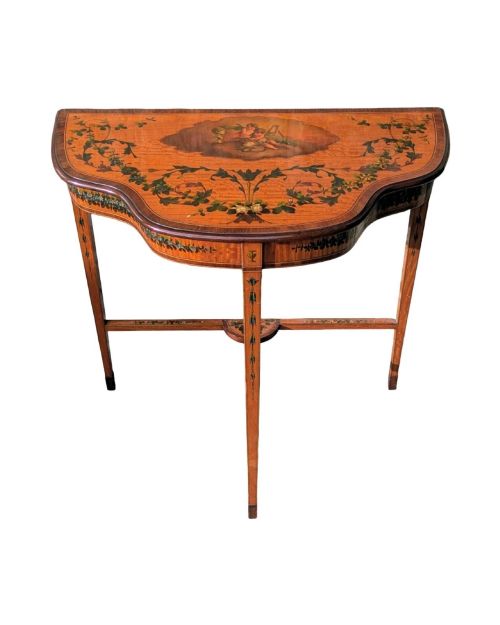
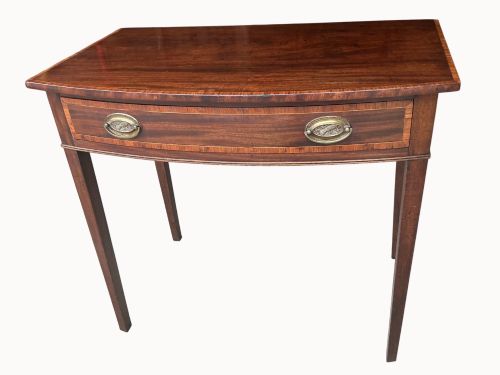
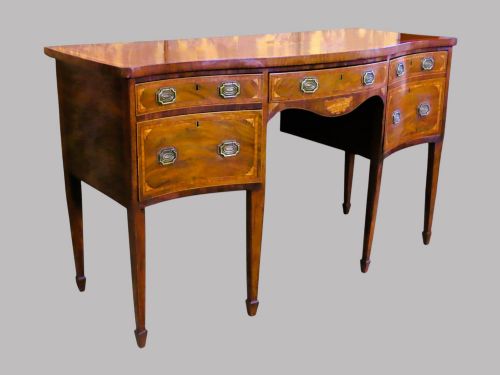
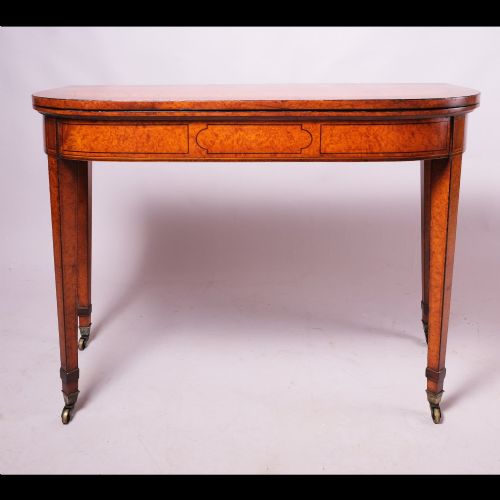
When you search for a sheraton hall table, you encounter elegant side and console forms rooted in the late eighteenth and nineteenth centuries, alongside later revival pieces. These items often adopt demi-lune, bow-fronted or rectangular shapes designed to sit flat against a wall in a hallway or landing.
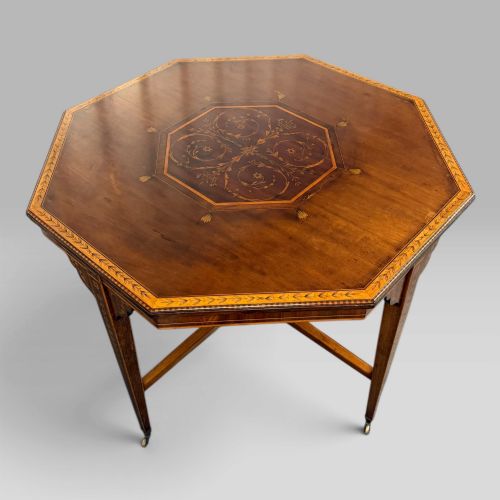
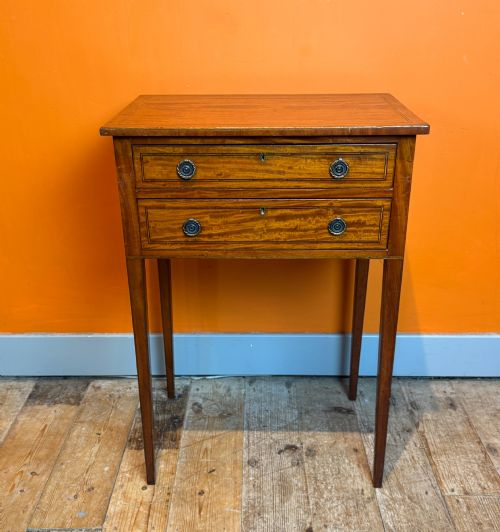
The pieces on this page span Georgian originals through to Edwardian and later Sheraton Revival interpretations. The most common iteration you will meet is the mahogany or satinwood side table, frequently enriched with boxwood stringing or delicate marquetry.
Materials and construction
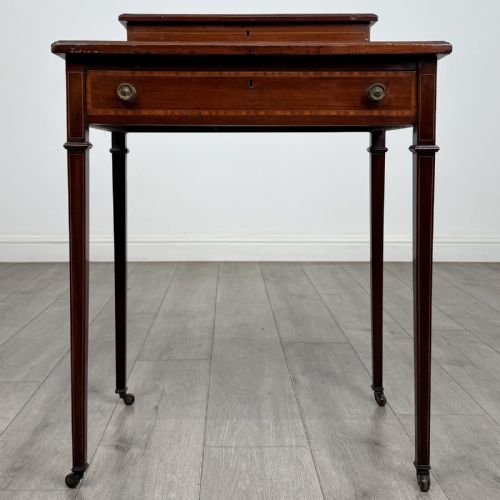
Makers built these tables primarily using mahogany and satinwood timbers, frequently incorporating rosewood, amboyna and boxwood for contrast and detail. Inlaid veneers, boxwood stringing and polychrome painted decoration define the surface ornament across both Georgian originals and later revival pieces.
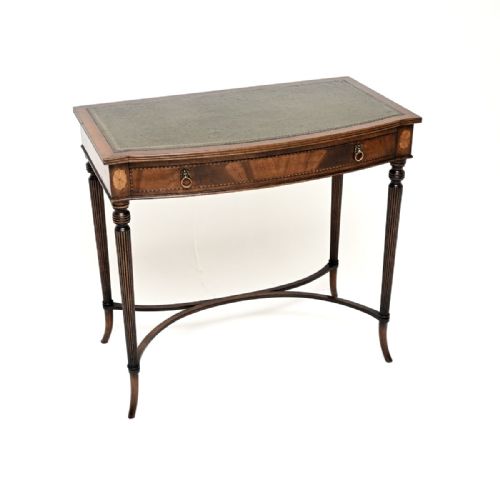
Joinery focused on stability and neat linear geometry, supporting slender tapered legs that characteristically anchor the style. Secondary timbers and brass hardware appear selectively, while leather inserts designate specific writing and desk variants.
Sheraton Hall Table Retail Price Guide 2026
Typical asking prices for sheraton hall table among the pieces listed under this phrase on Sellingantiques today, from the lower quarter to the upper quarter. They describe what is for sale here now, not the wider market.
Listings feature mahogany, satinwood and rosewood timbers paired with boxwood inlay and painted surfaces.
Assessing quality
The distinction between standard production and the finest work lies in the crispness of the inlay and the selection of figured timber. Superior examples display meticulously matched veneers, precise boxwood stringing and hand-painted motifs that retain sharp definition.
Proportion and structural restraint also dictate excellence, separating balanced tables with refined tapered legs from heavier or more utilitarian furniture. The integration of secondary woods and the subtlety of crossbanding further mark out the upper tier of these pieces.
Edwards & Roberts
The Sheraton Hall Table Glossary
- Demi-lune
- Half-moon shape. This form is common in console and side tables designed to fit snugly against a hallway wall.
- Crossbanding
- A border of veneer running perpendicular to the grain of the main surface. It creates a neat visual frame on tabletops.
- Marquetry
- Decorative patterns formed from fitted pieces of coloured wood veneer. These intricate designs often adorn satinwood panels.
- Stringing
- Thin inlay lines of contrasting timber. Boxwood stringing provides sharp linear definition around drawers and edges.
- Sheraton Revival
- A late nineteenth and early twentieth century style. Makers during this period reinterpreted original eighteenth century forms.
Sheraton Hall Table: Frequently Asked Questions
What is a sheraton hall table?
A sheraton hall table is a slender piece of furniture designed for an entryway, typically featuring straight tapered legs and refined geometric inlay.
These tables provide a narrow surface for decorative items or correspondence without obstructing movement in a hallway.
How do I date a table?
Dating relies on timber selection, construction methods and stylistic cues such as painted decoration or brass fittings. Georgian originals show period joinery, whilst Edwardian and later revival pieces often incorporate softer secondary woods.
Examining the underside and drawer linings helps distinguish eighteenth century craftsmanship from later twentieth century interpretations.
Where should I place it?
These tables suit narrow spaces such as corridors, landings and entrance halls because their shallow profiles hug the wall. Demi-lune and bow-fronted variants work particularly well in tight corners.
Pairing a console table with a matching wall mirror creates a balanced focal point near an entryway.
How do I care for satinwood?
Satinwood requires gentle dusting with a soft, dry cloth to protect its polished surface and delicate inlay work. Avoid placing the timber in direct sunlight or near heat sources to prevent fading and veneer lifting.
Applying microcrystalline wax occasionally will nourish the grain without building up a heavy residue.