

Sheraton Bureau
A sheraton bureau brings refined writing furniture into a room, combining practical storage with delicate inlaid timber work.
Sheraton Bureau
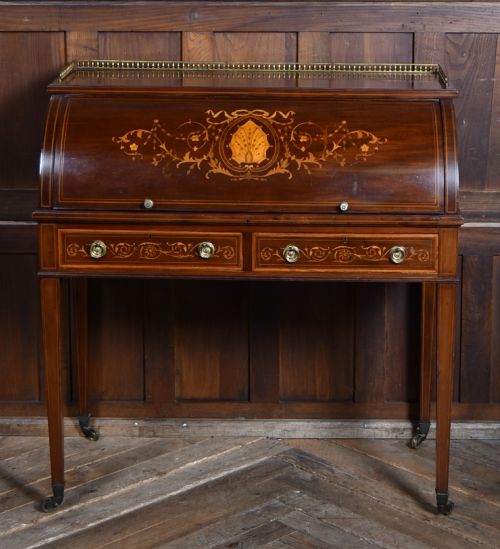
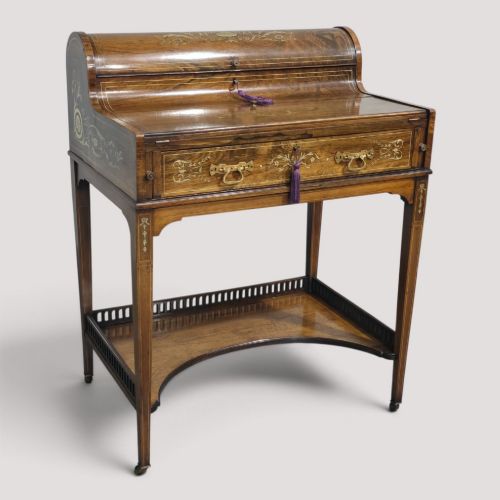
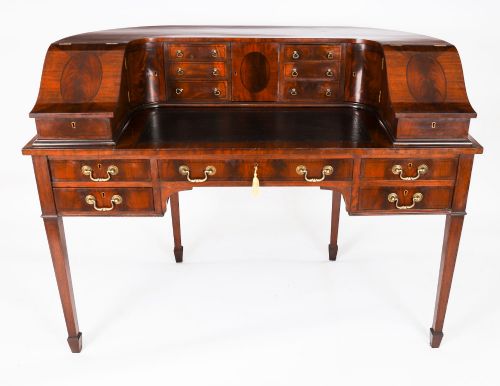
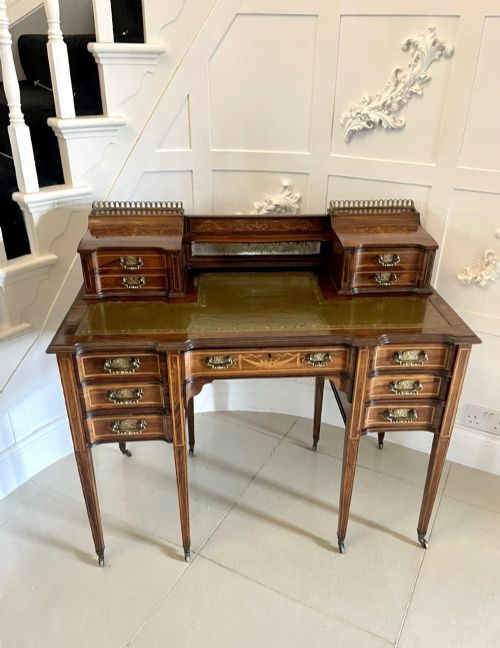
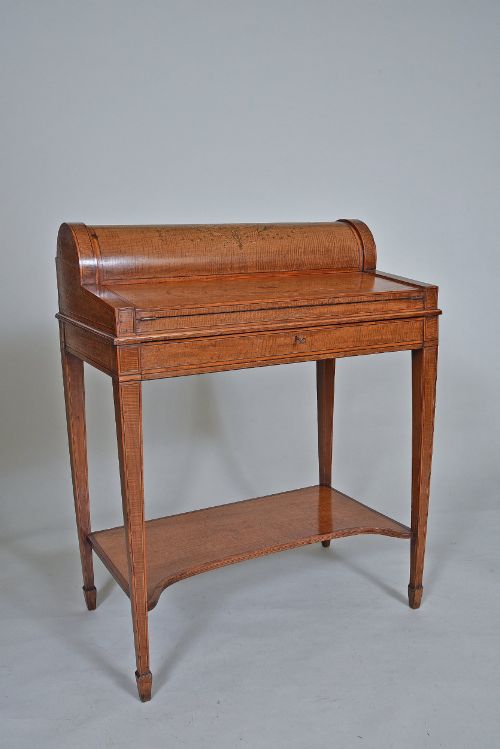
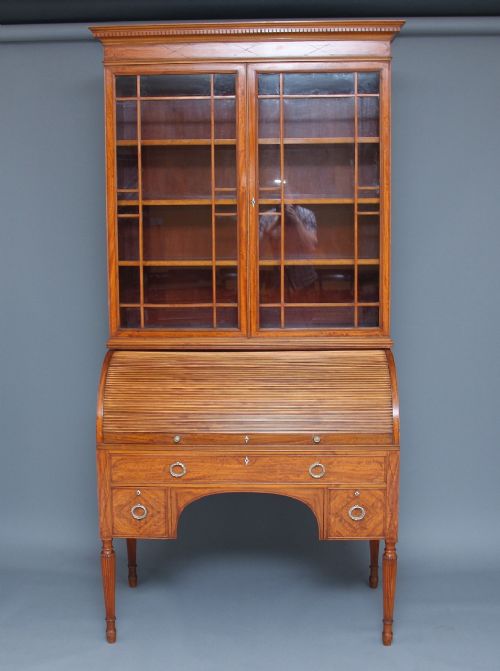
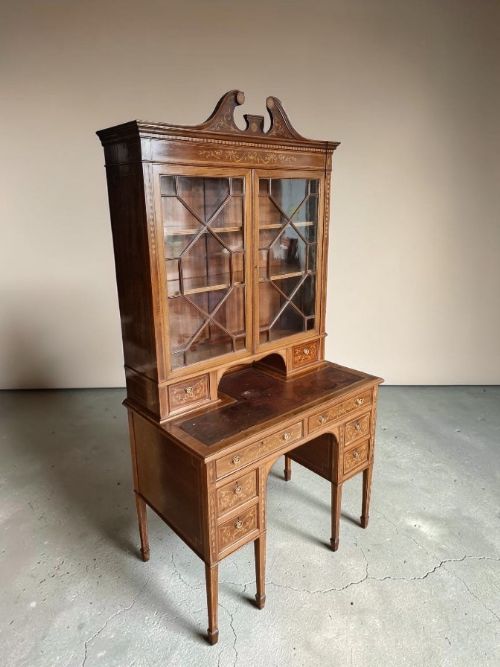
When you search for a sheraton bureau, you encounter writing furniture dating from the Georgian period through to Edwardian revivals. These pieces encompass fall-front desks, cylinder bureaux, and secretaire bookcases designed for correspondence and household administration.
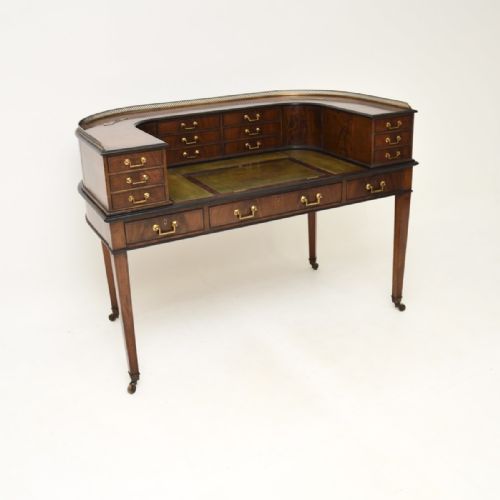
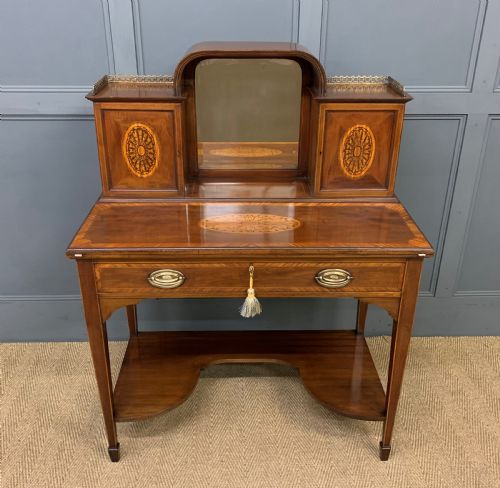
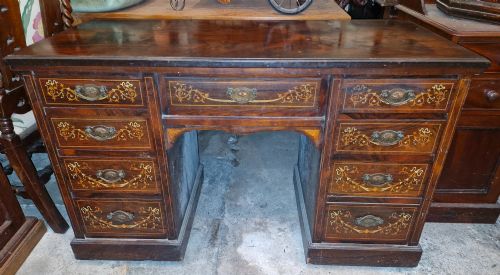
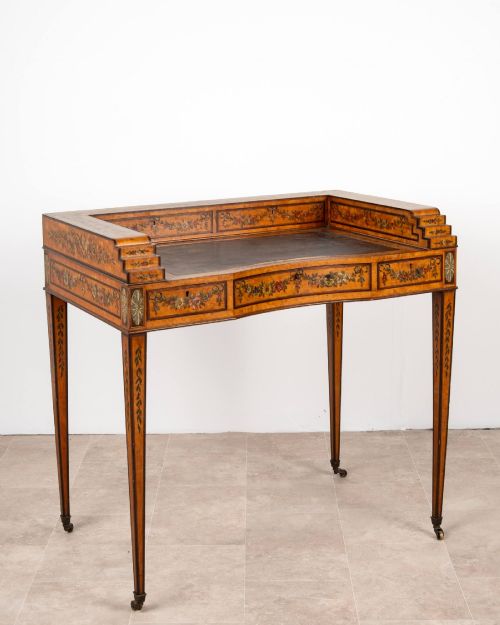
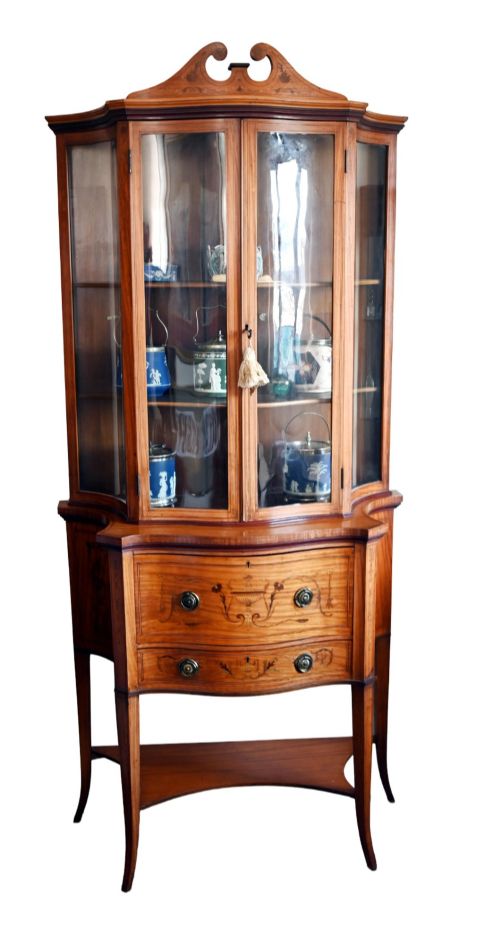
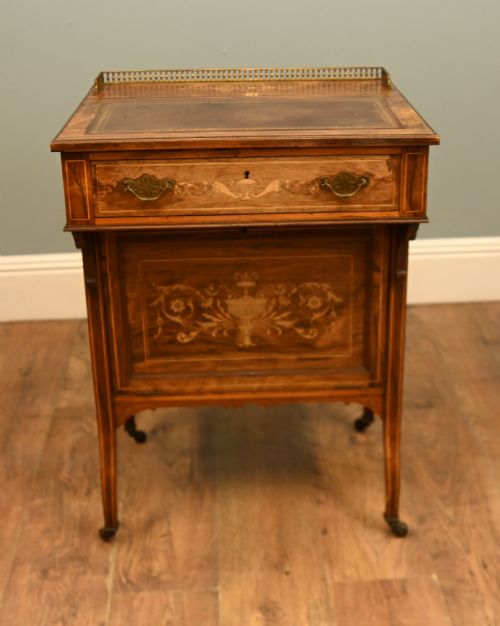
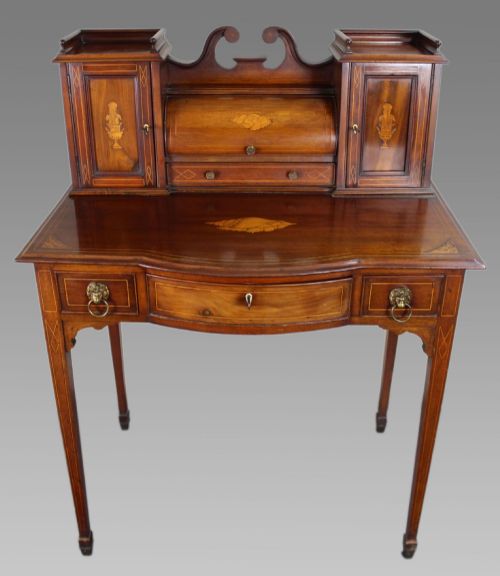
The version you are most likely to meet on this page is the Edwardian Sheraton Revival piece, constructed in mahogany or satinwood with decorative inlay. Alongside these, older Georgian originals and Victorian interpretations appear, spanning writing tables, Davenport desks, and Carlton House desks.
How they were made
Cabinet makers utilised choice hardwoods including mahogany, satinwood, and rosewood as foundational timber for these desks. Surfaces frequently received detailed ornamentation through marquetry inlay and contrasting wood veneers.
Additional materials incorporated brass handles, leather writing inserts, and occasional glass panels for bookcase doors. Hand-painted decoration appears on select Edwardian examples, applied directly to the timber surfaces.
Sheraton Bureau Retail Price Guide 2026
Typical asking prices for sheraton bureau among the pieces listed under this phrase on Sellingantiques today, from the lower quarter to the upper quarter. They describe what is for sale here now, not the wider market.
Listings span the Georgian, Victorian, and Edwardian eras, incorporating satinwood, mahogany, rosewood, and leather materials.
What varies in quality
The standard of a sheraton bureau rests upon the precision of its cabinet work and the crispness of the timber inlay. Finer examples display meticulous matching of wood grains and tightly fitted interior drawers.
Makers of distinction, such as Edwards & Roberts or Maple & Co., applied superior skill to structural joinery and decorative detailing. Lesser pieces demonstrate simpler construction and more mechanical application of surface ornament.
Edwards & Roberts·Maple & Co.
The Sheraton Bureau Glossary
- Bureau
- A writing desk featuring a sloping fall-front that opens to reveal a fitted interior of small drawers and pigeonholes.
- Satinwood
- A pale, lustrous timber imported from tropical regions, frequently utilised for fine veneers and stringing on late-period furniture.
- Marquetry
- The art of forming decorative patterns using thin slices of wood veneer applied to a structural carcase.
- Secretaire bookcase
- A tall cabinet combining a upper bookcase section with a lower writing drawer or drop-front desk compartment.
- Carlton house desk
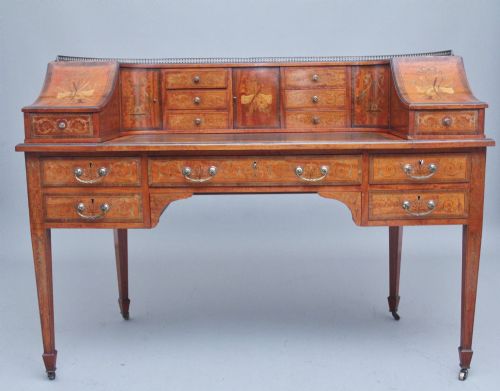
- A U-shaped writing table featuring a raised superstructure of small drawers and compartments wrapping around the rear of the top.
Sheraton Bureau: Frequently Asked Questions
How do I identify a Sheraton Revival bureau?
Sheraton Revival pieces date predominantly from the late nineteenth and early twentieth centuries, copying the lighter proportions and classical motifs of the late eighteenth century. They frequently employ satinwood veneers, painted floral details, and fine marquetry inlay on mahogany.
You can often distinguish them from original Georgian pieces by examining the secondary timbers inside the drawers and the style of the brass hardware, which reflect Victorian and Edwardian manufacturing methods rather than eighteenth-century workshop practices.
What is the difference between a bureau and a writing table?
A bureau typically incorporates a sloping lid that folds down to create a writing surface while concealing internal compartments for paperwork. This design allows correspondence to be stored securely out of sight when not in use.
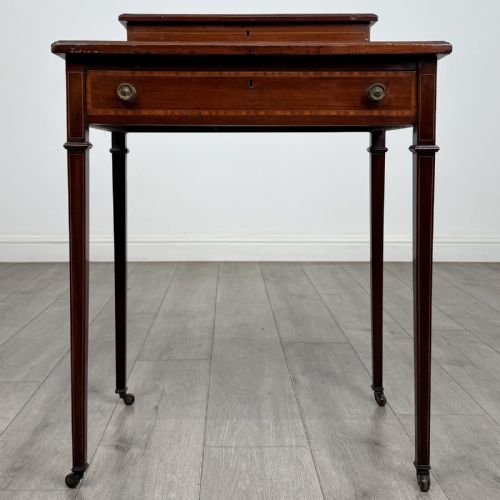
A writing table, by contrast, provides an open flat top for working, sometimes accompanied by stationary drawers beneath the surface. Variations like the Carlton House desk add a tiered superstructure of pigeonholes above the main writing area.
How should I care for satinwood veneer?
Satinwood requires protection from direct sunlight and excessive heat to prevent the delicate veneer from fading or lifting. Maintaining stable room humidity preserves both the timber and the underlying glue.
Dust the surface gently with a dry, soft cloth and avoid chemical polishes that can damage the antique finish. Occasional application of a suitable microcrystalline wax helps nourish the wood without leaving a heavy buildup.
Where were Carlton House desks used?
Carlton House desks served as elegant, freestanding pieces of correspondence furniture placed within principal reception rooms or private studies. Their curved superstructures allowed writing materials to remain organised within easy reach of the user.
Because these desks were designed to be viewed from all sides, makers ensured the back panels received the same decorative attention as the front, making them suitable for placement in the centre of a room.