

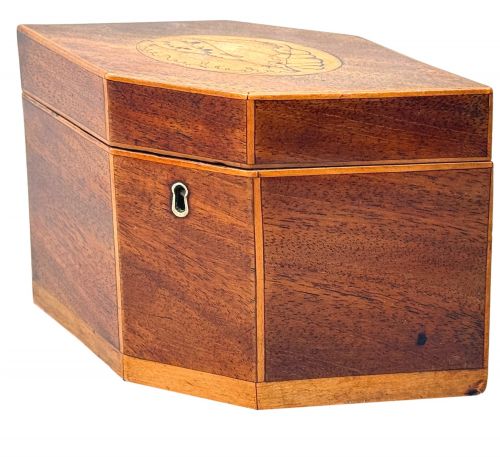


Shell Inlay Caddy
A shell inlay caddy is a timber box for precious tea leaves, prized for intricate marquetry and cabinetwork.
Shell Inlay Caddy
A shell inlay caddy is a lidded wooden receptacle designed to store dry tea leaves safely under lock and key. The listings here centre primarily on tea caddies, tea caddie boxes, and related decorative boxes from the Georgian, Regency, and Edwardian eras. These boxes frequently utilise exotic timbers such as satinwood, rosewood, and mahogany.
Beyond standard tea storage, the selection extends to occasional tables and work tables incorporating similar inlaid decoration. Makers of the period often employed contrasting woods and bone to construct decorative motifs, notably butterfly inlays. The pieces range from hexagonal forms to bow-fronted double containers designed to hold multiple varieties of tea.
Georgian and Regency examples dominate the selection, alongside occasional Victorian and Edwardian interpretations. Buyers encounter tortoiseshell surfaces and intricate wood inlay alongside plain mahogany structures. Each box reflects the domestic status of tea in historical households, where leaf storage demanded secure, ornamental cabinetry.
How they were made
Cabinetmakers constructed these boxes using solid timbers and fine veneers, laying satinwood, rosewood, and mahogany over a secondary wood base. Boxwood and bone were frequently cut into thin segments to form contrasting stringing and shell motifs. These individual elements were fitted precisely into recessed channels carved directly into the primary surface.
Tortoiseshell examples required heating and pressing thin plates of shell over a prepared wooden or metal carcase. Interior fittings such as cannisters and sugar dishes were often fashioned from matching timbers or metals, secured with brass hinges and locks. Surface finishing relied on hand-rubbed polishing techniques to highlight the grain of the wood and the iridescence of the shell.
Shell Inlay Caddy Retail Price Guide 2026
Typical asking prices for shell inlay caddy among the pieces listed under this phrase on Sellingantiques today, from the lower quarter to the upper quarter. They describe what is for sale here now, not the wider market.
Some boxes hide tiny interior compartments originally designed to keep the key to the tea store safely out of reach.
What varies in quality
Quality in a shell inlay caddy rests upon the precision of the marquetry and the choice of primary timber. Finer examples display tight, seamless joints where contrasting woods meet without visible filler. The complexity of the inlay design, such as detailed butterfly motifs rather than simple geometric banding, distinguishes superior cabinetwork.
The selection of materials dictates the standing of the piece, with figured satinwood and well-matched tortoiseshell commanding greater attention. Interior completeness, including original cann canisters and functioning brass hardware, elevates the integrity of the box. Lesser pieces exhibit simpler construction methods and plain secondary timbers with minimal decorative flourish.
The Shell Inlay Caddy Glossary
- Satinwood
- A durable timber known for its golden lustre and reflective grain. It served as a primary ground for delicate inlay work during the Georgian period.
- Tortoiseshell
- The mottled horn plate of certain turtle species used as a luxury veneer. Skilled artisans applied it over backing foils to enhance its natural depth of colour.
- Marquetry
- The art of applying thin pieces of wood, bone, or shell to a structure to form decorative patterns. Craftsmen cut these elements together to ensure tight interlocking joints.
- Cannister
- A small vessel fitted inside a tea caddy to separate different leaf varieties. These were often made of wood or metal with matching fitted lids.
- Stringing
- A narrow line of contrasting timber inlaid around the edges of a box lid or panel. This technique defined geometric borders on period cabinetwork.
Shell Inlay Caddy: Frequently Asked Questions
What were tea caddies used for?
Tea caddies served as secure storage containers for loose tea leaves when tea was an expensive and heavily taxed commodity. They kept the dry leaves fresh and protected them from moisture and theft in the Georgian household.
Most boxes featured internal lockable compartments or separate cannisters to store green and black teas under the direct control of the head of the house.
How do I date a Georgian tea caddy?
Dating relies on observing the prevailing timber choices, hardware styles, and construction methods of the era. Georgian pieces frequently use satinwood, mahogany, and hand-cut brass hinges.
Changes in furniture design from straight geometric lines to more curved, bow-fronted shapes help distinguish early eighteenth-century examples from later Regency and Victorian items.
Are tortoiseshell boxes fragile?
Tortoiseshell requires careful handling because the material can become brittle and sensitive to extreme changes in temperature and humidity. Direct sunlight can also cause the colour beneath the shell to fade over time.
Stable indoor environments without excessive moisture help preserve the integrity of the shell veneer and its underlying wooden carcase.
What is butterfly inlay?
Butterfly inlay refers to small decorative wood or bone insertions shaped like butterfly silhouettes embedded into the surface of a box. Cabinetmakers used this motif to add visual interest to satinwood and mahogany panels.
Such details are characteristic of fine decorative work found on late eighteenth-century and early nineteenth-century pieces.