


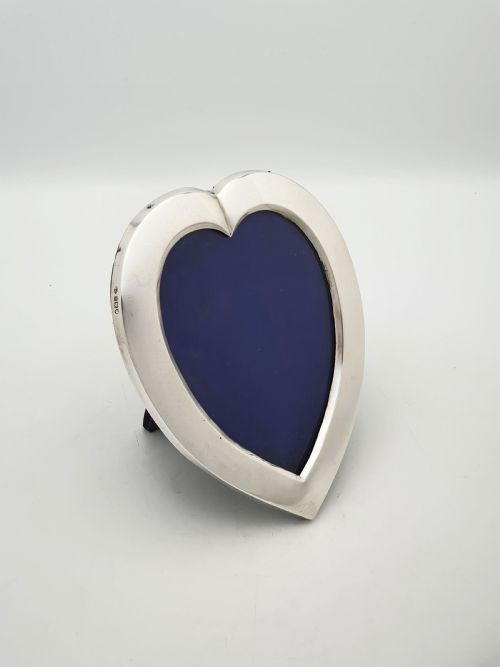


Shaped Silver Frame
A shaped silver frame brings undeniable character to a mantelpiece, holding portraits and mirrors within distinctive curves and outlines.
Shaped Silver Frame
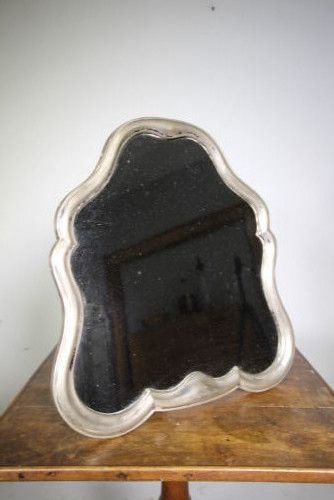
When you search for a shaped silver frame, you find desktop accessories and wall furnishings designed to hold photographs, pictures, or mirrors rather than standard rectangular rectangles. These pieces span picture frames, photo frames, mirrors, vanity mirrors, wall mirrors, and dressing table mirrors.
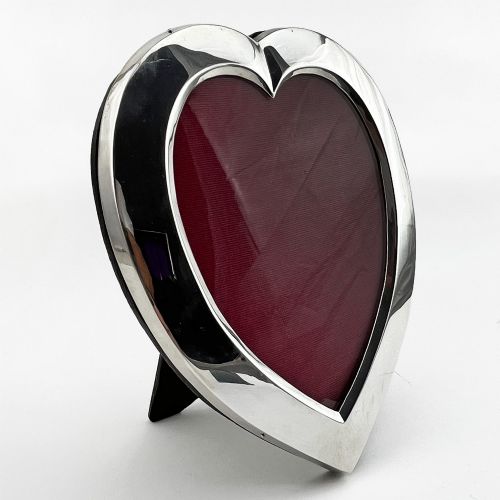
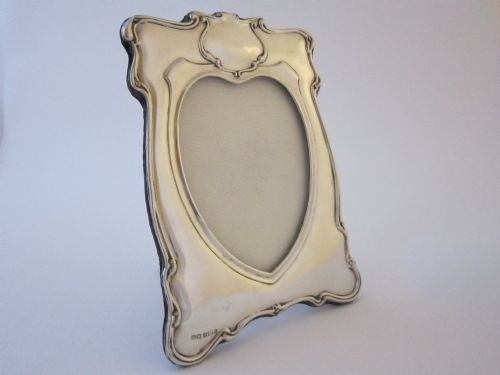
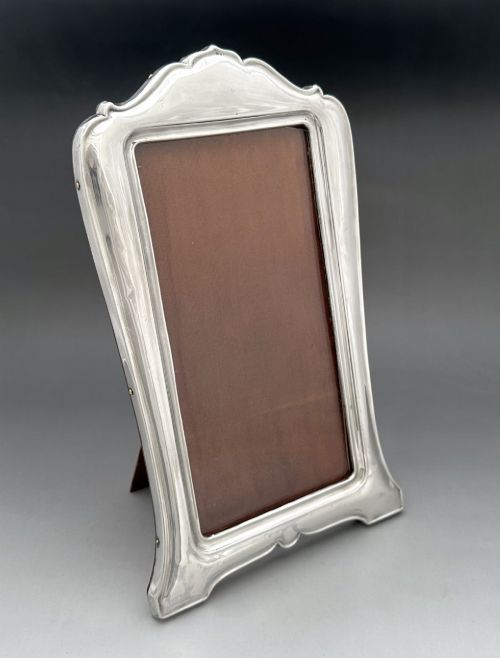
The versions you meet most often on this page date from the Victorian, Edwardian, and George V periods, stretching back through the nineteenth century. Makers shaped these objects into hearts, ovals, circles, stars, serpentine outlines, and pitch-topped arches.
Many survivors take the form of heart-shaped photo frames featuring pierced or embossed decoration alongside original wooden backs and fabric linings. Alongside smaller desk items, larger wall mirrors and dressing table mirrors emerge in carved wood and gesso with silver leaf or silver gilt finishes.
Materials and construction methods
Silversmiths formed the metal elements using sterling silver or silver gilt, hammering, pressing, and embossing sheets to create high-relief patterns, scrolls, and sinuous Art Nouveau lines. Workshops often mounted these silver fronts onto wooden backs lined with velvet, fabric, or leather.
Mirror and large frame construction also utilised carved wood and gesso, finished with original silver leaf or silver gilt to achieve reflective surfaces with shaped tops and ribbed borders.
Listings feature sterling silver and silver gilt alongside carved wood, gesso, glass, velvet, fabric, and leather backings.
What separates examples in quality
Quality rests primarily on the crispness of the chased or embossed decoration and the complexity of the outline, whether a cast heart shape or a hand-carved gesso mirror frame. Thicker gauge silver retains its structural integrity and sharp detail around pierced apertures far better than thin metal prone to distortion.
The survival of original components also dictates worth. Pieces retaining their original easel backs, leather supports, wood struts, and glass liners sit securely at the higher end of the range compared to those altered or re-backed later.
William Comyns·Syner & Beddoes·Henry Matthews·Garrard & Co
The Shaped Silver Frame Glossary
- Sterling silver
- An alloy of silver containing 92.5% silver and 7.5% other metals, usually copper. This standard composition forms the basis of British hallmarked photo frames.
- Silver gilt
- Silver that has been coated with a thin layer of gold on its surface. This technique imparts a warm, rich tone to mirrors and decorative frames.
- Gesso
- A paint mixture consisting of a neutral binder mixed with chalk, gypsum, or pigment. Craftsmen applied this substance to wood frames before gilding to build up relief details.
- Embossed decoration
- Raised designs hammered or pressed into sheet metal from the reverse side. This technique created the floral patterns and scrolls seen across Victorian and Edwardian borders.
- Easel back
- A hinged support strut attached to the rear of a frame to allow upright placement on a desk or table. These stands frequently utilise velvet or leather coverings.
Shaped Silver Frame: Frequently Asked Questions
How do I date a silver frame?
Examine the hallmarks stamped on the silver border, which typically indicate the assay office, date letter, and sterling standard. Stylistic clues such as flowing Art Nouveau linework or heavy Victorian embossing also point to specific decades.
Compare the construction of the backboard and easel strut with the main body. Original fittings match the period of the hallmarked silver front.
Were these always meant for photographs?
Many objects started life as picture frames or photo frames for cabinet cards and cartomania portraits during the nineteenth century. Others served as vanity mirrors and dressing table mirrors for daily grooming.
Manufacturers produced identical stampings and castings for both mirrors and photograph holders. Owners often repurposed smaller frames as mirrors or vice versa over time.
How should I clean silver frames?
Use a soft microfiber cloth and a mild, non-abrasive silver polish to remove tarnish from the raised decoration. Avoid rubbing vigorously over embossed details to preserve the underlying metal.
Keep polish away from the fabric, velvet, or leather backing materials. Residue can stain porous textiles and weaken old adhesives.
Why do so many have heart shapes?
Heart-shaped photo frames gained immense popularity during the late Victorian and Edwardian eras as tokens of affection and sentiment. Makers responded to high demand by producing stamped and pierced designs in various sizes.
These pieces held miniature portraits of loved ones for desks and dressing tables. The romantic outline remained a staple for silversmiths well into the twentieth century.