
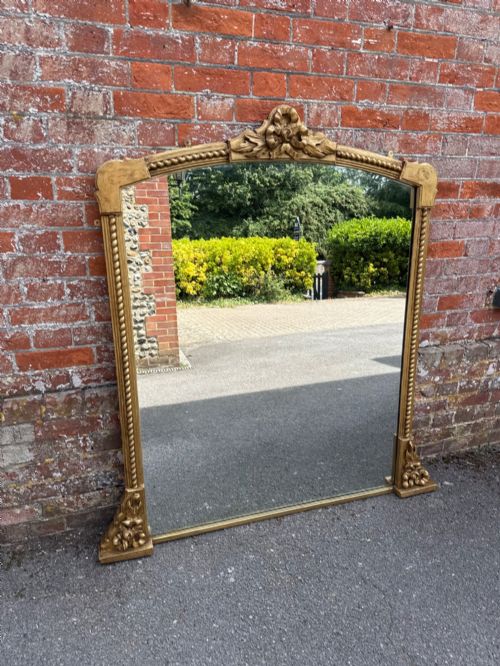
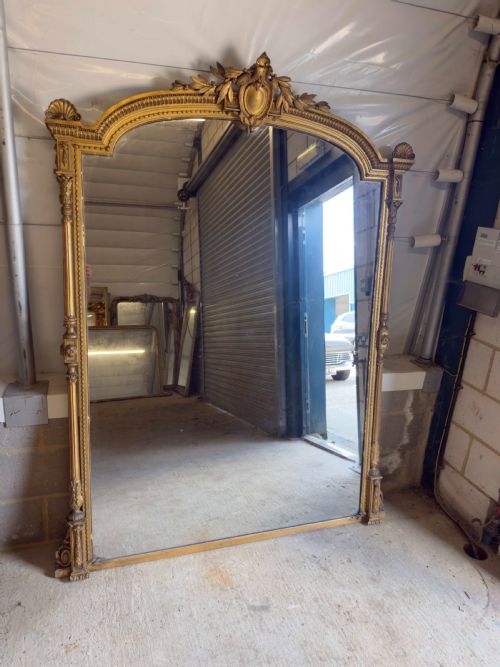
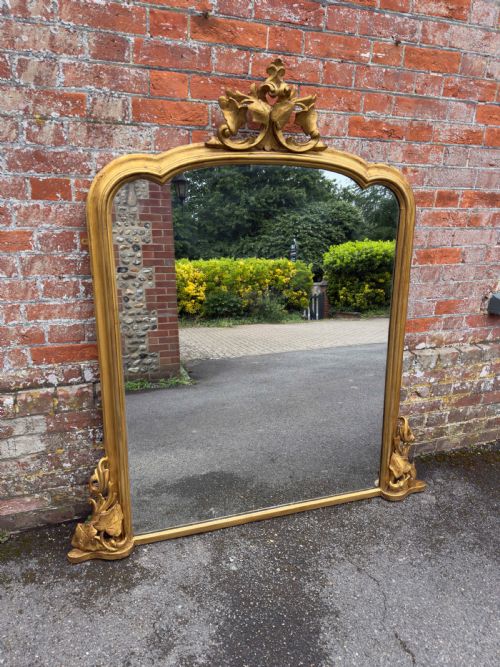
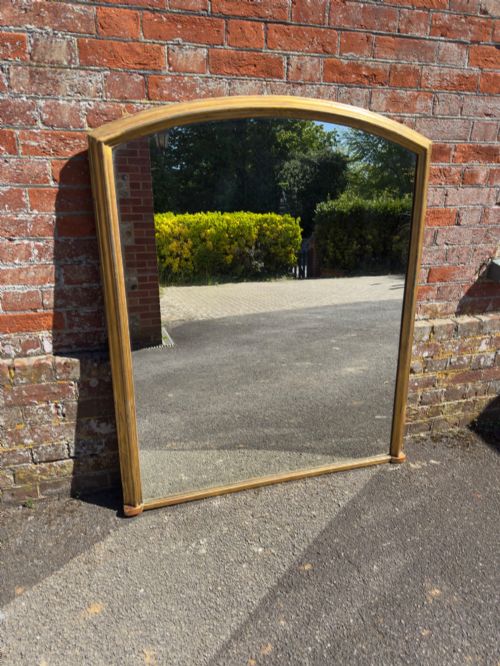


Shaped Arched Mantel Mirror
A shaped arched mantel mirror brings architectural presence to a room, offering grand proportions and nineteenth-century decorative craft.
Shaped Arched Mantel Mirror
When you search for a shaped arched mantel mirror, you encounter large nineteenth-century decorative pieces designed to sit above a fireplace or upon a principal wall. These items reflect the domestic interior tastes of the Victorian period and nineteenth-century France.
The versions most commonly met on this page span the 1860s, 1870s, and 1890s, taking the form of substantial overmantel mirrors and wall mirrors. They present distinct arched and shaped tops that soften the vertical lines of a chimney breast.
How they were made
Maker-joiners constructed the foundational carcase from timber and carved wood, building up the curved profiles and ornamental reliefs. Applied gesso provided a smooth sculptural medium over the wood to receive the final decorative finishes.
Surface decoration relied upon gold leaf, silver leaf, or paint applied directly to the prepared gesso mouldings. The primary reflective plate consists of heavy mirror glass fitted to the interior rebate.
Several mirrors retain their original silver-gilt finish, combining two precious metals to catch the candlelight of a Victorian evening.
What varies in quality
The standard of carving in the wood and gesso foundation dictates the visual depth and crispness of the ornamental scrolls. Finer examples display meticulous hand-tooling along the arched profile rather than simplified mouldings.
The integrity of the original gilt or painted surface layer determines the character of the piece over time. Original gilding and untouched silver-gilt finishes hold greater visual cohesion than later overpainting.
The Shaped Arched Mantel Mirror Glossary
- Gesso
- A plaster-based mixture applied to carved wood to create a smooth surface for gilding or painting. This material receives intricate relief work.
- Giltwood
- Timber that has been coated with gold leaf over a prepared base. This finish provides a warm reflective quality.
- Overmantel mirror
- A large mirror specifically proportioned to hang on the wall directly above a mantelpiece. These pieces often anchor the decorative scheme of a reception room.
- Rococo Revival
- A nineteenth-century design style characterised by asymmetrical scrolls, naturalistic foliage, and flamboyant curves. It draws inspiration from eighteenth-century French decoration.
Shaped Arched Mantel Mirror: Frequently Asked Questions
Where should I hang a shaped arched mantel mirror?
These large mirrors traditionally occupy the wall space directly above a fireplace mantel, where their proportions balance the hearth below.
They also function effectively on principal living room walls to draw light across the space and create a focal point.
How do I identify a Victorian mirror?
Victorian mirrors often feature heavy timber carcases covered in gesso with deep carved wooden ornament. The construction methods and stylistic markers align with nineteenth-century British cabinet making.
Evidence of age appears in the construction joints, the backing materials, and the characteristics of the mirror glass itself.
What is the difference between French and English nineteenth-century mirrors?
French nineteenth-century mirrors frequently incorporate ornate Rococo Revival styling with elaborate floral and scroll motifs executed in carved wood and gesso. English equivalents from the same decades often display similar decorative grammar adapted to domestic Victorian interiors.
Both national traditions utilise gold leaf and silver-gilt finishes on substantial timber frames.
How do I care for antique giltwood?
Antique giltwood requires dusting with a dry, soft brush to protect the delicate gold leaf layer from abrasion. Moisture and chemical cleaners damage the historical surface.
Keeping the mirror away from direct sunlight and damp environments preserves the underlying gesso and wood carcase.