
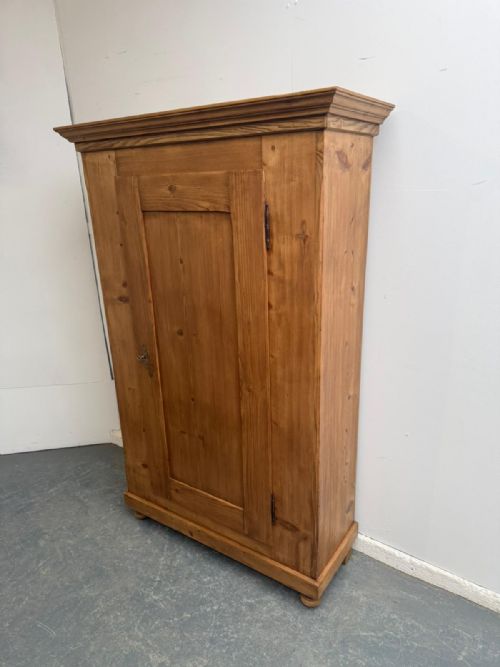


Shallow Pine Cabinet
These shallow pine cabinet examples offer compact storage with slender footprints, combining utilitarian honesty and practical charm for tight spaces.
Shallow Pine Cabinet
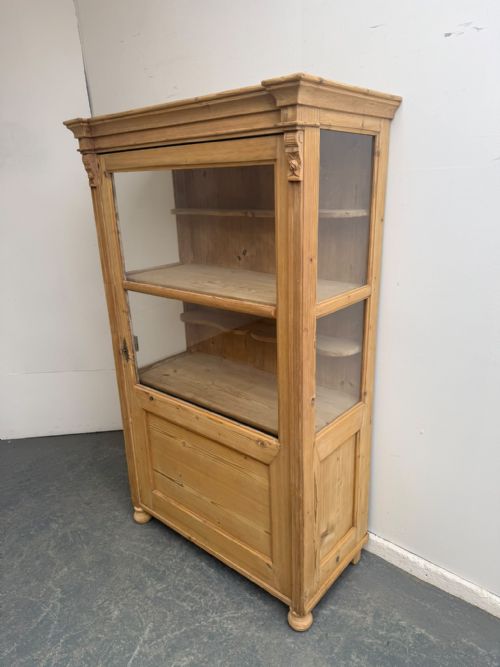
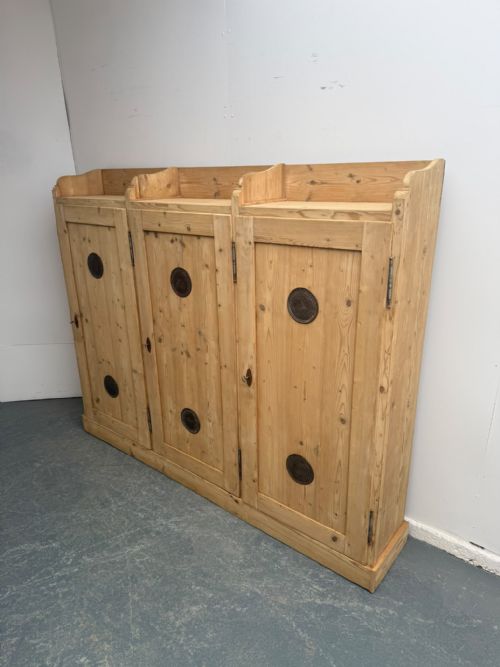
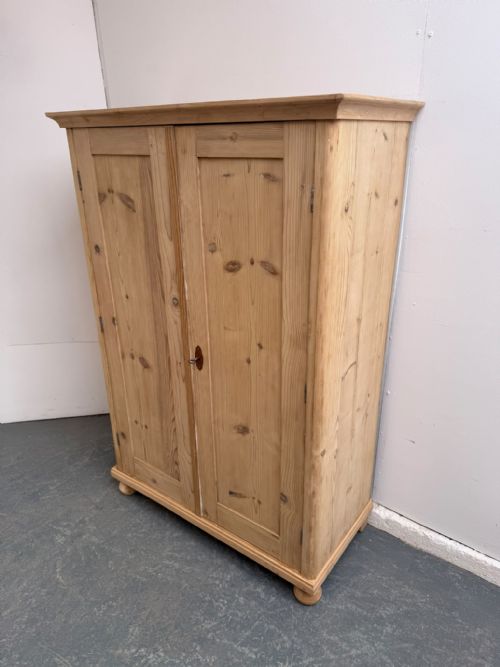
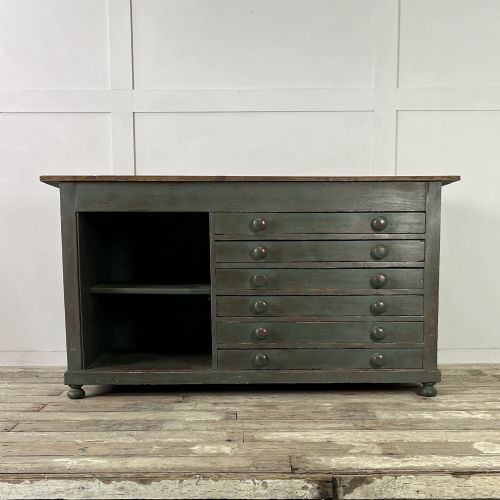
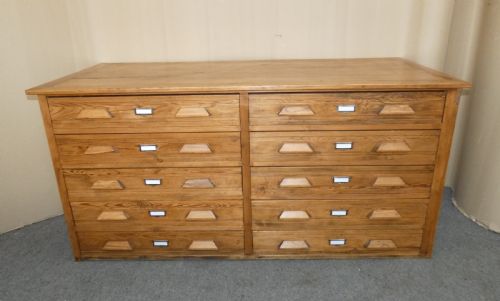
A shallow pine cabinet provides practical storage in a narrow format, taking forms from simple cupboards and glazed display units to multi-drawer filing banks and collectors' chests. These pieces span the Georgian, Victorian, and Edwardian eras, incorporating regional styles such as rustic farmhouse, industrial utility, and Arts and Crafts designs.
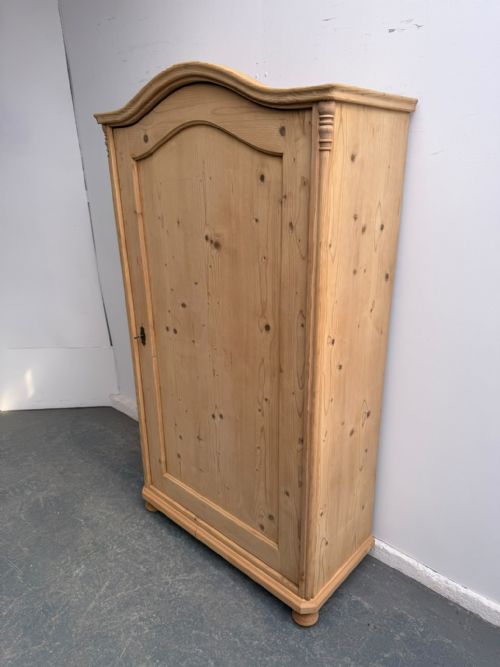
The most common examples on this page are Victorian pieces, often built for utility or collection display. They range from narrow kitchen cupboards and dresser bases to artists' chests and haberdashery drawers, suiting hallways, kitchens, and studies where floor space is limited.
How they were made
Construction relies heavily on pine and pitch pine, chosen for workability and durability. Workshops frequently incorporated iron and brass handles, hinges, and label holders alongside glass panels for display variants.
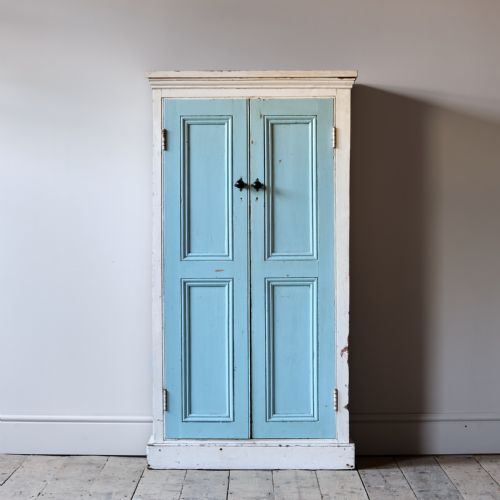
Surfaces appear in several finishes, including painted pine, stained wood, or waxed timber. Cabinetmakers joined boards simply and securely, prioritising sturdy utility over elaborate ornamentation.
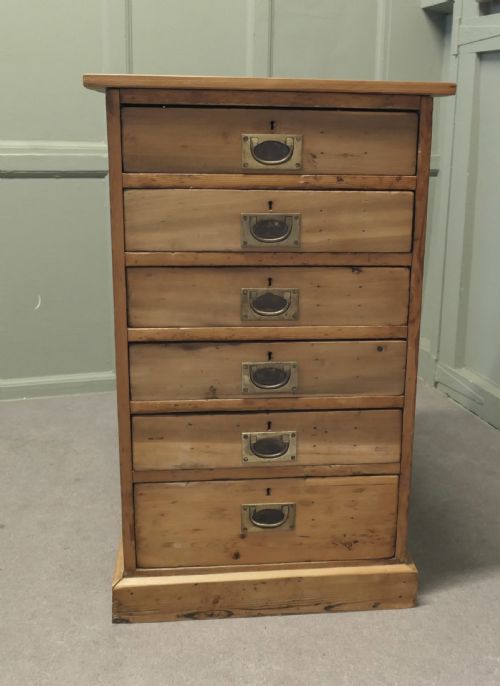
Several pieces preserve small brass label holders designed to tell you precisely which drawer held your buttons.
What varies in quality
Quality rests upon the integrity of the timber selection, such as figured pitch pine versus standard deal, and the precision of the drawer construction. Better examples retain original iron or brass hardware and clean interior linings.
Proportion and purpose also divide the range. Purpose-built collectors' cabinets and multi-drawer filing units demonstrate finer internal partitioning and more complex joinery than general domestic storage cupboards.
J.T.Crockett
The Shallow Pine Cabinet Glossary
- Pitch pine
- A resinous softwood offering distinctive grain patterns and greater durability than standard pine. Cabinetmakers utilised this material for hard-wearing furniture such as plan chests and specialised storage units.
- Collectors cabinet
- A multi-drawer piece designed to house specimens, coins, or small objects. These items typically feature numerous shallow drawers within a compact frame.
- Haberdashers drawers
- Multi-drawer units originally built for retail shops to store ribbons, buttons, and textiles. Their shallow banks of drawers suit modern domestic storage.
- Dresser base
- The lower section of a kitchen or dining room storage unit. These pieces provide surface workspace above cupboards or drawers.
- Plan chest
- A large, extremely shallow multi-drawer cabinet designed for architectural drawings and maps. Edwardian workshops built these in pitch pine for institutional and office use.
Shallow Pine Cabinet: Frequently Asked Questions
Where do shallow pine cabinets fit best?
Their slim profile allows these cabinets to sit comfortably in narrow hallways, landings, and compact kitchens without obstructing walkways.
They offer useful organizational space in rooms where deeper furniture would overwhelm the floor plan.
What were multi-drawer pine cabinets used for?
Many multi-drawer examples functioned as collectors' cabinets, artists' chests, or haberdashery units for organising small specimens and tools.
Others served offices and workshops as filing cabinets and plan chests for paper storage.
How do I care for a waxed pine surface?
Maintain waxed pine surfaces by applying a traditional beeswax polish periodically to nourish the timber and preserve the soft sheen.
Avoid placing these cabinets near direct heat sources or strong sunlight to prevent the pine from drying out.
How can I tell Victorian pine from later pieces?
Victorian pine furniture often displays hand-cut joinery, older brass or iron hardware, and distinct patination acquired through decades of waxing.
Later Edwardian and 1920s pieces tend toward more standardised machine construction and specific utilitarian forms like plan chests.