
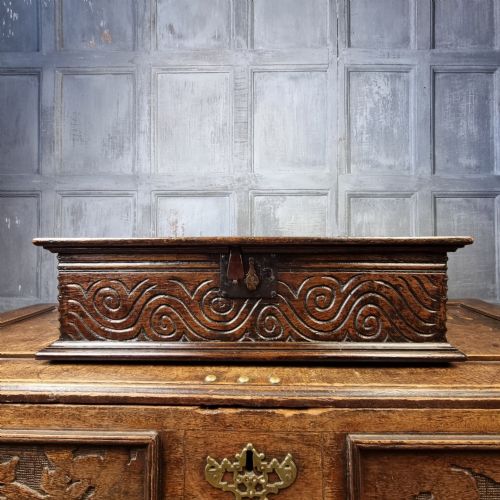


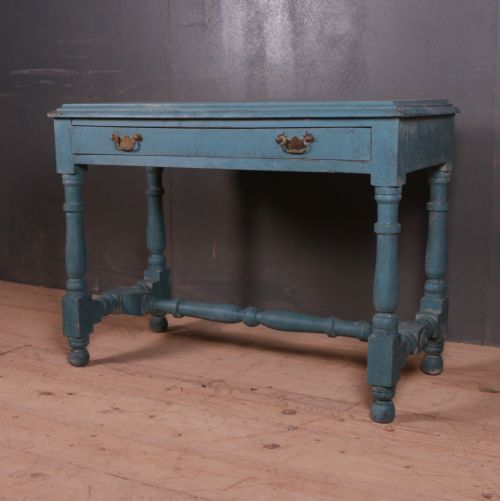
Seventeenth Century Desk
A seventeenth century desk offers solid timber construction and compact form, giving you a tangible piece of early domestic history to work upon.
Seventeenth Century Desk
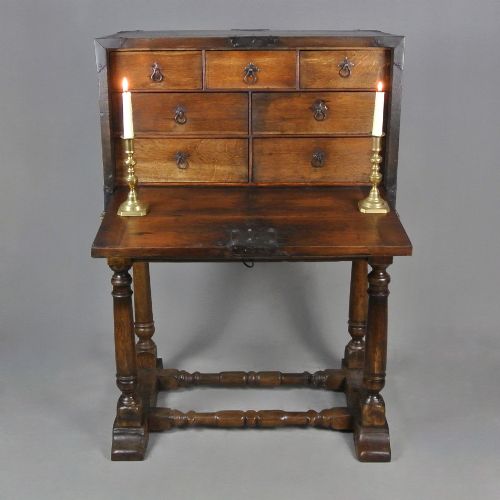
When you search for a seventeenth century desk, you encounter various forms ranging from compact desk boxes and table boxes to bureau bookcases and varguenos on stands. The pieces you are most likely to meet on this page span the seventeenth century alongside later revivals, reflecting how writing furniture evolved from portable storage into dedicated stands and cabinets.
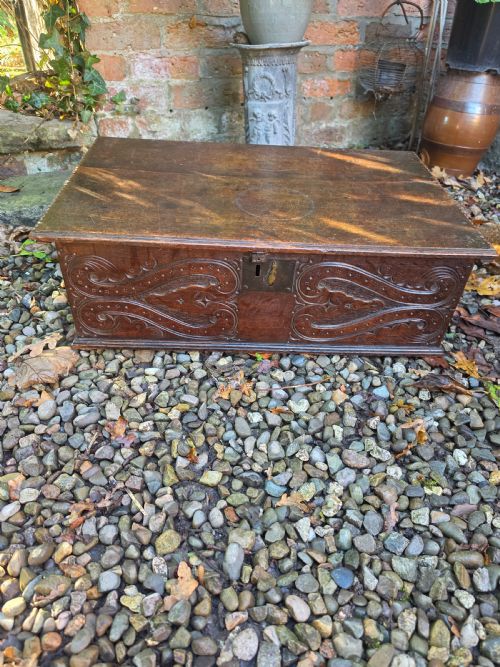
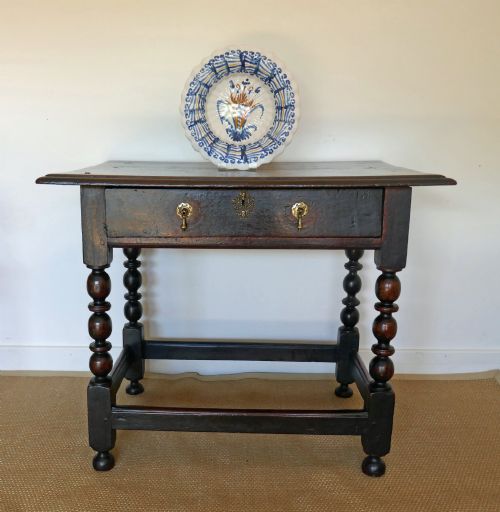
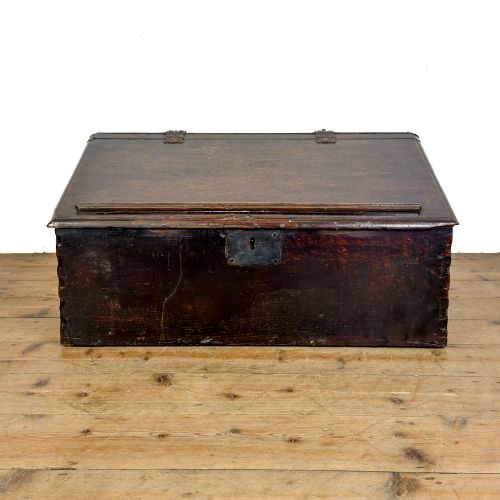
Many items recorded under this search phrase take the form of oak desk boxes, bible boxes, and document boxes designed to sit on tables rather than stand independently on the floor. Alongside these portable containers, the selection includes larger bureau bookcases and side tables that served domestic writing and storage needs across English, Spanish, and continental European workshops.
The materials and styles bridging these entries demonstrate a distinct shift from utilitarian oak storage toward figured walnut marquetry and baroque ornamentation. Buyers find both authentic period artefacts dating back to the sixteen-hundreds and later revival pieces constructed in subsequent centuries.
Materials and construction methods
Makers relied heavily on solid oak and walnut, utilising traditional framing techniques such as panel and frame construction to accommodate natural wood movement. Surfaces were frequently embellished with intricate chip carving, marquetry inlay, or tortoiseshell mounts depending on regional tastes and workshop traditions.
Hardware played an integral structural and decorative role, featuring forged iron, brass hinges, and complex steel locks that secured vital documents. Secondary elements like bone inlay or gilt bronze mounts appear on high-status continental examples, contrasting with the robust ironwork found on English strong boxes.
Object forms range from portable bible boxes and document containers to large bureau bookcases.
Distinctions in quality and execution
The upper tier of these pieces displays superior timber selection, such as burr walnut veneers and finely figured oak boards that have matured with rich patination. Lesser examples often show more utilitarian construction, simpler carving, or replacement timber elements added during later centuries.
Original mechanisms and hardware elevate a piece significantly, particularly complex steel locks and internal drawer arrangements that remain intact. The crispness of chip carving and the precision of marquetry inlay further separate standard production from exceptional craftsmanship.
The Seventeenth Century Desk Glossary
- Desk box
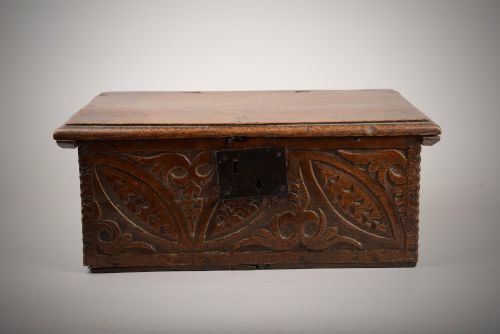
- A portable wooden container with a sloping or flat lid designed to hold writing materials and documents. These boxes were frequently placed upon tables before dedicated writing furniture became common.
- Bureau bookcase
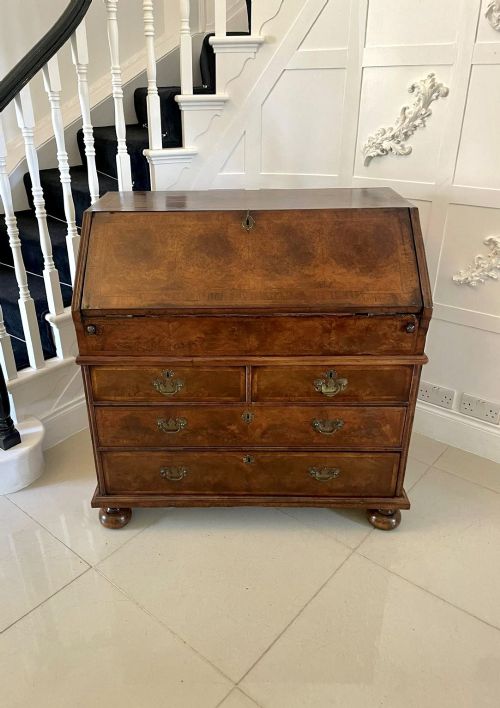
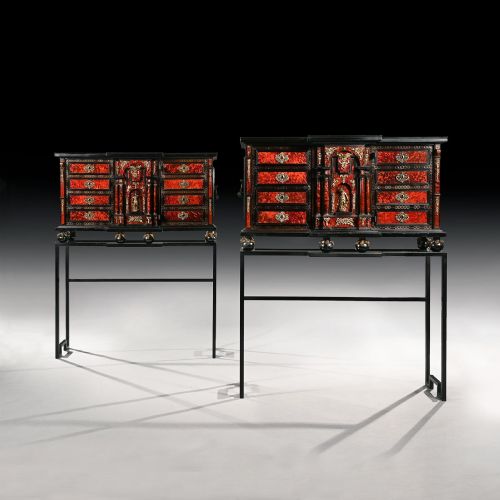
- A tall dual-part furniture form combining a sloping desk flap for writing with upper shelving enclosed by doors. Examples often feature sophisticated walnut marquetry and double dome top constructions.
- Vargueno
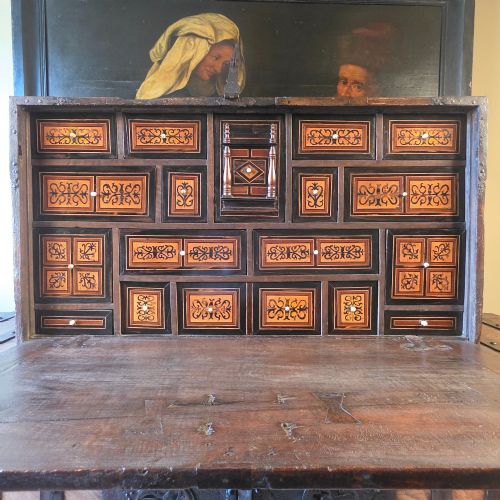
- A traditional Spanish cabinet form featuring a drop-front panel that opens to reveal numerous small drawers and compartments. They are typically mounted on decorative trestle stands.
- Marquetry
- The art and craft of applying decorative veneer pieces made from various woods to a structured surface to form intricate patterns. This technique is particularly prominent on William and Mary period items.
- Chip carving
- A style of relief carving where small chips are removed from a flat surface to create geometric or linear patterns. It is frequently seen on seventeenth century oak boxes and bible boxes.
Seventeenth Century Desk: Frequently Asked Questions
How do I identify a bureau bookcase?
A bureau bookcase combines a sloping desk front that folds down for writing with an enclosed bookcase section mounted directly on top. They typically feature numerous internal pigeonholes and drawers.
These large case pieces often incorporate rich walnut veneers and marquetry decoration, representing a more advanced stage of domestic furniture development.
Were these desks made from solid oak?
Many early pieces relied heavily on solid oak timbers, particularly English desk boxes and side tables from the sixteen-hundreds. Carpenters utilised sturdy framing to ensure longevity.
As styles shifted toward the end of the century and into later revival periods, cabinetmakers increasingly introduced walnut, fruitwood, and decorative veneers alongside the traditional oak.
Where were varguenos produced?
Varguenos originated in Spain as distinctive cabinet furniture mounted on decorative stands or trestles. They feature elaborate drop-front panels concealing intricate small drawers.
These pieces often incorporated rich woods and metal mounts, serving both storage and display functions in wealthy Spanish interiors.