



Set of Wine Glasses
A set of wine glasses brings historical charm to the table, ranging from Georgian coloured bowls to Victorian cranberry glass and twentieth-century crystal.
Set of Wine Glasses
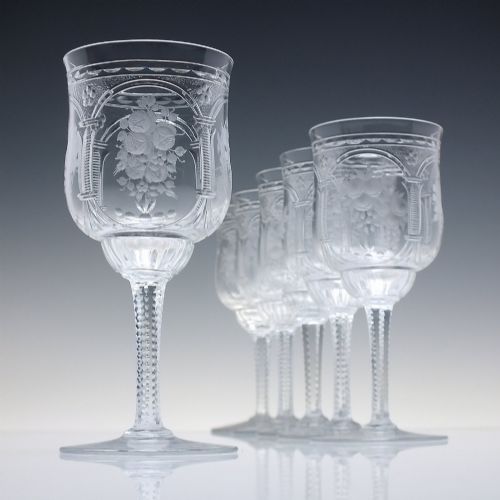
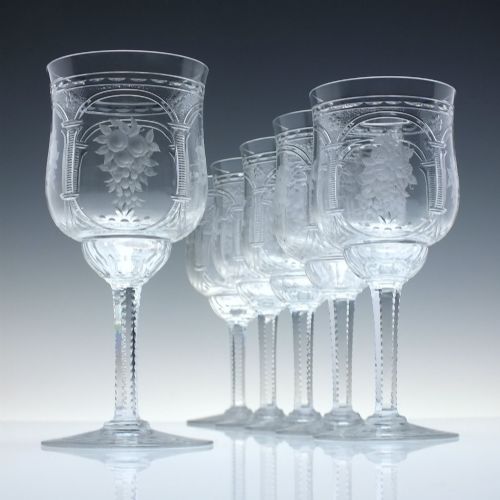
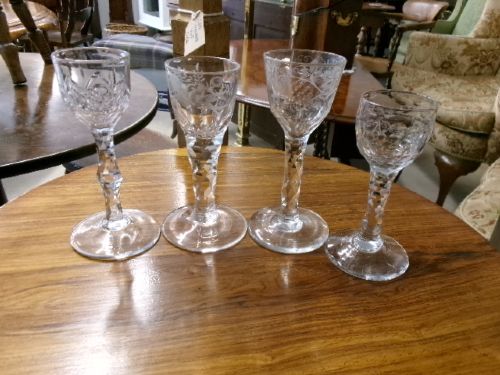
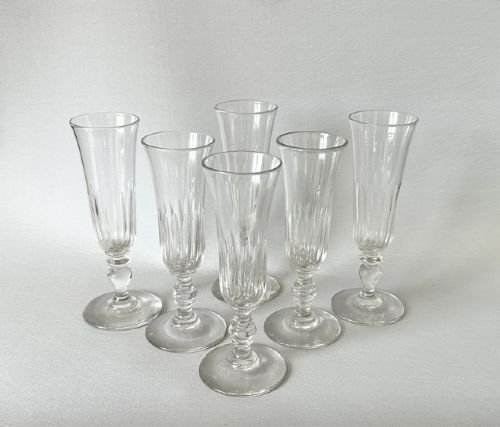
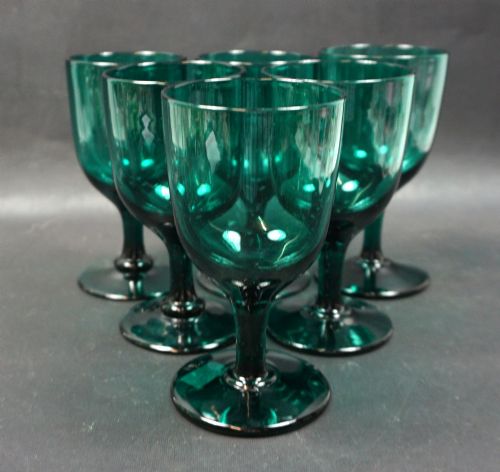
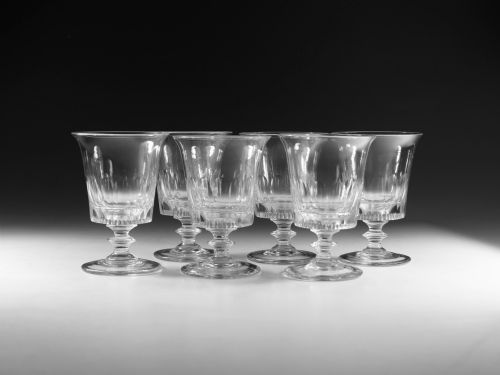
When searching for a set of wine glasses, collectors encounter vessels spanning the Georgian, Victorian, and Edwardian eras up to the nineteen-thirties. The most frequent discoveries on this page include matching and harlequin groups of Victorian cranberry glassware, deep green Bristol glass, and eighteenth-century or early nineteenth-century Georgian rummers and port glasses.
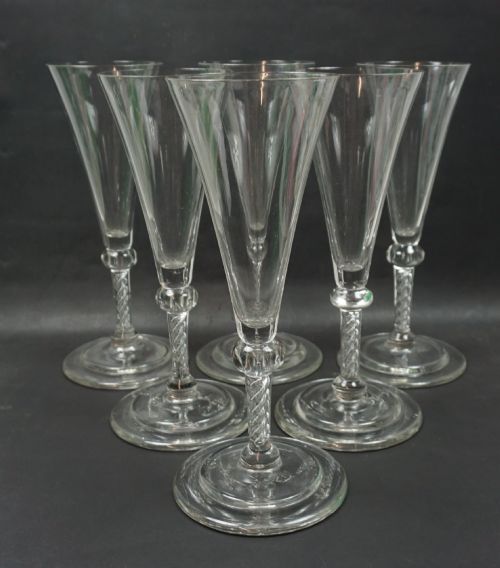
These collections also encompass continental examples, such as Bohemian hock glasses and German Historicism roemers adorned with enamelled heraldic motifs. Forms vary from tall air twist stemware and faceted bowls to heavy lead crystal services intended for formal dining and entertaining.
How they were made
The pieces recorded in these listings rely primarily on hand-blown glass, lead crystal, and clear or coloured glass manipulated through cutting, engraving, and intaglio techniques. Makers utilised colour overlays, acid etching, and delicate enamel decoration to create varied hues including amethyst, cobalt blue, emerald, and pale green.
Stem construction techniques define many period pieces, featuring air twists, opaque twists, bobbin shapes, and heavy baluster stems. Foot bases also vary significantly, incorporating wide flat designs, lemon squeezer corners, and folded rims shaped by skilled artisans.
Listings feature lead crystal, cranberry glass, and Bristol green drinking vessels spanning the Georgian, Victorian, and Edwardian periods.
What varies in quality
Quality in these drinking vessels rests upon the depth of the metal, the precision of the wheel-cut or engraved decoration, and the uniformity achieved within a matched grouping. Hand-blown pieces display individual character in their thickness and pontil marks, whereas lesser items lack the crispness of facet cutting and the rich saturation found in genuine cranberry or Bristol green glass.
The distinction between ordinary table service and top-tier glassware lies in the complexity of the stem formation, such as intricate air or opaque twists, and the preservation of delicate enamel or gilt detailing across every piece in the set.
Webb Corbett·René Lalique·Fritz Heckert·Thomas Webb·Theresienthal
The Set of Wine Glasses Glossary
- Roemer
- A traditional Germanic large-bowled drinking glass, often coloured green and resting on a studded raspberry prunt stem. These are frequently found decorated with enamelled heraldic motifs.
- Rummer
- A heavy, large-bowled drinking glass popular during the Georgian and Victorian eras for wine or ale. They typically sit upon a short stem with a square lemon squeezer or round foot base.
- Air twist
- A decorative stem formation created by drawing out air bubbles trapped within the molten glass during blowing. This technique produces spiral threads running down the length of the stem.
- Cranberry glass
- A rich red-pink transparent glass created by adding gold chloride to the molten batch. It gained immense popularity during the Victorian period for tableware and decorative items.
- Intaglio
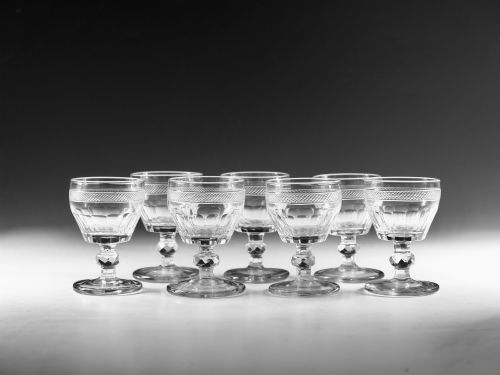
- A technique where designs are sunk below the surface of the glass by wheel-cutting, creating a frosted relief effect. This method is often seen on Edwardian drinking services.
Set of Wine Glasses: Frequently Asked Questions
Can I use these glasses daily?
Many sturdy Victorian and Edwardian glasses are robust enough for occasional modern dining. Careful handling is essential given the thinner walls of Georgian drinking vessels.
Hand-blown crystal requires respect during use and storage. Storing them safely away from crowded modern cupboards prevents rim chipping.
What is Bristol green glass?
Bristol green refers to a distinct dark green transparent glass produced in English factories during the eighteenth and nineteenth centuries. It was widely utilised for wine glasses, finger bowls, and decanters.
This specific hue became a staple of Georgian and Victorian table settings. It contrasts sharply against white linen tablecloths.
How do I spot a matched set?
Matched sets display uniform height, bowl shape, colour saturation, and weight across every single piece. Slight variations in hand-blown items are normal but extreme differences indicate assembled replacements.
Inspect the pontil marks and engraving styles closely under good light. Consistent wear patterns on the foot bases confirm a group has stayed together.