

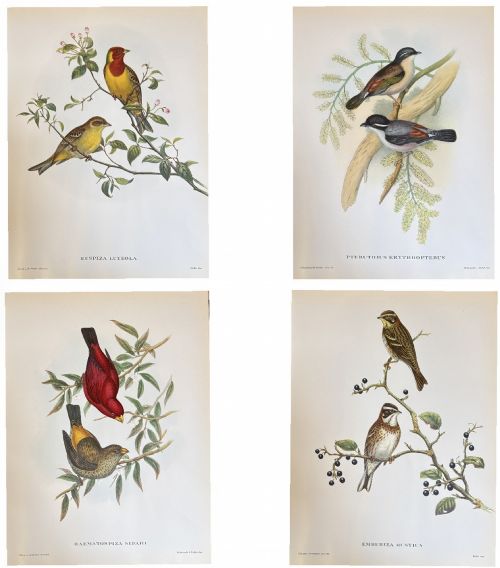
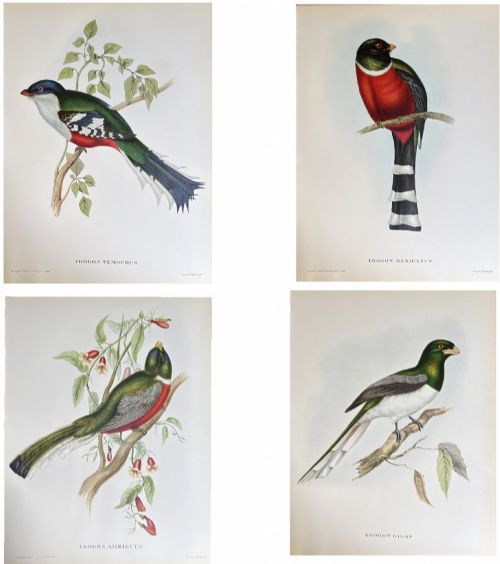
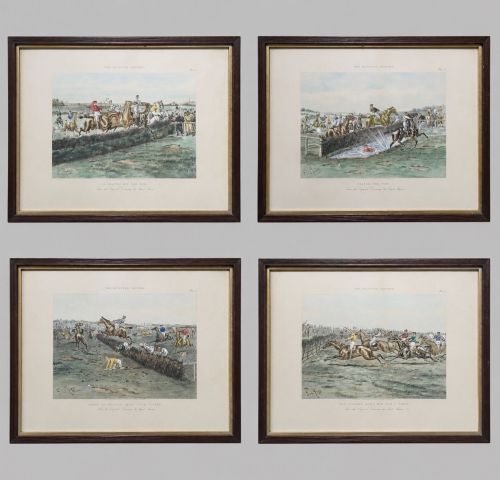
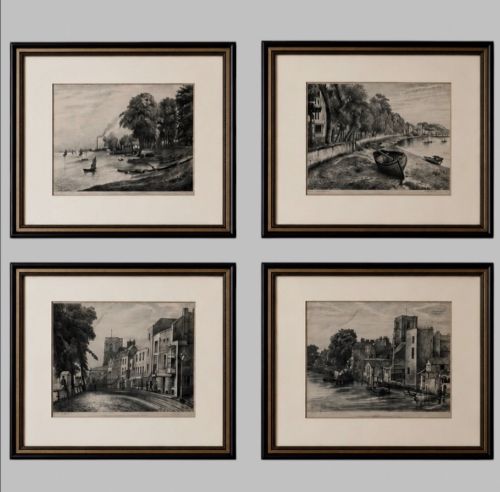




Set of Four Art Prints
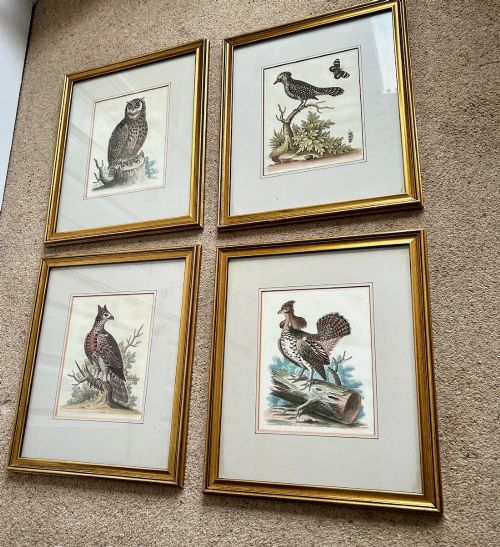
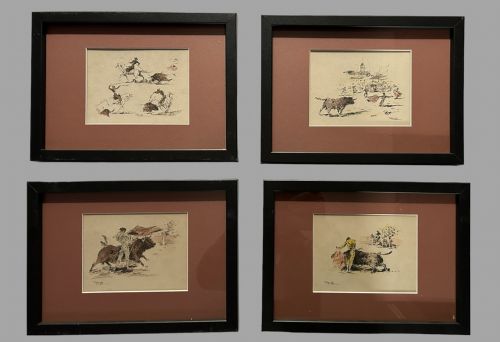
These set of four art prints collect coordinated series of historical imagery, offering a balanced decorative arrangement for your walls.
Set of Four Art Prints
A set of four art prints brings together grouped imagery designed to be displayed in unison, spanning subjects from natural history to sporting scenes. When you browse a set of four art prints on this page, you encounter works originating from the eighteenth, nineteenth, and twentieth centuries. The selection encompasses various formats including framed artwork, engravings, lithographs, and aquatints.
The subjects represented across these series reflect distinct historical interests, ranging from botanical studies and ornithology to architectural scenes and equestrian pursuits. Many examples arrive ready to hang within period frames of wood or gilt, while others remain unframed on paper sheets. These groupings provide a complete narrative or visual sequence across the four individual pieces.
How they were made
The creation of these works relies on traditional printmaking techniques executed on paper, utilising ink, watercolour, and sometimes hand-colouring. Engravings, lithographs, etchings, and mezzotints form the primary methods used by historical printers and artists to transfer detailed imagery onto the sheet. Reverse glass techniques also appear in specific Regency examples, applying the printed or painted design directly beneath a protective glass panel.
Framing materials typically involve wood, gilt wood, and gold leaf, providing structural support and aesthetic enhancement to the paper sheets. Some pieces feature embossed details on the paper itself, adding tactile dimension alongside the visual ink work.
Set of Four Art Prints Retail Price Guide 2026
Typical asking prices for set of four art prints among the pieces listed under this phrase on Sellingantiques today, from the lower quarter to the upper quarter. They describe what is for sale here now, not the wider market.
First World War German generals captured in caricatures sit alongside tropical birds and eighteenth-century architectural scenes in our unexpected line-up.
What varies in quality
The distinction between tiers of quality rests upon the clarity of the impression and the precision of the plate work on the paper. Finer examples retain sharp lines, distinct tonal gradations, and carefully applied hand-colouring that enhances the original ink or engraving without obscuring the detail.
The integrity of the surrounding frame, whether constructed from simple wood or embellished with gold leaf and gilt, contributes to the overall standard of the piece. Uniformity across all four items in the set, ensuring matching paper tone and consistent ageing, elevates the cohesion of the group.
John Curtis·Edward Lear·William Swainson·George Edwards·Otto Pilny·J F Herring
The Set of Four Art Prints Glossary
- Engraving
- A printmaking method where a design is cut into a metal plate with a burin, holding ink in the grooves to produce fine, crisp lines on paper. This technique allows for remarkable detail in botanical and architectural subjects.
- Lithograph
- A planographic printing process based on the antipathy of oil and water, enabling artists to draw directly onto a limestone block or metal plate. It produces smooth tonal transitions well suited to topographical and figurative scenes.
- Aquatint
- A variant of etching that uses powdered resin to create tonal areas resembling watercolours rather than sharp lines. It appears frequently in nineteenth-century sporting and narrative print series.
- Mezzotint
- A tonal printmaking process where the copper plate is roughened uniformly to produce rich darks and subtle gradations of light. It creates velvety depths ideal for dramatic historical compositions.
- Gilt Wood
- Timber framing finished with a thin layer of gold leaf or metallic paint to impart a bright, reflective surface. This treatment defines many traditional frames housing period artwork.
Set of Four Art Prints: Frequently Asked Questions
How were these print sets originally displayed?
Historical print sets were typically hung together in symmetrical arrangements within domestic interiors, libraries, or studies. Grouping four related subjects created a balanced visual anchor on a panelled or wallpapered wall.
Many of these series, such as botanical studies or sporting scenes, were published specifically to be framed as a unified set of four. This practice allowed collectors to present a complete narrative or taxonomy across adjacent wall spaces.
What is the difference between an engraving and a lithograph?
An engraving is produced by cutting lines into a hard metal plate, resulting in precise, sharp marks transferred to the paper under pressure. This method yields fine details ideal for scientific illustration and architecture.
A lithograph is created by drawing on a stone or metal surface with a greasy medium, allowing for softer lines and painterly tonal areas. This technique gained popularity in the nineteenth century for capturing varied artistic styles and richer colour washes.
Are these prints hand-coloured?
Many historical prints feature applied watercolour or tinting added by hand after the initial ink impression was pulled from the plate. This secondary process brought vibrancy to natural history subjects like birds, butterflies, and botanical specimens.
Closer inspection under magnification often reveals the subtle brushstrokes of the colourist distinguishing the hand-applied pigment from the printed outlines beneath.
How should I care for framed paper prints?
Paper prints require protection from direct sunlight to prevent the fading of inks, watercolours, and coloured pigments over time. Maintaining stable indoor humidity levels also safeguards both the paper sheets and their wooden or gilt frames.
When hanging, choose locations away from direct heat sources and damp environments to preserve the physical structure of the paper and any accompanying framing materials.