
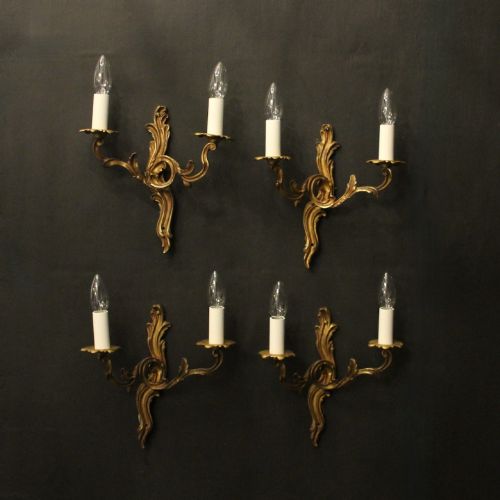
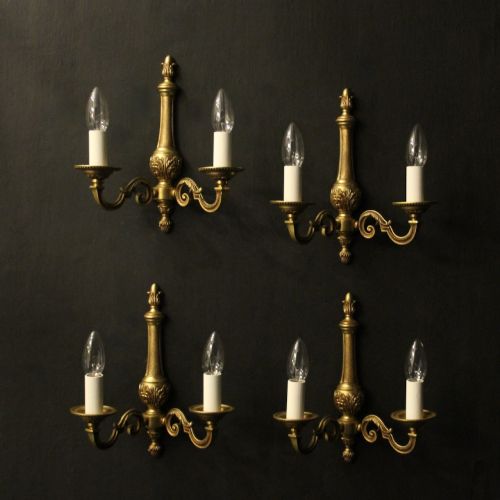
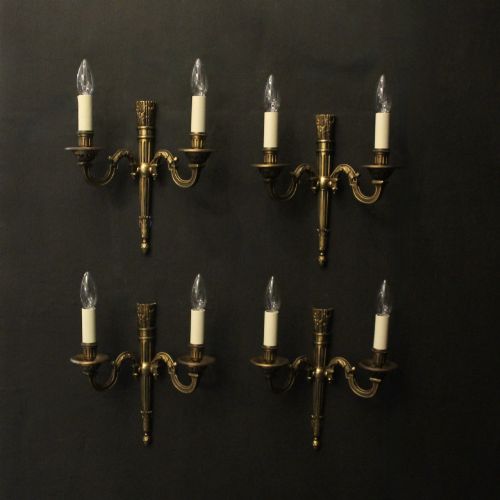
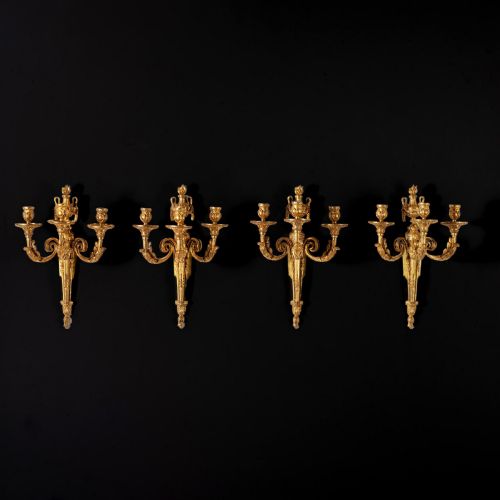
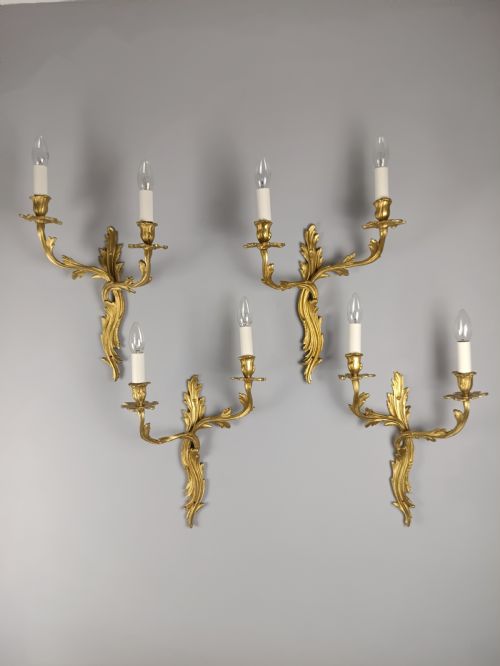
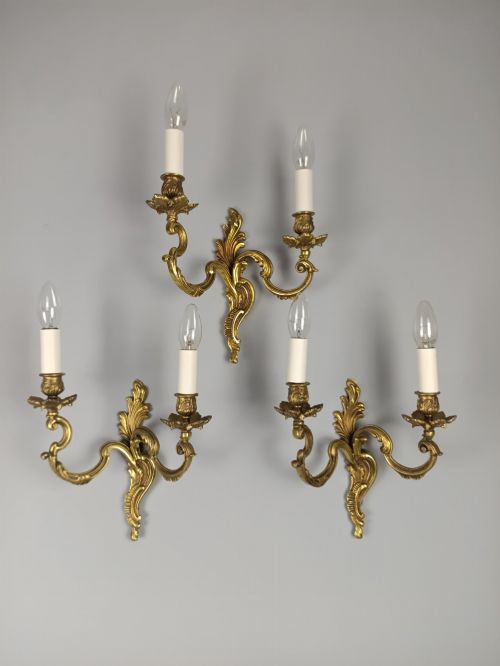
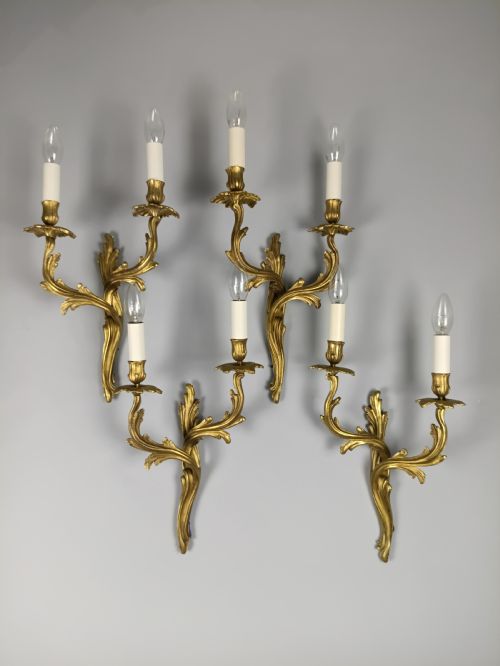
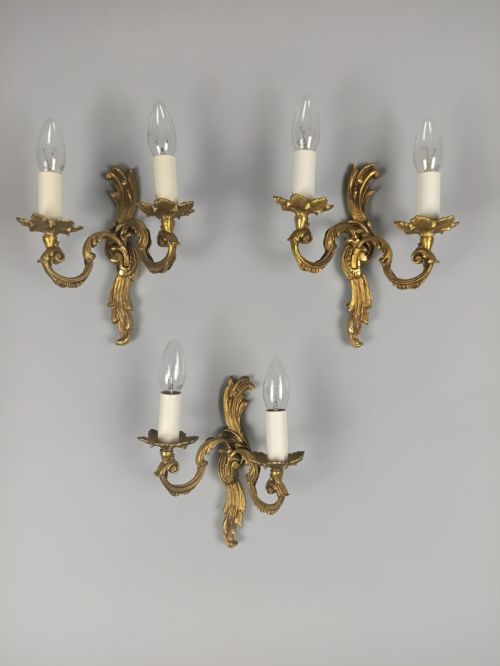
Set French Wall Lights
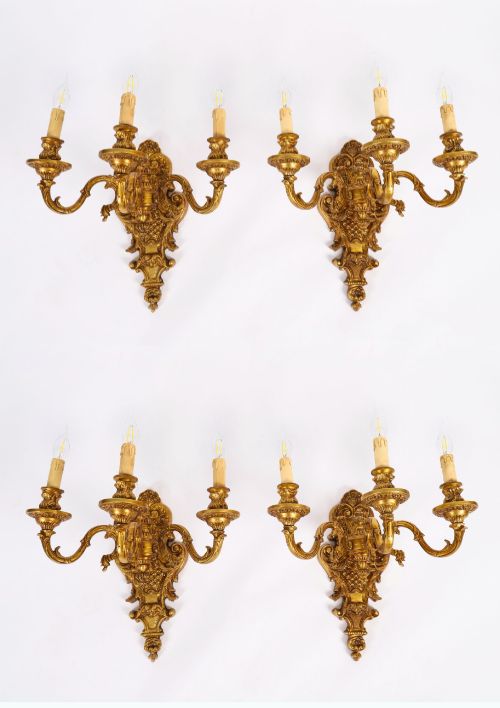
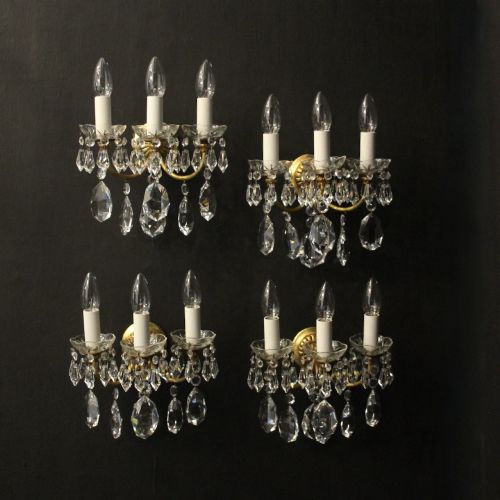
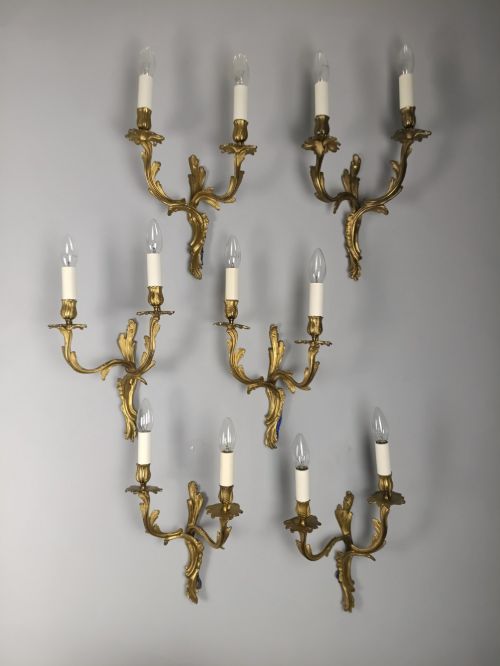
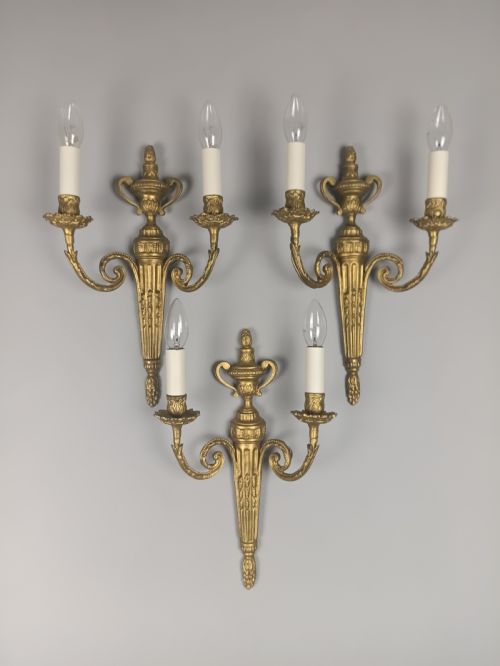
These set french wall lights bring historic illumination and classical symmetry to interior schemes, spanning periods from the eighteenth century through the mid-twentieth century.
Set French Wall Lights
When searching for set french wall lights, buyers encounter matching groups of historic light fittings designed to mount directly onto interior walls. These fixtures provide balanced illumination across principal rooms while serving as decorative architectural ornaments in their own right.
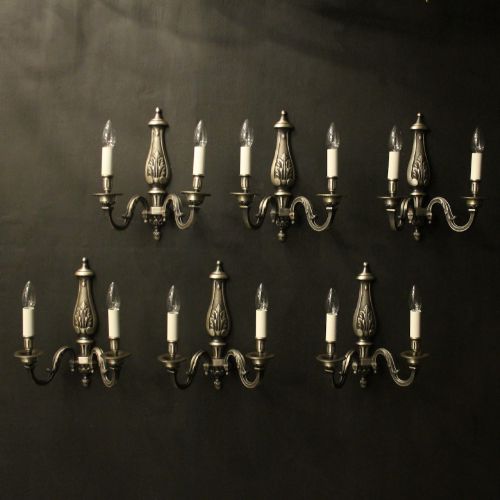
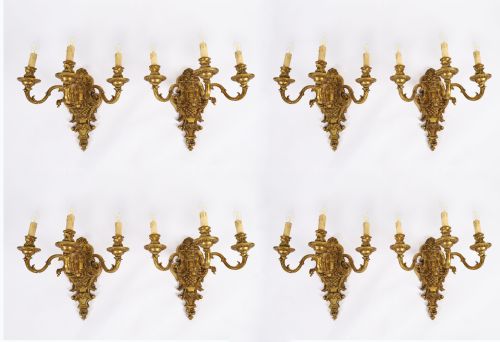
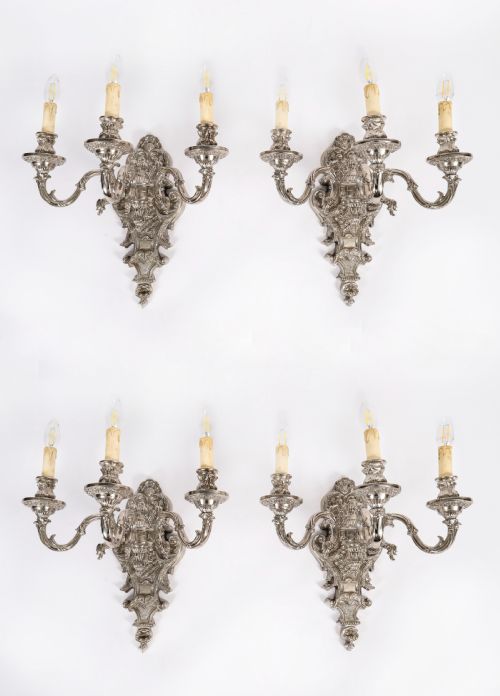
The selections available range from modest pairs and trios to extensive groupings of six, eight, or twelve matching sconces. Most examples originate from the nineteenth and early twentieth centuries, though eighteenth-century survivals appear alongside later interpretations.
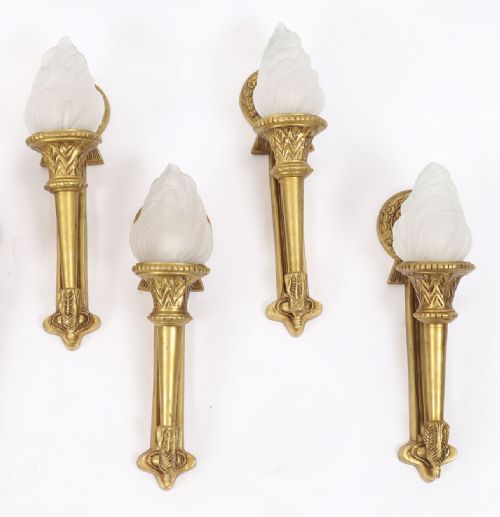
Forms include twin-arm and triple-arm configurations, torch styles, and specialised fittings adorned with glass, crystal, or figural motifs such as cherubs. These matched assemblies allow for uniform lighting design throughout panelled reception rooms, hallways, and formal dining spaces.
What varies in quality
The original quality of the gilding or metal plating dictates how well the surface ages over centuries of exposure. Heavier applications of ormolu retain their richness and lustre, while thinner finishes wear down to the base brass or bronze beneath.
Listings feature brass, bronze, and gilt metal forms spanning the eighteenth, nineteenth, and twentieth centuries.
The Set French Wall Lights Glossary
- Ormolu
- Gilded bronze produced by applying a mercury-gilding amalgam to a cast bronze base. This technique creates a durable, deep golden surface characteristic of fine eighteenth- and nineteenth-century lighting.
- Sconce
- A wall-mounted light fixture designed to carry candles or electric lamps. In historical contexts, these pieces often feature backplates that reflect light into the room.
- Rococo
- An ornate design style characterised by asymmetrical scrolls, C-curves, and naturalistic plant motifs. It heavily influences many French wall fittings from both the eighteenth century and later revival periods.
- Neoclassical
- A style drawing inspiration from classical antiquity, featuring symmetrical lines, urns, flaming torches, and crisp geometric patterns. It provides a restrained counterpoint to earlier curving forms.
- Twin-arm
- A lighting branch configuration featuring two distinct candle nozzles or lamp holders extending from a single backplate. This layout maximises light output while maintaining a compact wall footprint.
Set French Wall Lights: Frequently Asked Questions
How do I install historic wall lights safely?
Many antique fixtures arrive rewired and tested to meet modern electrical standards, making them ready for professional installation by a qualified electrician.
Consult your electrician regarding backplate dimensions and weight support to ensure secure mounting on your specific wall construction.
What is the difference between Rococo and Neoclassical styles?
Rococo designs emphasise asymmetrical flowing curves, organic plant forms, and elaborate scrollwork that create a dynamic sense of movement.
Neoclassical pieces favor strict symmetry, straight lines, and motifs borrowed directly from Greek and Roman architecture.
Can I mix different sets in one room?
Interior designers typically recommend using matched sets within a single space to maintain visual balance and architectural harmony.
If combining different groupings, ensure they share a common metal finish or period style to prevent visual clashing.
How do I clean gilded bronze wall lights?
Dust surfaces gently using a soft, dry artist brush or microfiber cloth to remove everyday accumulation without disturbing the finish.
Avoid abrasive polishes and chemical cleaners, as these substances can strip away delicate ormolu or gold leaf layers.