




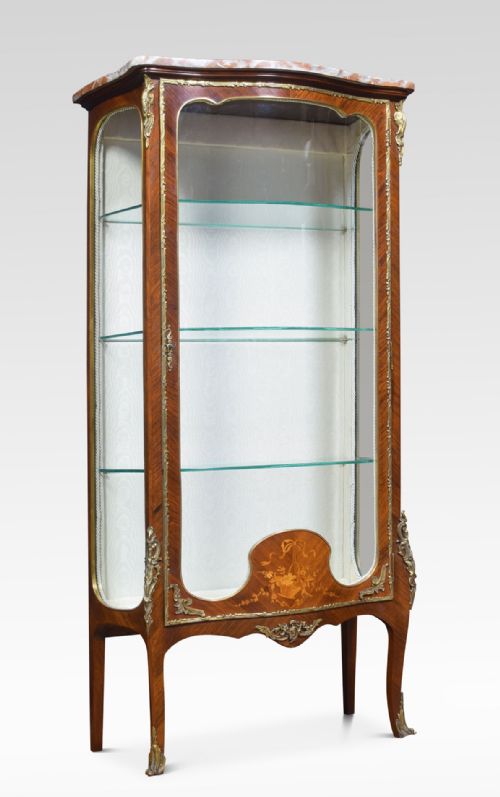

Serpentine Vitrine
A serpentine vitrine brings curved glass and fluid lines into a room to display precious small possessions.
Serpentine Vitrine
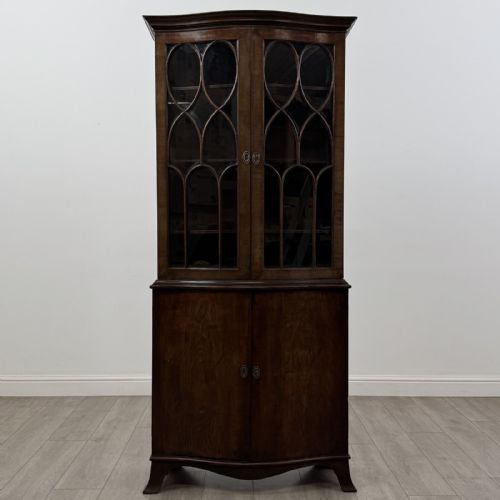
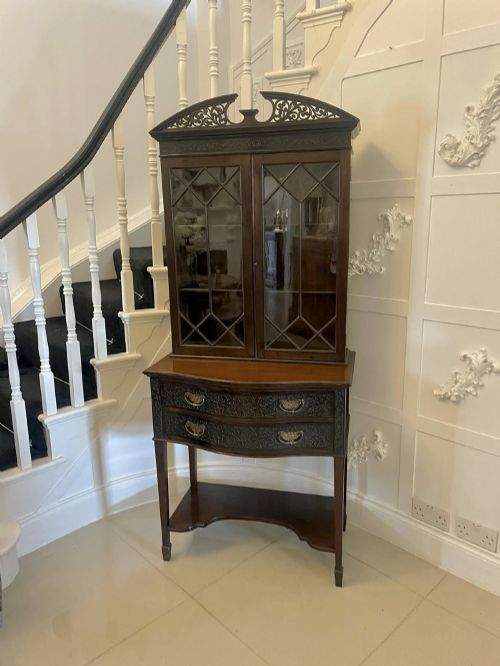
A serpentine vitrine is a display cabinet defined by its undulating, curving front profile and glazed panels designed to exhibit fine objects. Buyers seeking this form will encounter pieces spanning the Victorian and Edwardian eras, alongside late nineteenth-century French and English revival designs.
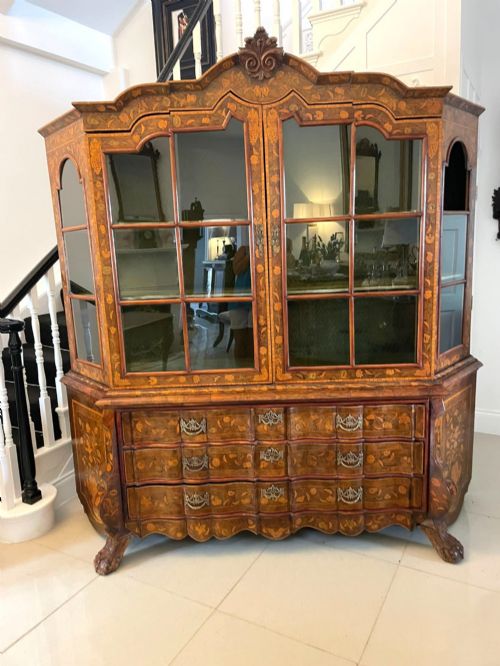
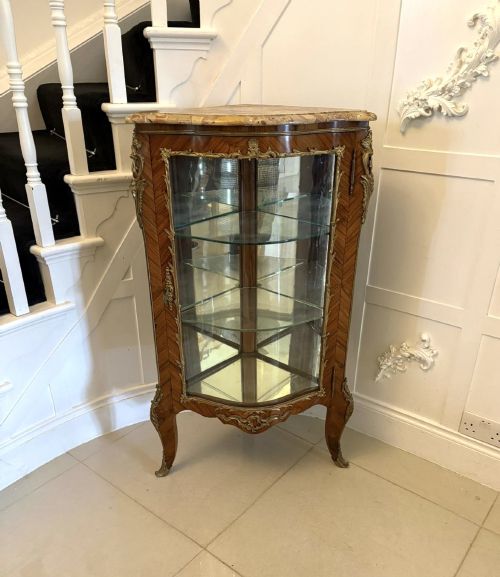
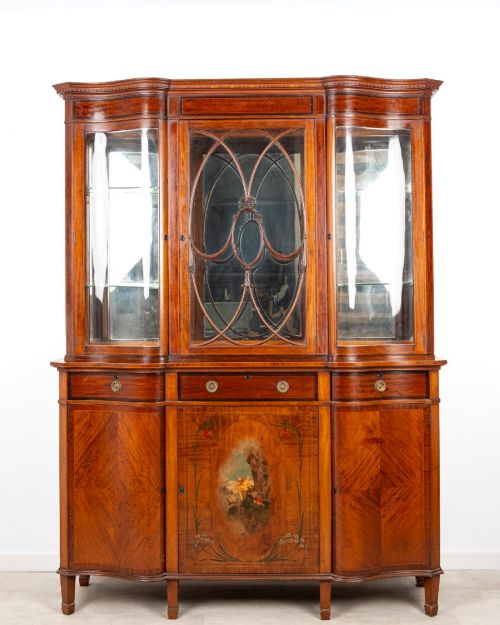
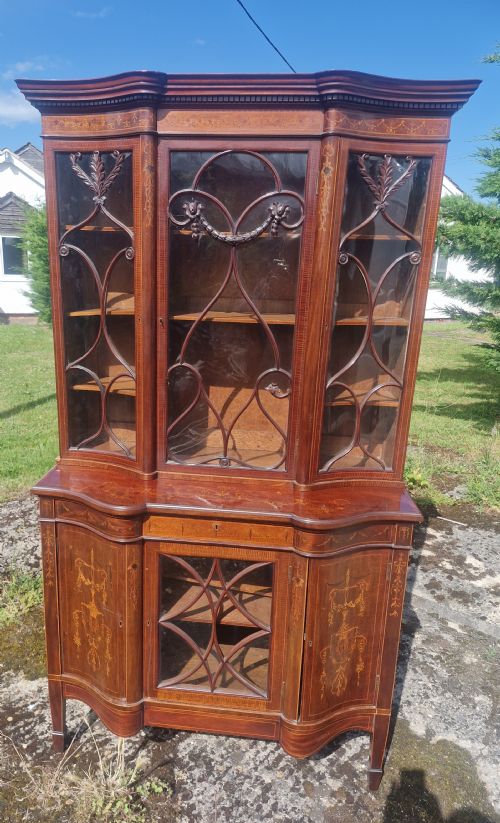
The inventory on this page demonstrates that these cabinets appear in several distinct forms, including freestanding display cabinets, corner units, and low bijouterie tables. Mahogany, kingwood, and walnut form the primary carcases, often paired with extensive marquetry and painted panels.
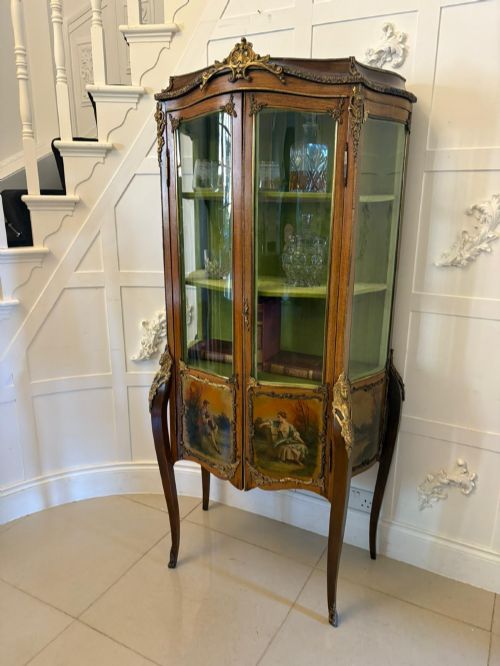
French Louis XV and Louis XVI revival styles dominate the selection, bringing decorative ormolu mounts and shaped marble tops to the domestic interior. English Sheraton and Chippendale revival pieces also feature, offering inlaid mahogany construction with characteristic serpentine framing.
Materials and Construction
Cabinet makers built these pieces using dense timber carcases of mahogany, kingwood, walnut, and satinwood, frequently enhanced by fruitwood inlay and floral marquetry. Shaping the timber into a compound serpentine curve required considerable skill in veneering and joining.
Gilt bronze ormolu mounts frame the glazed doors and corners, while fabric linings often pad the interior display shelves. Vernis Martin painted panels appear on French pieces, adding narrative painted scenes to the lower sections of the cabinets.
Serpentine Vitrine Retail Price Guide 2026
Typical asking prices for serpentine vitrine among the pieces listed under this phrase on Sellingantiques today, from the lower quarter to the upper quarter. They describe what is for sale here now, not the wider market.
Some serpentine display tables double as miniature display rooms on legs for tiny treasures.
Markers of Quality
Quality in these cabinets rests upon the precision of the timber shaping and the crispness of the cast ormolu mounts. Superior examples exhibit fluid, continuous curves across the door frames and drawers without awkward transitions.
The intricacy of the marquetry and the choice of cabinetmaker elevate certain pieces above standard production models. Makers who utilised high-grade kingwood and hand-chased ormolu achieved a depth of finish that distinguishes their work.
Edwards and Roberts
The Serpentine Vitrine Glossary
- Serpentine
- A furniture outline featuring a double-convex curve flanked by concave sweeps, resembling a snake's movement. This undulating front shape creates dynamic shadow and reflected light across the cabinet face.
- Vitrine
- A glass-panelled cabinet specifically constructed for the display of curiosities and ornaments. The glazed sides and doors allow light to reach objects from multiple angles.
- Ormolu
- Gilded bronze mounts applied to furniture edges and mounts for decorative effect. These cast metal details protect vulnerable corners and enhance the cabinet's formal appearance.
- Vernis Martin
- A simulated Japanese lacquer technique developed in eighteenth-century France and revived in later furniture. The translucent varnish covers delicate painted scenes on wooden panels.
- Marquetry
- Inlaid patterns formed by fitting small pieces of contrasting veneer into a prepared wooden ground. This technique creates pictorial designs of flowers and foliage across the cabinet doors.
Serpentine Vitrine: Frequently Asked Questions
What is a serpentine vitrine used for?
These cabinets were designed to showcase porcelain, glassware, and small collectables safely behind glass panels.
The curved glass and mirrored or fabric interiors ensured that displayed items caught ambient light from multiple directions.
How do I date a serpentine vitrine?
Dating relies on identifying the prevailing revival style, timber choices, and construction methods used in the carcase.
Nineteenth-century French pieces often incorporate kingwood and ormolu mounts, while Edwardian English examples frequently use inlaid mahogany.
Where should I place a corner vitrine?
Corner display cabinets fit neatly into unused room angles while providing full visibility for delicate cabinet porcelain.
They utilise awkward wall junctions to present three-dimensional decorative objects without dominating the floor space.
What is the difference between a vitrine and a bijouterie table?
A vitrine stands vertically as a tall cabinet with shelves, whereas a bijouterie table operates as a glazed display surface on legs.
Tables were intended for horizontal viewing of flat treasures like medals, coins, and miniatures.