



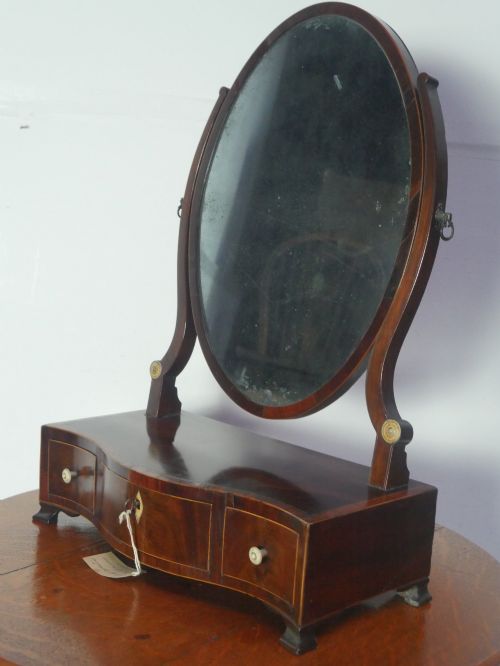


Serpentine Toilet Glass
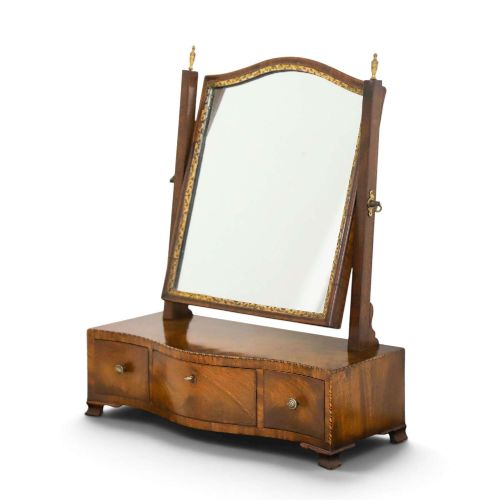
A serpentine toilet glass sits on a dressing chest, offering a clear reflection framed in curving mahogany.
Serpentine Toilet Glass
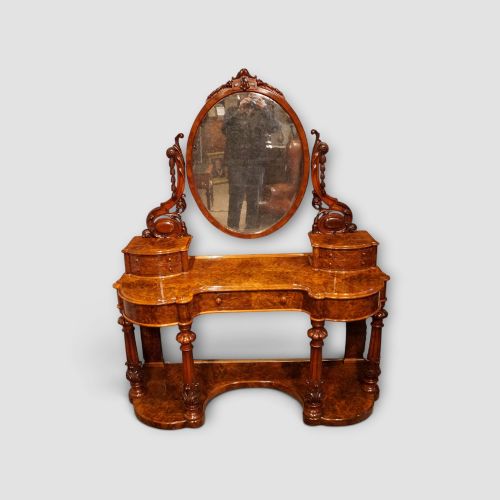
When someone searches for a serpentine toilet glass, they are looking for a table mirror designed for personal grooming during the Georgian and Victorian eras. These pieces sit upon a small box base equipped with drawers, providing a stable platform for the swivelling glass plate above.
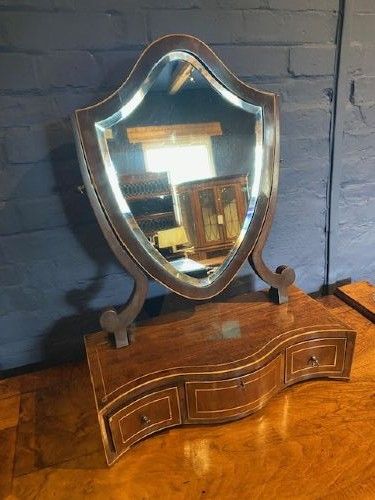
Makers shaped the wooden base with curved contours, sometimes incorporating boxwood inlay or satinwood details to accent the drawers. The glass plate swings between two upright arms, allowing the user to adjust the angle of reflection.
How they were made
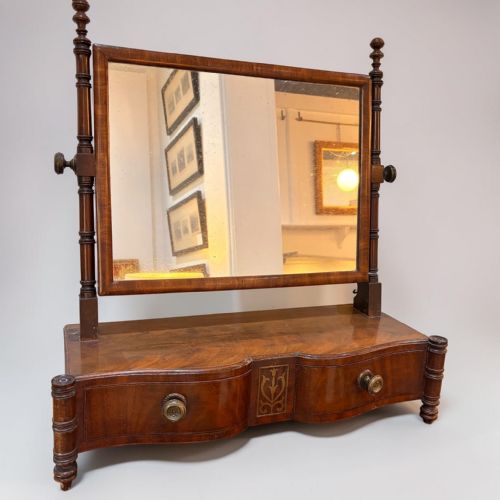
Cabinet makers constructed the frames and drawer boxes primarily using solid mahogany, frequently selecting flame mahogany veneers for the main surfaces to create visual depth. They incorporated secondary woods like boxwood for delicate stringing and inlay work.
The mirror glass itself is held within a pivoted frame attached to upright standards, which mount securely to the top of the serpentine base. Brass fittings such as small knobs or screw caps often secure the swing mechanism at the sides.
Serpentine Toilet Glass Retail Price Guide 2026
Typical asking prices for serpentine toilet glass among the pieces listed under this phrase on Sellingantiques today, from the lower quarter to the upper quarter. They describe what is for sale here now, not the wider market.
Current listings feature mahogany and glass construction spanning Georgian, Regency and Victorian periods.
What varies in quality
The crispness of the serpentine curve across the wooden base separates standard examples from finer ones. Skilled makers achieved a fluid, balanced undulation that required precise hand-sawing and planing of the solid mahogany.
Proportion between the mirror glass and the drawer box below also dictates the visual success of the piece. Superior items maintain a balanced scale where neither the glass nor the base dominates the composition.
The Serpentine Toilet Glass Glossary
- Serpentine front
- A furniture front shaped with a convex central section flanked by two concave curves, creating an undulating profile. This contour requires precise woodworking skills to execute properly.
- Toilet glass
- A portable mirror designed to stand on a dressing table or chest of drawers. These items often include small drawers in the base for storing personal trinkets.
- Swing mirror
- A mirror plate mounted on pivots between two vertical posts, allowing it to tilt backward and forward. This mechanism relies on brass screws or pins.
- Flame mahogany
- A veneer cut from timber where the grain creates a pattern resembling flickering flames. Cabinet makers used this figure on prominent drawer fronts.
- Boxwood inlay
- Narrow strips of pale boxwood inserted into grooves in darker wood surfaces to create linear borders. This technique highlights the structural outlines of the piece.
Serpentine Toilet Glass: Frequently Asked Questions
What is a serpentine toilet glass?
A serpentine toilet glass is a tabletop dressing mirror featuring a curved front base with small drawers. It sits on chests or tables to provide a reflective surface for grooming.
The design dates primarily to the Georgian and Victorian periods, constructed mainly in mahogany with pivoted mirror frames.
Where were these mirrors placed?
These mirrors were placed on top of dedicated dressing tables, chests of drawers or low sideboards in bedrooms. Their portable nature allowed owners to position them near natural light.
The compact base provided storage for small personal items while keeping the mirror elevated to a comfortable height.
How do I date a mahogany mirror?
Dating relies on observing the construction methods, wood types, and decorative styles present in the base and frame. Georgian examples often feature finer proportions and subtle boxwood stringing.
Victorian pieces tend to be larger and heavier, sometimes utilising flame mahogany veneers with bolder visual characteristics.
How does the swing mechanism work?
The swing mechanism uses threaded brass screws or pins fitted through upright arms into the sides of the mirror frame. Tightening these fittings holds the glass at the desired viewing angle.
This simple pivot allows the user to tilt the reflection up or down depending on their height.