

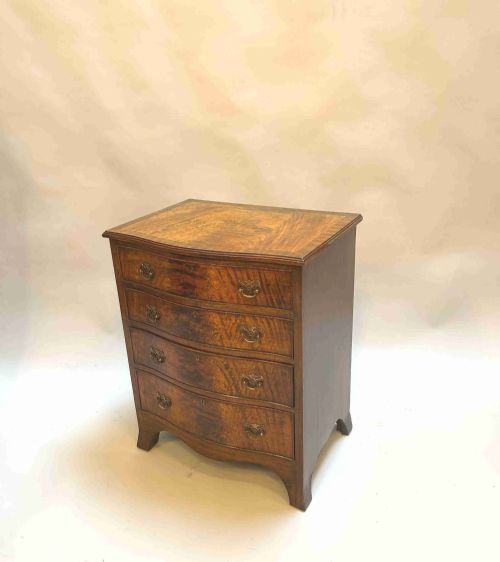
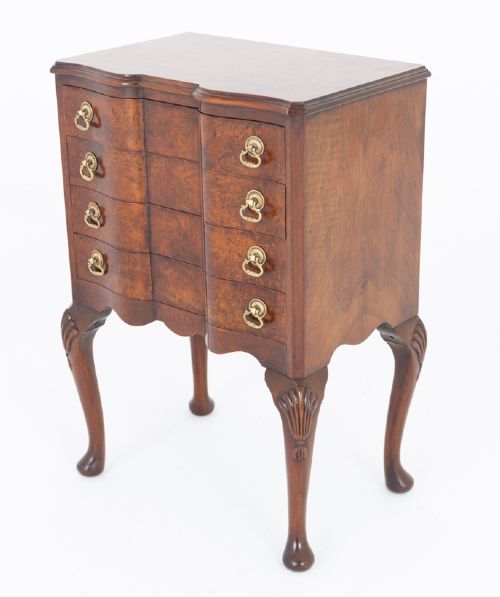
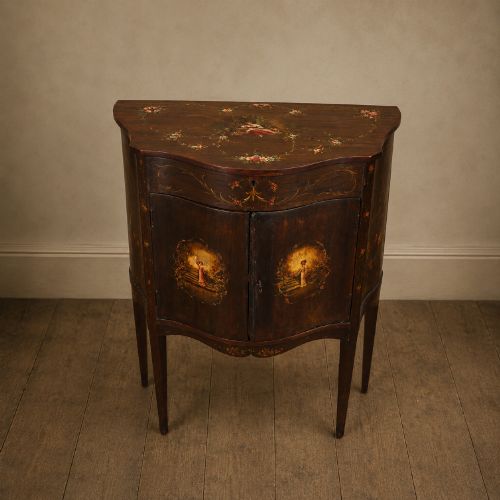
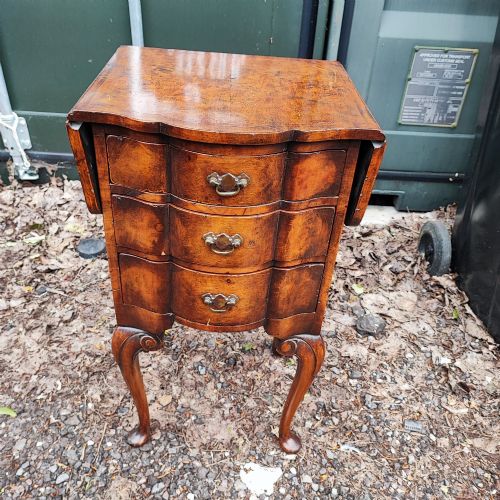


Serpentine Small Cabinet
These serpentine small cabinet pieces bring flowing curves and compact storage to any room, offering genuine period charm.
Serpentine Small Cabinet
A serpentine small cabinet presents a distinctively curved front that softens room layouts while providing practical storage in a compact footprint. Buyers hunting for a serpentine small cabinet encounter diverse forms ranging from bedside chests to refined display cabinets and side cupboards.
The pieces appearing on this page span several centuries and revival movements, stretching from eighteenth-century origins through nineteenth-century Victorian interpretations and into twentieth-century revivals. Walnut, burr walnut, mahogany, and satinwood dominate the selection, often enriched with painted surfaces or marquetry inlay.
Makers working within Georgian Revival, Sheraton Revival, Queen Anne, and French Louis styles shaped these small cabinets to suit drawing rooms, bedrooms, and parlours. The undulating front line defines the group, creating movement in the timber grain and catching candlelight or daylight from different angles.
How they were made
Cabinet makers constructed these small pieces using dense hardwoods like mahogany and walnut, frequently applying burr walnut or satinwood veneers to create rich, figured surfaces across the curved drawer fronts and doors. Marquetry inlay and hand-painted details were carefully added by hand to enhance the visual depth of the timber.
Brass handles, escutcheons, and ormolu mounts were cast and fitted to accent the serpentine lines, while glass panels were set into display cabinet doors. Joinery relied on traditional techniques to maintain the stability of the undulating fronts across changing household temperatures.
Serpentine Small Cabinet Retail Price Guide 2026
Typical asking prices for serpentine small cabinet among the pieces listed under this phrase on Sellingantiques today, from the lower quarter to the upper quarter. They describe what is for sale here now, not the wider market.
Listings feature pieces spanning the eighteenth century through to the 1930s, constructed in mahogany, walnut, satinwood, and kingwood.
What varies in quality
The fineness of the timber veneer and the precision of the marquetry define the upper tier of these pieces, alongside the crispness of any hand-painted decoration. Superior examples display seamless alignment along the curved drawer fronts and doors.
Mounts cast in brass or ormolu show sharper detail and heavier weight on better-made cabinets, whereas simpler production relies on plainer hardware. The integrity of the serpentine shaping itself dictates the overall elegance of the silhouette.
The Serpentine Small Cabinet Glossary
- Serpentine
- A furniture front curved in a concave-convex-concave wave shape, resembling the undulations of a snake. This profile requires skilled carpentry to shape accurately across drawers and doors.
- Marquetry
- The art of applying pieces of veneer to a structure to form decorative patterns and pictures. Craftsmen use varied woods to achieve natural contrasts in tone and grain.
- Ormolu
- Gilded bronze mounts applied to furniture for decoration, popular in French-inspired and nineteenth-century revival pieces. The finish adds metallic highlights to timber surfaces.
- Vitrine
- A glass-displayed cabinet designed to show off porcelain, books, or curiosities. These pieces often feature glazed sides as well as doors to maximise interior illumination.
Serpentine Small Cabinet: Frequently Asked Questions
Where do I put a serpentine small cabinet?
These compact cabinets suit bedrooms as bedside tables, hallways as lamp stands, or living rooms as display units. Their curved fronts allow them to sit gracefully in corners or narrow spaces without obstructing room flow.
Matching the timber tone to existing furniture helps integrate the piece, though walnut and mahogany versatile finishes blend easily with varied interior styles.
How do I clean the wood surfaces?
Dust the cabinet regularly with a soft, dry cloth to prevent dirt build-up in the carved details and veneer joints. Avoid modern silicone sprays that can damage antique polishes.
Applying a traditional beeswax occasionally nourishes the timber and maintains the natural lustre of walnut and mahogany surfaces.
Are these cabinets purely decorative?
While many feature glass doors for display or serve as lamp tables, most offer functional drawer or cupboard space inside. They were originally built for practical storage in domestic rooms.
Interior compartments accommodate books, bedside items, or small collections while keeping living areas tidy.
How do I identify a revival piece?
Revival pieces often combine styles such as Queen Anne or Sheraton elements within nineteenth or twentieth-century construction methods. Timber selection, hardware fixings, and internal secondary woods help indicate the exact period.
Comparing the construction to documented examples from the same era clarifies whether a cabinet dates to the original eighteenth century or a later revival.