



Serpentine Nightstands
Serpentine nightstands combine undulating curves with practical bedside storage, offering a sophisticated silhouette shaped by centuries of cabinet-making tradition.
Serpentine Nightstands
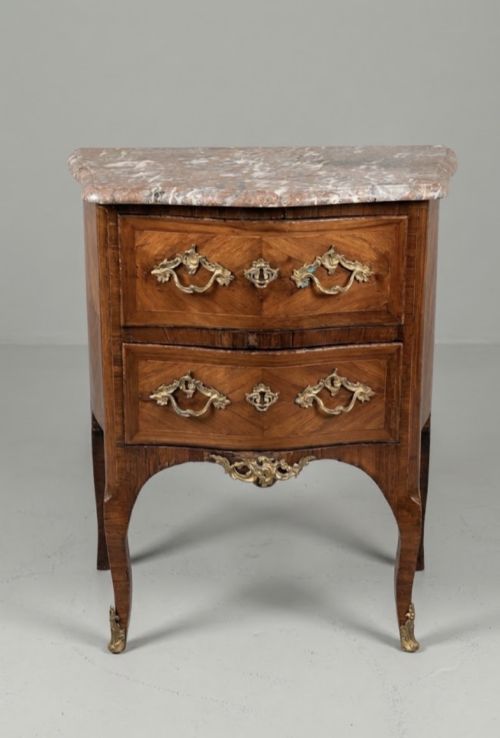
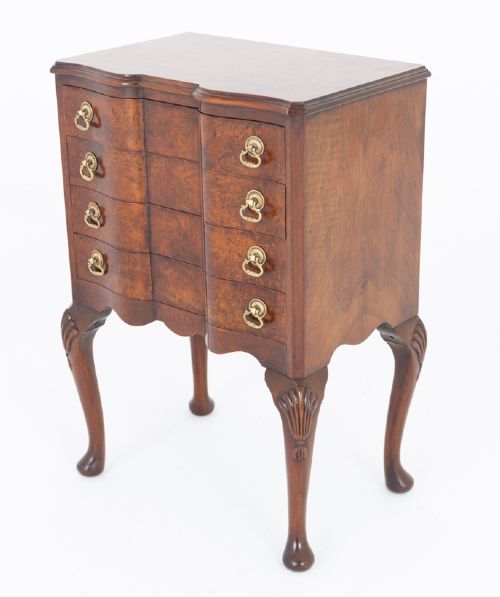
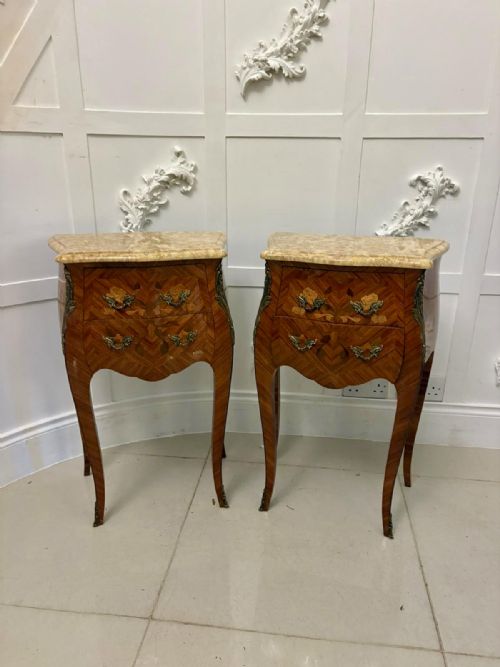
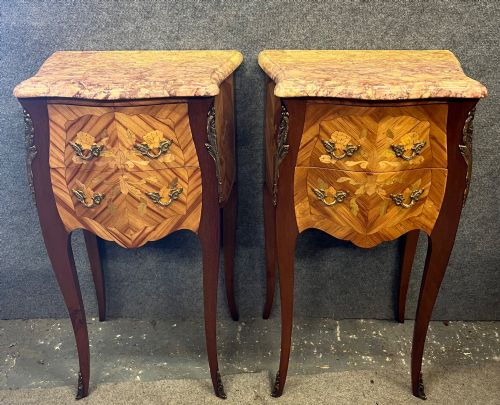
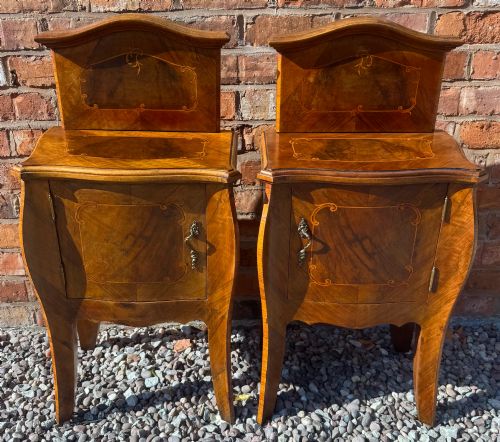
Serpentine nightstands encompass bedside tables, cabinets, and small commodes defined by their curving fronts that sweep outward at the sides and inward at the centre. This distinctive shape appears across periods from the eighteenth century through to the art deco era, though nineteenth-century revival and twentieth-century interpretations feature frequently.
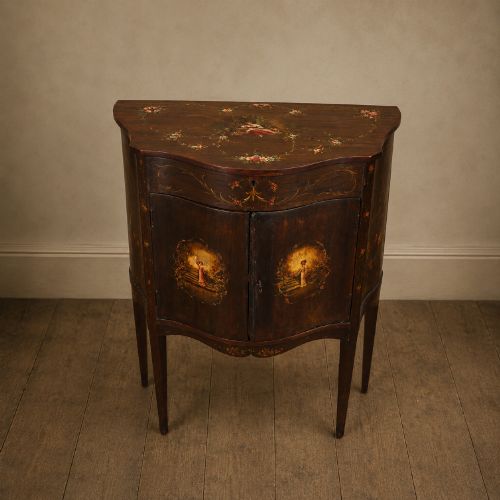
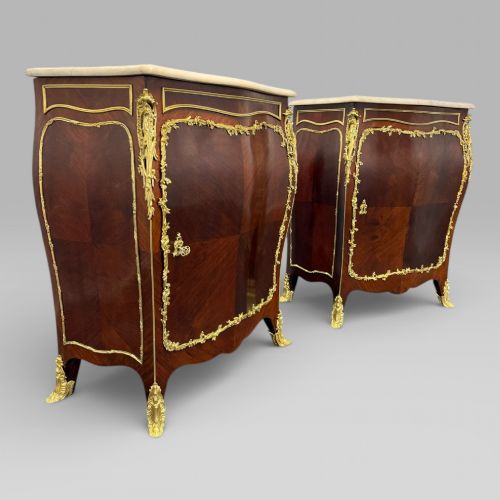
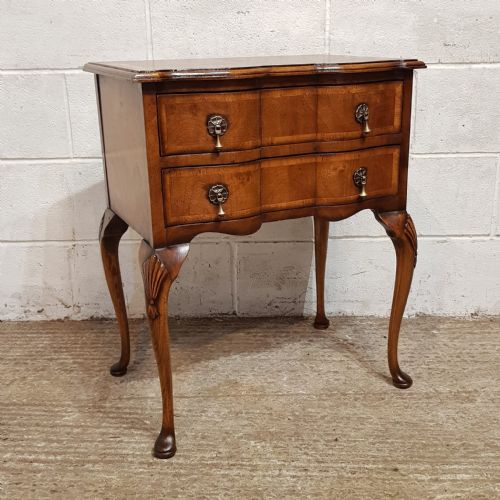
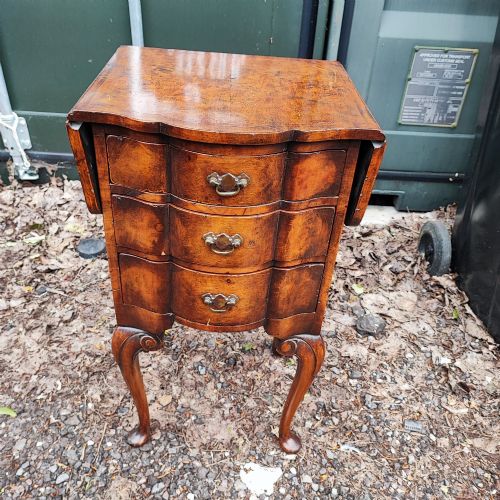
The objects take many forms, including enclosed cupboards with doors, open lamp tables, and diminutive chests of drawers. Cabinet-makers constructed these pieces using dense hardwoods and decorative veneers, often pairing the undulating woodwork with fitted marble tops.
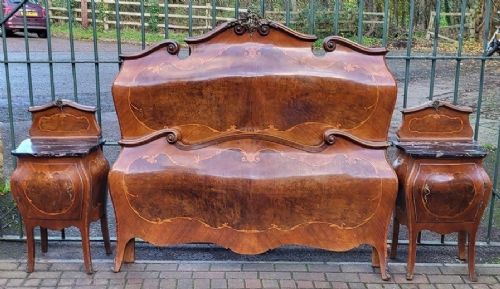
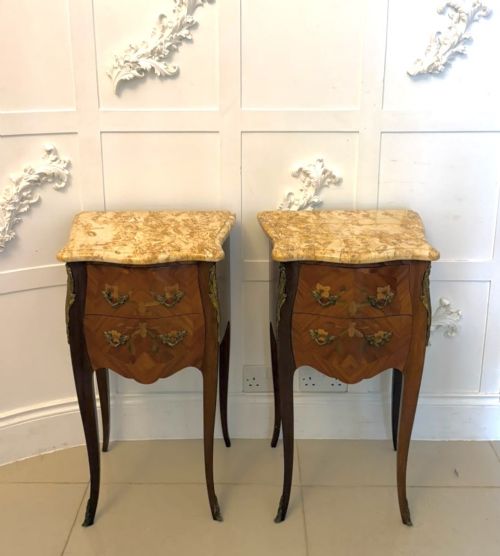
Makers adapted the serpentine profile to various regional tastes, producing French Louis XV style bombe variants alongside English Georgian mahogany designs and Italian walnut pieces. Buyers meet pairs as well as single items, reflecting how bedroom furniture was commissioned and used over successive centuries.
Materials and Construction Techniques
Craftsmen utilised robust primary timbers such as mahogany and walnut, applying burr walnut, kingwood, and rosewood veneers to create richly figured surfaces. Marquetry and parquetry inlays frequently decorate the drawer fronts and cabinet doors, demonstrating precise geometric or floral patterns.
Shaping the serpentine front required skilled woodworking to curve solid timber and bend veneers over complex frames without splitting the grain. Cabinet-makers incorporated cast brass handles, ormolu mounts, and polished marble inserts to finish the top surfaces of the more elaborate examples.
Serpentine Nightstands Retail Price Guide 2026
Typical asking prices for serpentine nightstands among the pieces listed under this phrase on Sellingantiques today, from the lower quarter to the upper quarter. They describe what is for sale here now, not the wider market.
Listings feature items built from mahogany, walnut, burr walnut, kingwood, and rosewood, accented with brass, marble, and ormolu.
Quality and Craftsmanship
The refinement of the serpentine sweep determines much of the visual success of a piece, separating fluid, hand-carved contours from stiffer mechanical reproductions. Superior examples display seamless veneer matching across undulating drawer fronts and balanced proportions that maintain structural integrity.
Fine cabinet-making reveals itself in the interior construction, including hand-cut dovetails on drawer boxes and the precise fit of doors within curved apertures. The integration of high-grade materials like heavy marble slabs and finely chased ormolu mounts distinguishes top-tier commissions from standard production.
E. Kahn
The Serpentine Nightstands Glossary
- Serpentine
- A furniture front characterised by a double curve, concave at the centre and convex at the sides. This profile creates a sense of movement across the piece.
- Bombe
- A swollen or bulging out-curved form characteristic of continental furniture. The sides and front curve outward in sweeping rounded contours.
- Marquetry
- Decorative patterns formed by inserting thin pieces of wood, veneer, or shell into a wooden substrate. Artisans arrange different coloured timbers to create pictorial or geometric designs.
- Ormolu
- Gilded bronze mounts and decorative accents applied to furniture. The technique involves treating brass or bronze with a gold amalgam.
- Parquetry
- Geometric wood inlay work arranged in regular patterns such as cubes, lozenges, or squares. It differs from marquetry through its strict adherence to repeating geometric grids.
Serpentine Nightstands: Frequently Asked Questions
What periods do these pieces come from?
The selection spans from eighteenth-century Georgian and late eighteenth-century items through to nineteenth-century Victorian revival pieces and early twentieth-century examples dating up to the 1930s. Each period brings distinct interpretations of the serpentine curve and favoured timber choices.
Earlier items often feature solid mahogany or walnut, while later nineteenth and twentieth-century versions frequently employ elaborate kingwood and burr walnut veneers alongside French styling influences.
How were serpentine nightstands used historically?
These pieces served as functional bedside storage for chamber items, night lamps, and personal belongings within affluent bedrooms. Their compact dimensions allowed them to sit neatly beside period bedframes while providing concealed cupboard space or accessible surface tops.
Over time, many of these cabinets transitioned into general living spaces as lamp tables or decorative lamp stands, adapting to changing domestic layouts while retaining their original storage utility.
Are these tables usually found in pairs?
Surviving examples appear both as single pieces and as matched pairs, depending on their original commission. Pairs are particularly common among French Louis XV style cabinets and twentieth-century decorative sets.
Single tables often originate from Georgian side commodes or individual bedroom suites where only one survivor remains from the original room arrangement.
How do I distinguish regional styles?
English pieces from the Georgian tradition tend to rely on solid mahogany with restrained serpentine lines and subtle bracket feet. In contrast, French and Italian variants frequently display pronounced bombe shaping, extensive marquetry, and gilt bronze or ormolu mounts.
Italian and French cabinets also commonly feature shaped marble slabs fitted to the top surface, a detail less typical of standard English vernacular bedside tables.