



Serpentine Marble Top Cabinet
A serpentine marble top cabinet brings flowing lines and cool stone to a room, offering both surface display and concealed storage.
Serpentine Marble Top Cabinet
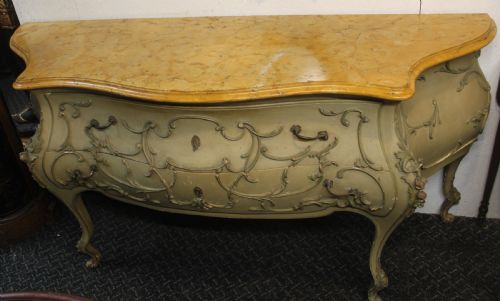
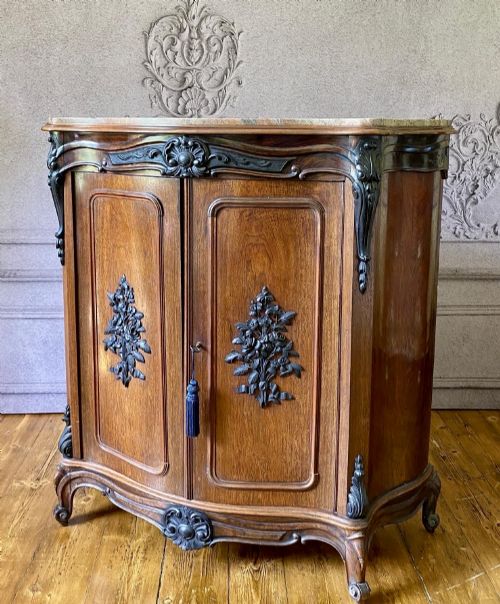
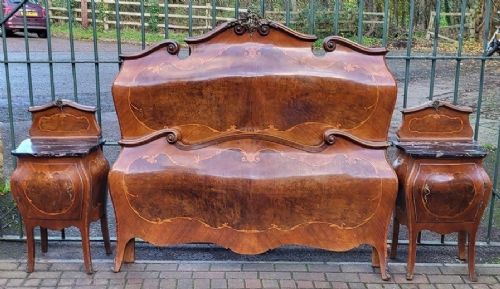
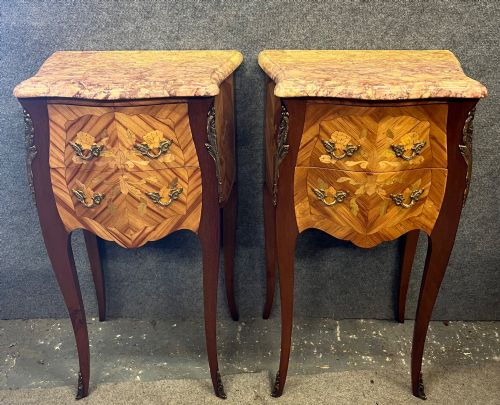
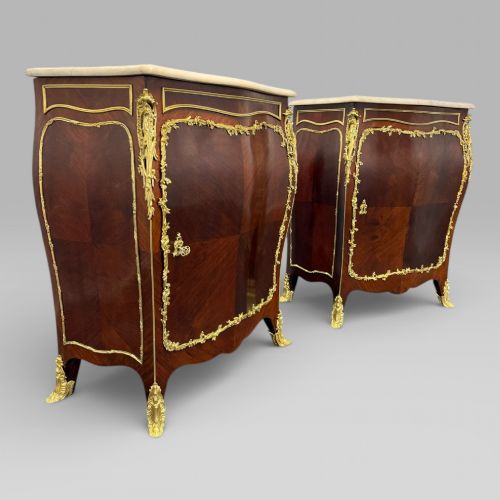
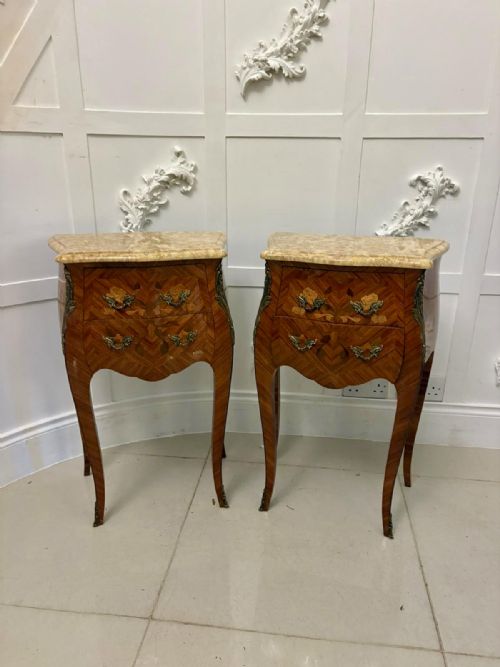
A serpentine marble top cabinet combines a distinctive undulating stone surface with timber construction, taking forms such as commodes, sideboards, and bedside tables. These pieces emerge predominantly in Victorian, Edwardian, and earlier continental periods.
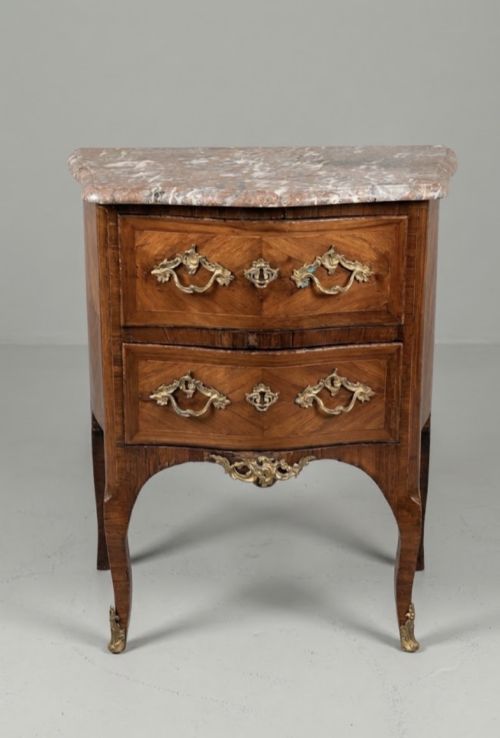
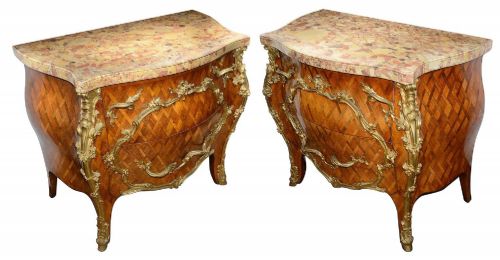
The profile curves outward at the centre and inward at the sides, creating a rhythmic movement across the furniture face. Such shapes require precise carpentry to ensure doors and drawers follow the contour without binding.
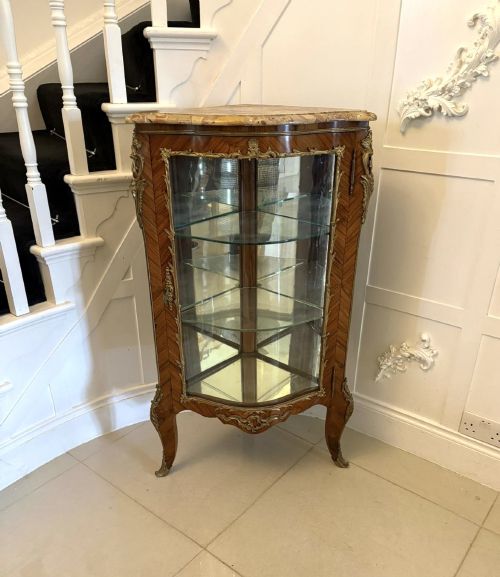
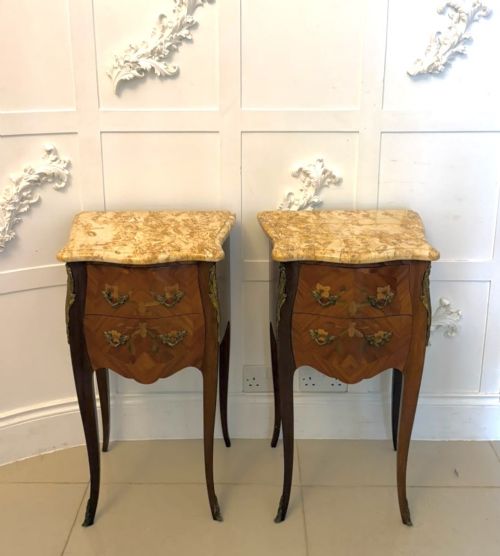
French influences shape many examples on this page, particularly through Louis XV and Louis XVI styles involving kingwood and walnut. Buyers frequently encounter side cabinets and display vitrines alongside bedside chests bearing these characteristic stone slabs.
Materials and construction
Cabinet makers combine dense timbers like walnut, kingwood, and rosewood over solid carcases, often applying intricate marquetry or parquetry patterns across the surfaces. Fine grain selection defines the exterior appearance of these woods.
Stone cutters shape heavy marble slabs to match the complex front curves of the wooden base, finishing the edges with bevels or moulding. Cast or chased ormolu mounts and brass details provide structural reinforcement and decorative accenting.
Serpentine Marble Top Cabinet Retail Price Guide 2026
Typical asking prices for serpentine marble top cabinet among the pieces listed under this phrase on Sellingantiques today, from the lower quarter to the upper quarter. They describe what is for sale here now, not the wider market.
Makers carved serpentine marble tops by hand to follow complex curves without modern templates.
Judging the work
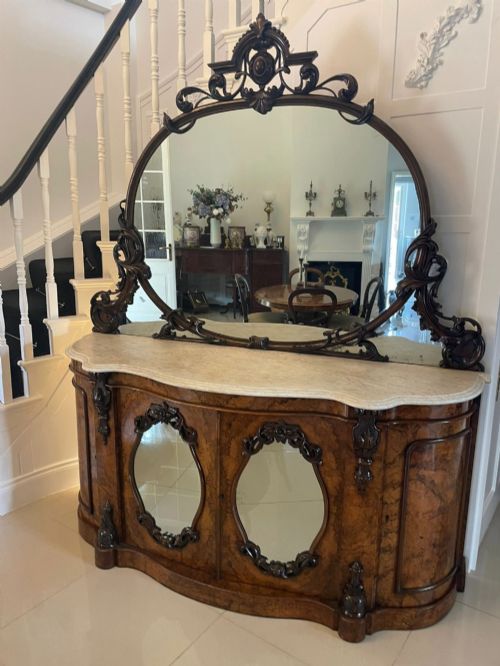
Superior examples demonstrate seamless alignment between the heavy stone top and the carved wooden framework beneath. The precision of the serpentine curve sets finer pieces apart, ensuring drawers operate smoothly despite the complex geometry.
The depth and execution of marquetry inlay, alongside the crispness of gilt bronze or ormolu mounts, signal the workshop standard. Well-chosen burr walnut or figured kingwood veneers further distinguish master craftsmanship from standard production.
E. Kahn·Epstein
The Serpentine Marble Top Cabinet Glossary
- Serpentine
- A curved shape that undulates with a convex centre flanked by concave sides. This line requires exceptional woodworking skill to execute properly.
- Ormolu
- Gilt bronze mounts applied to furniture edges and corners for decoration. The technique involves coating bronze in a gold amalgam.
- Marquetry
- Decorative veneer work forming pictures or geometric patterns using various coloured woods. Craftsmen cut these pieces to fit precisely together.
- Commode
- A low chest of drawers, often standing on short legs and associated with French design. These pieces frequently carry heavy stone tops.
- Vitrine
- A glass-fronted display cabinet designed for porcelain and curiosities. The framing often incorporates serpentine glass panels.
Serpentine Marble Top Cabinet: Frequently Asked Questions
What rooms suit a serpentine marble top cabinet?
These cabinets work well in living areas, hallways, and bedrooms where their decorative fronts provide a focal point. The stone surface offers a durable landing space for lamps and decorative objects.
Smaller bedside versions fit neatly beside low beds, whilst larger commodes and credenzas anchor dining spaces or grand reception rooms.
How do I care for the marble top?
Wipe the stone surface regularly with a soft, damp cloth and neutral soap to prevent staining. Avoid acidic liquids like citrus juice or wine, which can etch polished marble.
Apply a protective stone wax periodically to maintain the lustre and guard against moisture penetration from glasses or vases.
Are these pieces English or French?
The selection includes both British Victorian examples and continental pieces executed in French styles such as Louis XV and Louis XVI. French pieces often feature kingwood veneers and elaborate ormolu mounts.
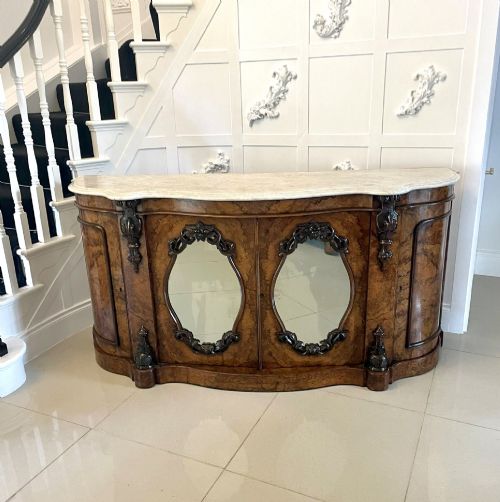
English makers tended to use walnut and burr walnut, creating robust side cabinets and mirror-back credenzas for domestic interiors.
How do I identify the period?
Examine the secondary woods inside the drawers, the style of the brass hardware, and the construction methods used on the carcase. Victorian pieces often show heavy walnut framing, while 18th-century pieces display hand-cut dovetails.
Revival pieces from later decades imitate earlier French aesthetics but reveal different internal construction and machine-cut elements.