



Serpentine Marble Sideboard
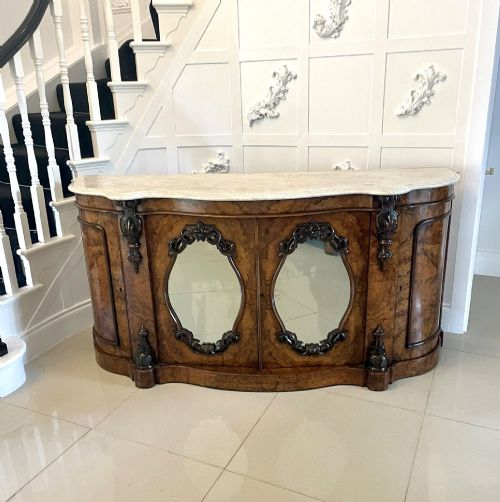
A serpentine marble sideboard brings together curving stonework and rich timber cabinetry, offering a striking centrepiece for formal dining rooms and grand hallways.
Serpentine Marble Sideboard
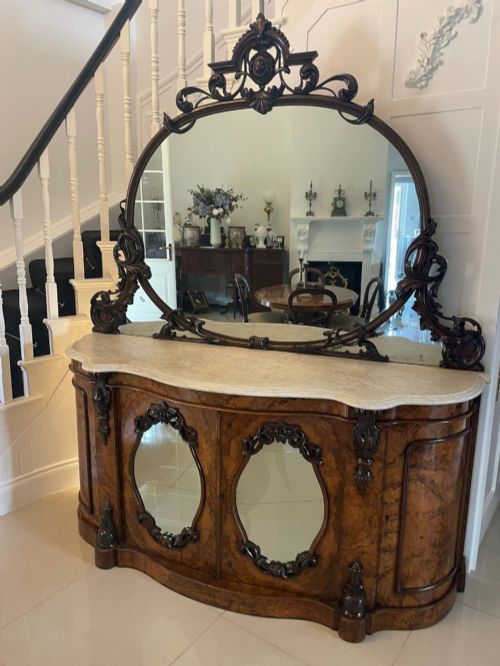
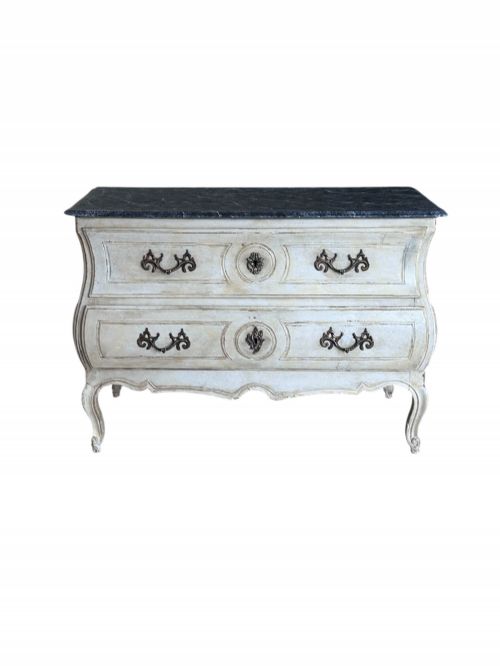
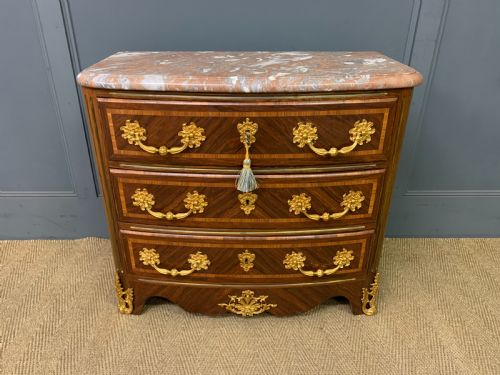
When you search for a serpentine marble sideboard, you encounter substantial Victorian credenzas, French commodes, and console tables featuring distinctive undulating fronts. These pieces combine heavy stone surfaces with refined cabinetry designed for display and storage in principal rooms.
The selections available here span the eighteenth, nineteenth, and early twentieth centuries, drawing heavily upon Victorian British craftsmanship and continental French styles. Walnut, burr walnut, rosewood, and kingwood predominate alongside painted finishes and marquetry details.
The characteristic serpentine shape curves outward and inward in a continuous flowing line, paired with fitted marble tops that follow the exact contours of the timber base below.
Materials and construction methods
Cabinetmakers constructed the foundational carcasses from timbers such as walnut, oak, and mahogany, frequently applying decorative veneers of burr walnut, kingwood, or rosewood to create patterned exterior surfaces. Marquetry inlay, brass stringing, and elaborate gilt bronze or ormolu mounts enhance the architectural facades.
The heavy marble slabs require precise stone-cutting techniques to achieve the characteristic convex and concave serpentine curves that match the profile of the wooden furniture beneath. Skilled joinery ensures the heavy stone rests securely upon the cabinet frame without compromising the structural integrity of the piece.
Serpentine Marble Sideboard Retail Price Guide 2026
Typical asking prices for serpentine marble sideboard among the pieces listed under this phrase on Sellingantiques today, from the lower quarter to the upper quarter. They describe what is for sale here now, not the wider market.
The site's listings record serpentine marble sideboards featuring both Victorian walnut construction and eighteenth-century French commode designs.
Distinctions in craftsmanship and design
Quality depends upon the fluidity of the timber veneer work and the precision with which the marble top follows the complex curves of the serpentine front. Superior examples integrate cast ormolu mounts and bronze details that fit cleanly against the wood grain without gaps.
The depth of carving on mirror backs, cupboard doors, and console frames distinguishes standard production from exceptional workshop output. Grain selection in burr walnut and kingwood further elevates the visual impact of the cabinetry.
Gillows·Gaudreaux
The Serpentine Marble Sideboard Glossary
- Serpentine
- A curved architectural line that sweeps inward and outward in a continuous 'S' shape. This profile defines the front facades and matching marble tops of these cabinets.
- Credenza
- A grand display cabinet or sideboard used primarily in the Victorian dining room or parlour. These pieces often incorporate mirrored backs and glazed side doors.
- Ormolu
- Gilt bronze ornamentation applied to the corners, mounts, and apron rails of French and English case furniture. This technique adds metallic contrast to the dark timber surfaces.
- Marquetry
- Decorative patterns created by fitting different wood veneers together onto a structural background. Artisans utilise contrasting tones to depict floral or geometric motifs.
Serpentine Marble Sideboard: Frequently Asked Questions
How do I clean the marble top?
Wipe the stone surface using a soft cloth dampened with warm water and mild neutral soap.
Avoid acidic cleaning products, vinegar, or harsh chemicals that can etch and dull the polished marble finish over time.
Can I place these pieces in a modern room?
The curved wooden forms and patterned marble surfaces integrate effectively into contemporary interiors as statement storage units.
Their substantial proportions require adequate floor space, particularly when paired with mirrored upper sections or console legs.
Are the marble tops attached?
The heavy stone slabs generally rest directly upon the wooden frames of the commodes and credenzas under their own weight.
Due to this heavy construction, moving the furniture requires lifting the marble separately from the base to prevent damage.
How do I distinguish French styles from Victorian pieces?
French commodes from this selection typically feature lighter kingwood or painted surfaces alongside extensive ormolu mounts and cabriole influences.
Victorian English equivalents tend to utilise darker walnut or burr walnut timbers, often incorporating mirrored backs and enclosed cupboard configurations.