


Serpentine Marble Credenza
A serpentine marble credenza brings sculptural stone and figured timber together, offering a stately cabinet for living spaces.
Serpentine Marble Credenza
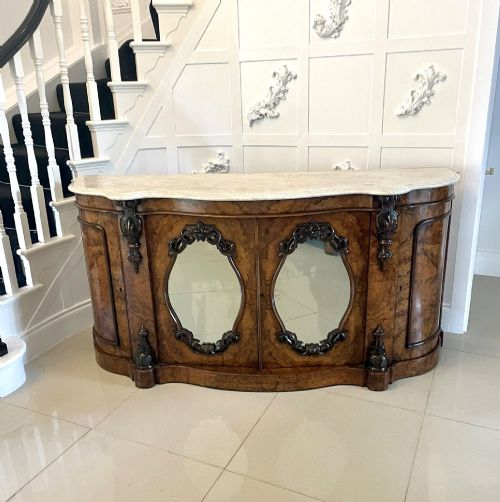
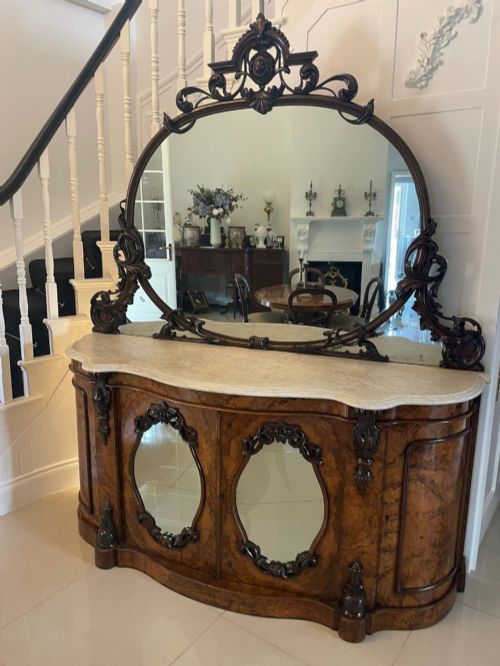
When you search for a serpentine marble credenza, you are looking at substantial nineteenth-century furniture defined by a curved, undulating front and a heavy stone top. The pieces on this page span the Victorian period and later decades, featuring prominent walnut, burr walnut, and rosewood constructions alongside mirror glass backs.
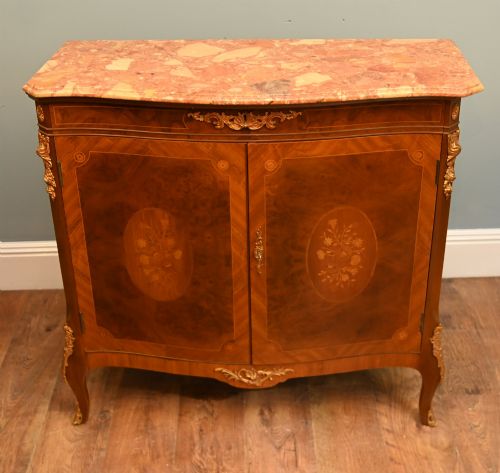
You will most frequently encounter Victorian examples alongside French revival sideboard forms, often incorporating brass mounts and marquetry. These cabinets function primarily as side storage and display units, combining cupboard doors with shaped stone surfaces.
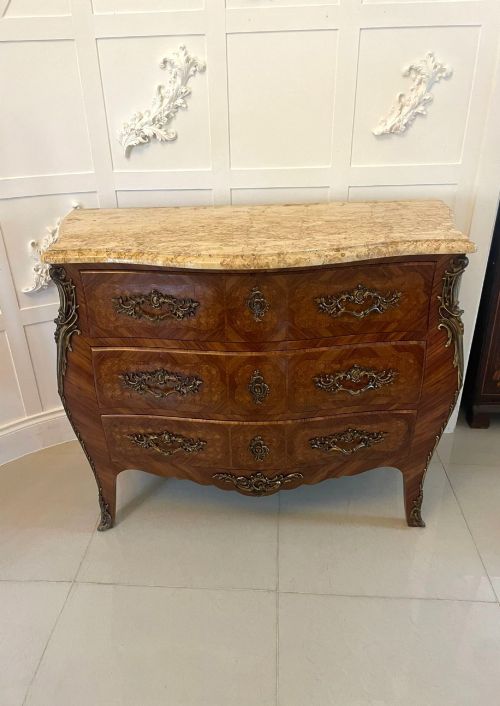
The regional origins split between British cabinetmakers working in walnut and continental makers producing rosewood and marquetry pieces. Side cabinets and commodes sit alongside traditional credenzas, all sharing the characteristic curved marble slab.
How they were made
Cabinetmakers built these pieces using solid timber frames faced with burr walnut, flame mahogany, or rosewood veneers, shaped to follow the sweeping curves of the design. Brass inlays, marquetry, and bronze mounts decorated the surfaces before glass doors were fitted.
The heavy marble tops were hand-carved and polished to match the complex serpentine contours of the wooden base beneath. Mirror glass panels were frequently integrated into upper back sections, supported by carved wooden frames.
Materials recorded across the archive include mirror glass, bronze, and flame mahogany.
What varies in quality
The distinction between ordinary and exceptional pieces lies in the choice of timber and the precision of the veneer work. Highly figured burr walnut and intricate marquetry indicate superior craftsmanship.
The thickness and sculptural quality of the serpentine marble top also separate standard examples from finer work. Heavier, deeply contoured stone combined with crisply cast brass mounts elevates the standing of a cabinet.
Gillows
The Serpentine Marble Credenza Glossary
- Serpentine
- A shaped furniture front that curves inward centrally and sweeps outward at the ends, resembling the undulating movement of a snake. This profile requires advanced woodworking skill to match with a carved stone top.
- Credenza
- A low cabinet traditionally used for serving food or displaying valuables, evolving in the nineteenth century into a glazed display piece. These units often feature central cupboards flanked by curved glass doors.
- Burr Walnut
- A prized timber harvested from walnut tree growths, producing swirling, intricate grain patterns. Cabinetmakers used these decorative veneers on the primary surfaces of grand Victorian furniture.
- Marquetry
- The art of applying small pieces of veneer to form decorative pictures or geometric patterns on a wooden carcase. This technique often incorporates various exotic woods to create contrast.
- Ormolu
- Gilt-bronze mounts applied to furniture edges and corners for decorative effect. These metal fittings accent the curved lines of nineteenth-century French and English cabinets.
Serpentine Marble Credenza: Frequently Asked Questions
What is a serpentine marble credenza?
A serpentine marble credenza is a heavy nineteenth-century cabinet featuring a curved, undulating wooden front and a matching stone top.
These pieces typically combine timber veneers like burr walnut with glass doors and internal shelving for display.
How were these credenzas used originally?
In Victorian and period interiors, these cabinets served as grand storage units in dining rooms and parlours.
The flat stone surface held decorative objects, while enclosed cupboards stored porcelain and silverware.
How do I style a marble credenza at home?
Place the cabinet against a sturdy wall in a dining room or hallway where its stone top and curved form can function as a focal point.
Keep heavy items balanced and allow the figured timber and brass details to remain visible.
How do I tell Victorian from French pieces?
Victorian examples frequently utilise burr walnut and incorporate mirror backs within the cabinet structure.
French pieces from the same era often lean towards rosewood, parquetry, and elaborate bronze mounts.