


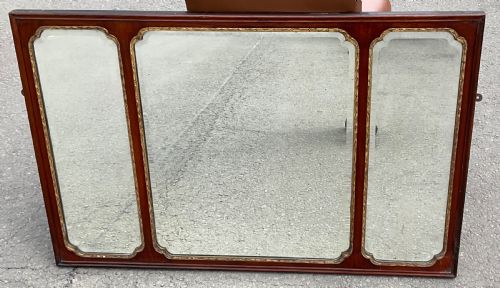


Sectioned Wall Mirror
A sectioned wall mirror offers segmented plates that catch the light from multiple angles, bringing depth and period character to a room.
Sectioned Wall Mirror
A sectioned wall mirror brings together divided glass plates within a single frame, offering a complex reflection that visually expands interior spaces. These pieces appear in forms such as overmantels and wall mirrors, designed to hang above mantelpieces or anchor large wall spaces.
The selections span the nineteenth century, the Regency era, the Edwardian period, and the nineteen thirties, covering styles like Neoclassical, Rococo Revival, French Empire, Tudor Revival, and William IV. Surviving examples range from simple white painted or ebonized frames to elaborate gilded and maple-framed structures.
Most pieces encountered on this page function as overmantel mirrors with triple or multiple plates, sometimes incorporating decorative panels, reverse glass prints, or relief details depicting figures like Bacchus and cherubs.
How they were made
Frames are constructed from wood such as oak, walnut, and maple, often finished with gesso and giltwood, paint, or part ebonization. Gilt wood and gilding techniques provide a reflective metallic surface that frames the individual glass plates.
Mirror glass and mirror plates are divided into sections using internal glazing bars or frame divisions. Certain examples incorporate specialised elements like reverse glass prints or decorative relief panels set above the main mirror plates.
Sectioned Wall Mirror Retail Price Guide 2026
Typical asking prices for sectioned wall mirror among the pieces listed under this phrase on Sellingantiques today, from the lower quarter to the upper quarter. They describe what is for sale here now, not the wider market.
What varies in quality
The distinction between standard and superior examples lies in the integrity of the original framing materials and the depth of the carved or applied ornamentation, such as decorative relief panels and gesso work. Finer pieces demonstrate precise joinery in multi-plate configurations and retain their original gilding or painted surfaces without extensive redecoration.
The Sectioned Wall Mirror Glossary
- Overmantel mirror
- A large mirror specifically proportioned to hang on the wall directly above a fireplace mantel. These often feature wide horizontal formats with multiple glass plates.
- Giltwood
- Wood carved and coated with gold leaf or a gold-coloured finish. This material is characteristic of formal nineteenth-century frames.
- Gesso
- A plaster-like mixture applied to wood frames and carved or moulded into decorative relief details before gilding or painting. It provides a smooth base for fine ornamentation.
- Reverse glass print
- An image painted or transferred onto the back of a glass panel. This technique protects the artwork behind the glass surface.
- Triptych
- A piece divided into three separate sections or panels. In mirrors, this refers to three adjacent glass plates within a shared frame.
Sectioned Wall Mirror: Frequently Asked Questions
Where should a sectioned wall mirror be hung?
These mirrors are traditionally positioned above a fireplace mantel as an overmantel piece, where their wide proportions reflect light across the room.
They also function effectively on prominent living room or hallway walls to create a focal point and add a sense of expanded space.
How do I identify a Regency period mirror?
Regency pieces often display classical motifs inspired by ancient Greece and Rome, utilising symmetrical lines and formal gilt or painted surfaces.
They frequently appear as triple plate overmantel mirrors with distinct architectural proportions characteristic of the early nineteenth century.
What is a multi-plate mirror?
A multi-plate mirror contains several distinct pieces of mirror glass fitted together within a single frame rather than one continuous sheet.
This construction method was often necessitated by historical glass-making limitations and creates a segmented reflection that divides the view.
Can these mirrors be cleaned safely?
Original mirror plates and antique frames require gentle maintenance using soft, dry cloths to avoid damaging fragile giltwood, gesso, or painted finishes.
Moisture should be kept away from the edges of old mirror plates to prevent silvering deterioration and separation from the backing.