



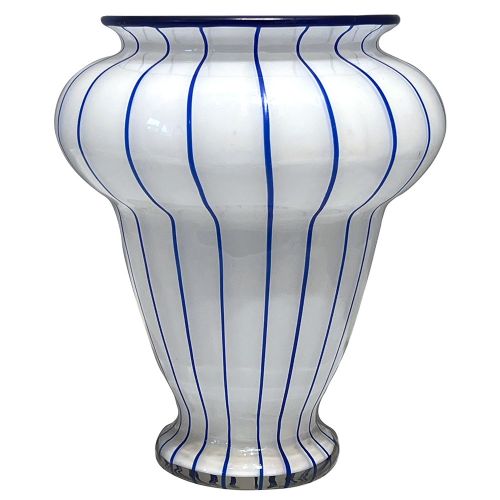


Secessionist Glass
Secessionist glass brings together stark geometric restraint and fluid organic forms, offering a bold departure from traditional ornamentation.
Secessionist Glass
Secessionist glass encompasses vessels, lighting, and tableware created during the height of the Vienna Secession movement and related continental workshops. When you search for secessionist glass, you encounter pieces defined by an architectural austerity balanced against the sensual appeal of iridescent surfaces.
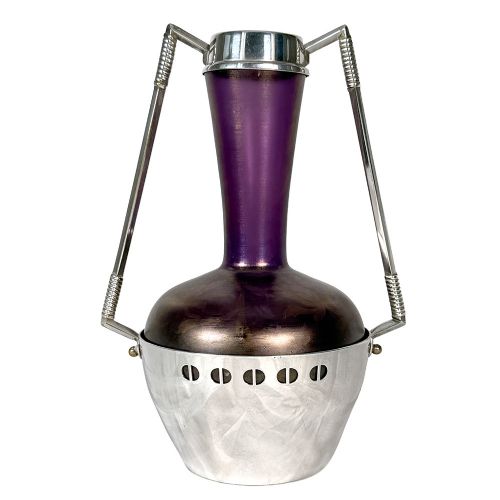
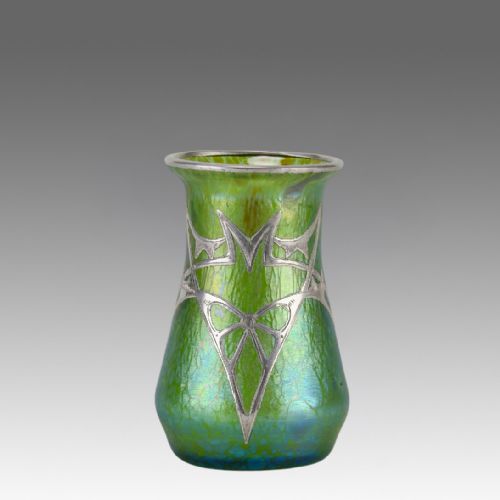
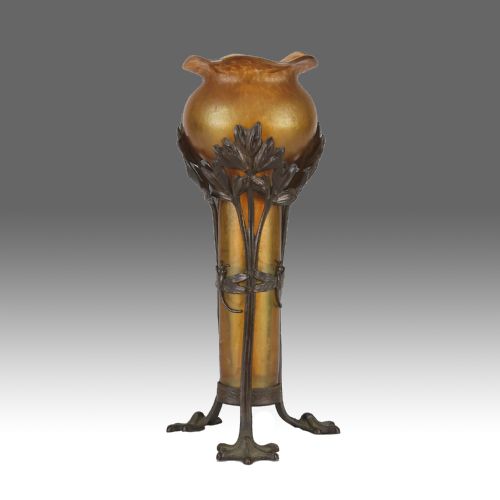
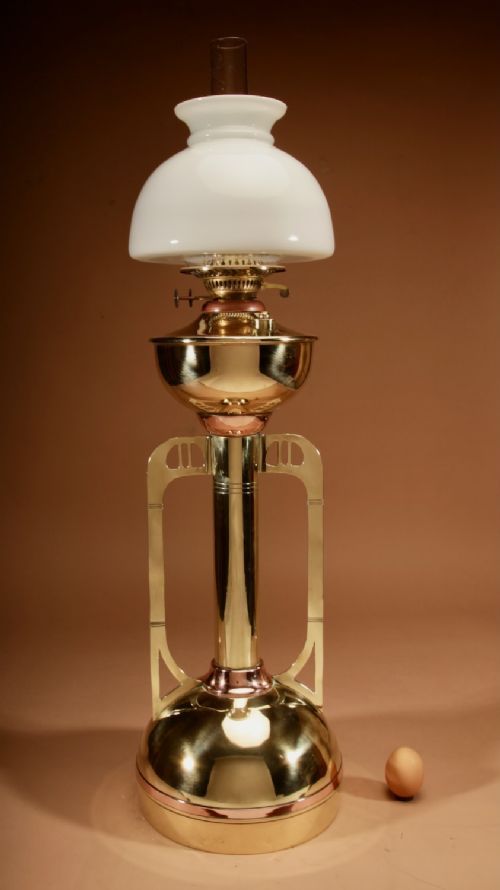
The objects on this page predominantly span the period from the late Victorian era through the early decades of the twentieth century. Vases, drinking glasses, and table lamps form the core of the available selection, often uniting glass bodies with metal mounts in silver plate, brass, or copper.
Makers and designers working within the Jugendstil and Arts and Crafts idioms contributed distinct regional interpretations from Austria, Germany, and the Netherlands. These works range from monumental opal glass vases with applied bands to delicate crystal champagne flutes shaped by prominent Wiener Werkstätte visionaries.
Materials and Manufacture
Makers utilised free-blown and mould-blown glass techniques, often employing specialised treatments like iridescent chemical coatings and crackle finishes to catch the light. The resulting bodies range from translucent opal glass to deep greens and clear crystal.
Metalwork played a structural and decorative role, integrating cast bronze, patinated brass, and pewter into mounts, handles, and lamp bases. Silver overlay and delicate metal framing provided a geometric contrast to the organic contours of the glass vessels.
Secessionist Glass Retail Price Guide 2026
Typical asking prices for secessionist glass among the pieces listed under this phrase on Sellingantiques today, from the lower quarter to the upper quarter. They describe what is for sale here now, not the wider market.
Listings feature glass, silver plate, bronze, and copper across periods spanning Victorian production to the 1910s.
Evaluating Quality
Quality rests upon the harmony between the glass vessel and its metal mount, where precise engineering meets artistic ambition. Superior examples exhibit clean lines in the metalwork and complex chemical effects in the glass without surface distortion.
Attribution to documented designers and celebrated glassworks elevates an object, distinguishing standard commercial output from vanguard studio pieces. The weight of the glass, the crispness of applied optical effects, and the integrity of patinated metal surfaces dictate the standing of each piece.
Johann Loetz·Gustave Serrurier Bovy·Otto Prutscher·Koloman Moser·Adelbert Niemeyer
The Secessionist Glass Glossary
- Iridescent Glass
- Glass treated with metallic vapours while hot to produce a shimmering, oil-slick surface effect. This technique was pioneered and refined by major Bohemian glassworks during the movement.
- Wiener Werkstätte
- The Vienna Workshops production cooperative established in 1903 by architects and artists promoting radical design. Their output influenced domestic objects, textiles, and decorative glass.
- Ausfuehrung
- The German term for execution or finish, frequently used in factory records to designate specific decorative formulas for glass coloration and surface pattern.
- Jugendstil
- The continental European style of art and design spanning the late nineteenth and early twentieth centuries. It shares roots with Art Nouveau but leans toward geometric abstraction.
- Taza
- A footed shallow cup or pedestal bowl used for presentation or serving. These metal or glass vessels often feature characteristic Secessionist rim detailing.
Secessionist Glass: Frequently Asked Questions
How do I identify genuine Secessionist glass?
Authentic pieces rely on characteristic stylistic markers such as austere geometric mountings, specific iridescent finishes, and organic profiles typical of the Vienna circle. Examining the integration of metalwork and glass provides strong clues to period authenticity.
Maker signatures remain scarce, so identification often depends on documented decors, characteristic glass weights, and known workshop forms associated with Bohemian and continental production centres.
What is the difference between Art Nouveau and Secessionist glass?
While Art Nouveau tends toward exuberant, flowing naturalism inspired by plant stems and hair, Secessionist design introduces a stricter, more architectural geometry. Secessionist works retain organic inspiration but harness it within cleaner, restrained structural lines.
This aesthetic shift reflects the influence of the Vienna Secession, where artists prioritised simplified forms and functional clarity over pure decorative excess.
How were these glass lamps and vases used originally?
Vases served primarily as decorative centerpieces in bourgeois interiors, often left empty or arranged with single sculptural stems to showcase the glass body. Table lamps provided ambient illumination for writing desks and parlours, combining functional metal wiring with artistic shades.
Drinking vessels and chalices were utilised during formal dining and social gatherings, reflecting the high value placed on aesthetic domestic goods by contemporary collectors.
How should I care for antique glass and metal mounts?
Dust glass surfaces gently with a soft, dry cloth and avoid harsh chemical cleaners that might strip delicate iridescent finishes or patinated metal surfaces. Keep pieces away from direct sunlight to preserve surface coloration.
When handling mounted pieces, support the heavy glass body rather than lifting solely by metal handles or delicate overlay, as historical adhesives and joins can weaken over time.