

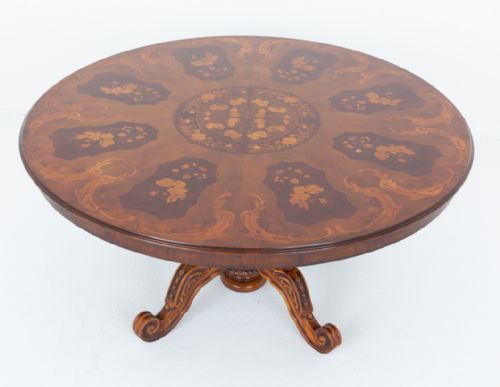


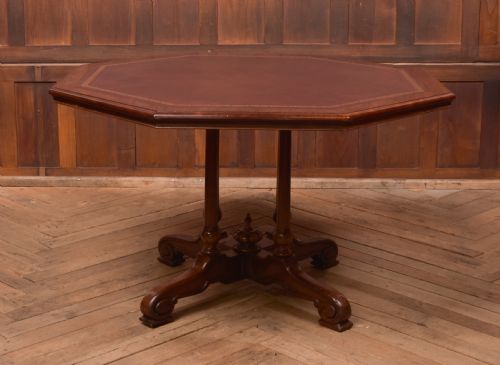
Scroll Foot Dining Table
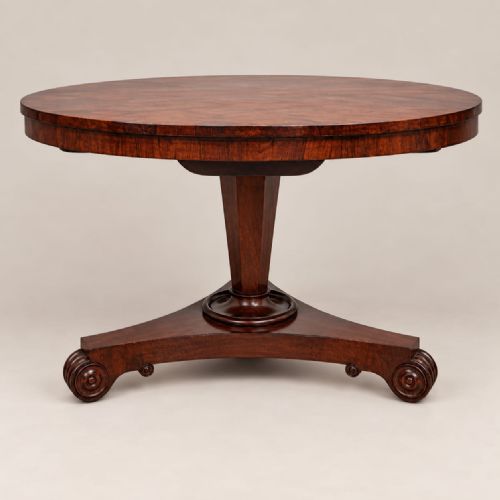
A scroll foot dining table brings genuine nineteenth century craftsmanship and robust timbers into your dining room.
Scroll Foot Dining Table
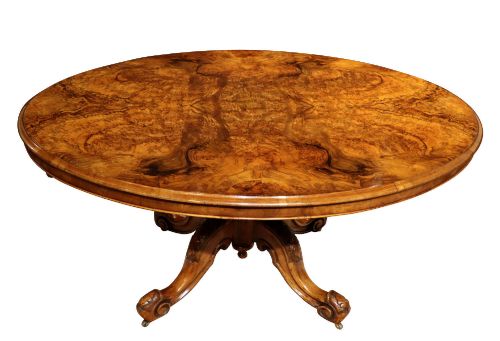
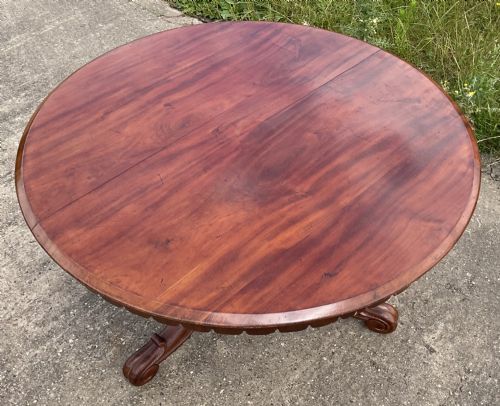
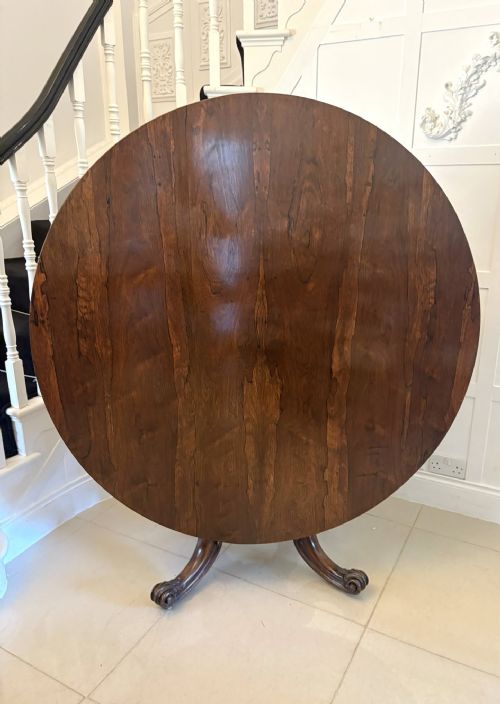
When you search for a scroll foot dining table, you encounter nineteenth century dining tables, breakfast tables, and circular centre tables featuring substantial pedestal bases and carved feet. These pieces originate from the Victorian, William IV, and Regency periods, offering formal presence and deep timber grains.
The versions most commonly met on this page include mahogany and rosewood circular or oval tables, often supported by a central pedestal with carved scroll feet. Alongside dining tables, the selection includes related centre tables and occasional breakfast tables built with similar architectural foundations.
How they were made
Cabinet makers constructed these tables using solid timbers and carefully selected veneers such as flame mahogany, burr walnut, and rosewood. The structural frames relied on dense hardwoods to support heavy circular or oval tops, whilst decorative surfaces utilised figured wood veneers applied over stable secondary woods.
Pedestal supports and feet required skilled carving by hand to achieve the characteristic scroll forms. Table tops often incorporated tilt mechanisms, allowing circular surfaces to be stored vertically against a wall when not in use.
Pedestal forms dominate the selection, appearing alongside occasional sauce boats in silver and old Sheffield plate.
What varies in quality
The distinction between ordinary and exceptional tables rests primarily on the choice of timber and the ambition of the carving. Superior examples display highly figured veneers like burr walnut and flame mahogany, paired with deeply carved pedestal bases rather than plain turned columns.
Construction methods also dictate grade, with finer pieces exhibiting seamless joint work, well-balanced tilt mechanisms, and stable pedestal assemblies that prevent wobble in large circular tops.
The Scroll Foot Dining Table Glossary
- Tilt top
- A table top hinged to the central pedestal so it can be turned upright when not in use. This mechanism saved space in nineteenth century dining rooms.
- Pedestal base
- A central column supporting the table top, typically resting on a platform or radiating feet. It eliminates the need for four corner legs.
- Burr walnut
- Timber taken from the warted growths of walnut trees, prized for its swirling grain patterns. Cabinet makers sliced this wood into veneers for decorative tabletops.
- Flame mahogany
- A veneer cut from the fork of a mahogany tree where the grain twists to create a flickering flame effect. It was frequently utilised on formal Victorian and Regency surfaces.
- Quadrapod base
- A four-way pedestal base providing sturdy support for large circular or oval tables.
Scroll Foot Dining Table: Frequently Asked Questions
What periods do these tables come from?
The listings span the nineteenth century, encompassing Regency, William IV, and Victorian eras. Makers during these decades favoured robust timber construction and ornate pedestal designs.
Most pieces date from around 1850 to 1870, reflecting the height of Victorian and mid nineteenth century cabinet making traditions.
Are tilt top tables stable for daily dining?
Tilt top tables function reliably for daily use provided the locking mechanism and pivot block remain secure. The heavy central pedestals provide a solid foundation for dining.
When locked in the horizontal position, a well maintained tilt top table offers the same stability as a fixed pedestal table.
What woods were used in these tables?
Mahogany and rosewood appear most frequently, accompanied by walnut and burr walnut. These dense hardwoods provided the structural strength required for large pedestal tables.
Veneers of flame mahogany and mixed wood inlay added decorative contrast to the primary timber surfaces.
How do I distinguish between a breakfast table and a dining table?
Breakfast tables traditionally featured tilt top mechanisms and smaller circular or oval surfaces intended for informal morning meals or parlour use. Dining tables generally offered larger fixed tops designed for formal gatherings.
In practice, nineteenth century terminology often overlapped, and many tilt top breakfast tables serve comfortably as dining tables today.