





Scrimshaw Art
Scrimshaw art comprises carved and engraved pieces in horn, bone, and whalebone, offering collectors rich maritime and folk history.
Scrimshaw Art
Scrimshaw art centres on carved and engraved pieces produced across the eighteenth and nineteenth centuries, alongside twentieth century examples. Collectors seeking scrimshaw art encounter utilitarian objects transformed by carving, engraving, and pigment.
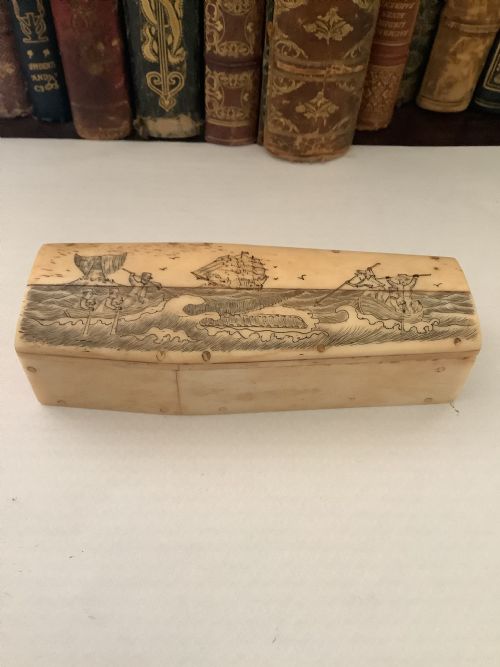
The pieces on this page span several distinct forms, most notably walking sticks, powder horns, beakers, and snuff boxes. These objects originate from maritime, folk art, and tribal traditions.
The most common versions met here include nineteenth century walking sticks in whalebone and horn, alongside eighteenth century powder horns and horn beakers. Inuit tribal carvings and twentieth century trench art also appear among the selections.
How they were made
Makers utilised natural organic materials, primarily working with whalebone, horn, bone, antler, and shark vertebrae, often reinforced with metal or brass elements. Pigment was frequently rubbed into the incised lines to make the engraved designs legible against the pale surface.
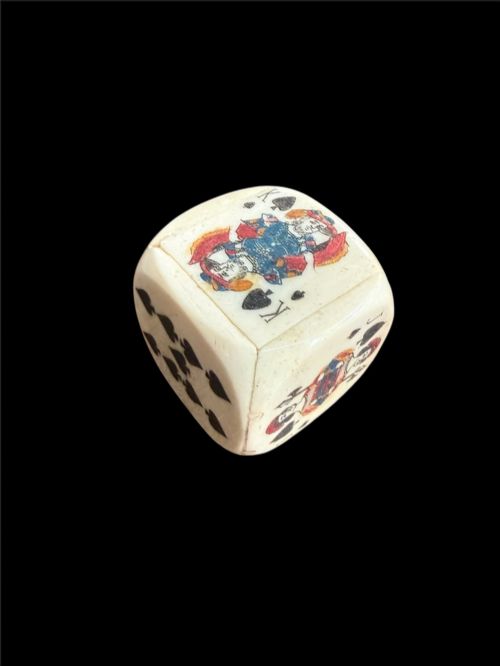
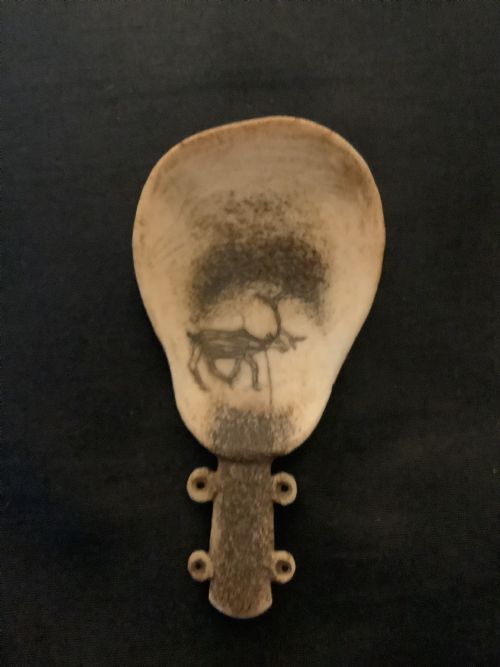
Craftsmen shaped these dense materials using simple hand tools, turning bone and horn into intricate walking stick shafts, gaming dice shakers, and decorative boxes. Carving ranged from low relief surface engraving to fully three dimensional sculptural figures and spoons.
Scrimshaw Art Retail Price Guide 2026
Typical asking prices for scrimshaw art among the pieces listed under this phrase on Sellingantiques today, from the lower quarter to the upper quarter. They describe what is for sale here now, not the wider market.
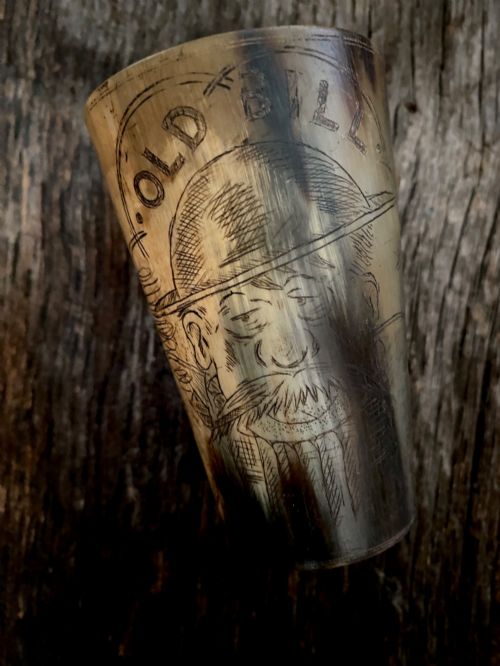
Old Bill makes an appearance on a World War 1 horn beaker.
What varies in quality
Quality in scrimshaw art rests upon the crispness of the engraving and the dexterity of the carving, distinguishing casual whittling from skilled folk artistry. Pieces with deep, clear lines and balanced proportions command greater attention.
The integration of the natural shape of the material into the final design dictates aesthetic success. Superior examples maintain structural integrity while displaying inventive decorative schemes.
The Scrimshaw Art Glossary
- Scrimshaw
- The carving and engraving of bone, horn, and whalebone. This work was traditionally undertaken by sailors and folk artisans utilising simple tools.
- Powder horn
- A hollowed animal horn used to store gunpowder. These items were frequently engraved with maps, dates, and pictorial scenes.
- Trench art
- Objects made by soldiers and prisoners from discarded materials during wartime. These pieces often incorporate horn and metal.
- Memento mori
- An artistic reminder of mortality. These carved items incorporate symbolic motifs such as skulls and commemorative dates.
Scrimshaw Art: Frequently Asked Questions
What is scrimshaw art?
Scrimshaw art encompasses engraved and carved objects made from organic materials like bone, whalebone, and horn. These items were traditionally produced by sailors, folk artists, and indigenous makers.
The category includes functional objects like powder horns, walking sticks, and snuff boxes decorated with incised patterns and pigment.
How were powder horns used?
Powder horns served to store and protect dry gunpowder for firearms in damp maritime or field conditions. The narrow tip allowed the powder to be poured directly into the weapon.
Makers often shaped the natural curve of the horn and added engraved decoration to record personal details or military campaigns.
How do I date horn and bone pieces?
Dating relies on the style of the engraving, the tool marks left on the material, and the wear patterns accumulated over time. Eighteenth and nineteenth century pieces often display distinct folk art motifs and patination.
Examining the construction methods and any accompanying inscriptions helps place the object within its historical period.
How do I care for bone and horn?
Bone and horn require stable indoor humidity to prevent the natural material from drying out and splitting over time. Keeping items away from direct heat sources and strong sunlight preserves the surface.
Gentle dusting with a dry cloth is generally sufficient for maintenance, avoiding harsh chemical cleaners that damage the pigment.