


Scottish Silver Server
These pieces of scottish silver server range from Georgian ladles to Edwardian chocolate pots, offering solid silver work to use at the table.
Scottish Silver Server
The versions you are most likely to meet on this page range from provincial ladles and toddy ladles to Edwardian chocolate pots and Victorian horn and silver servers. They reflect the practical and social dining habits of their respective eras, utilising sterling silver alongside materials like agate, wood, and glass.
How They Were Made
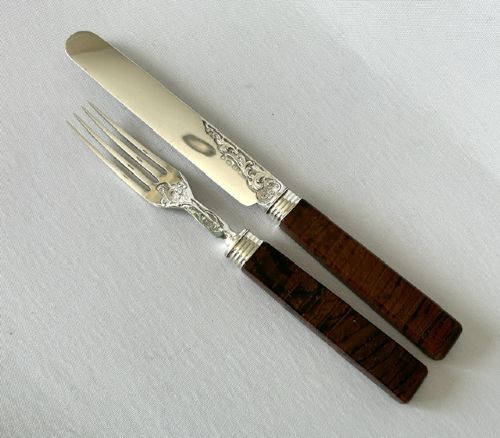
Makers shaped these items using sterling silver and silver plate, often combining the metal with organic materials such as horn, whalebone, mother of pearl, wood, and agate. Handles and bodies demonstrate traditional silversmithing techniques appropriate for holloware and cutlery.
Individual pieces incorporate specialised components like glass inserts in whisky noggins and cheese dishes, or inset agate stones on knives and forks. Provincial workshops and city assay offices applied hallmarks and private dies to record origin and standard.
Listings include items spanning the Georgian, Victorian, and Edwardian periods, utilising sterling silver, horn, agate, and glass.
What Varies in Quality
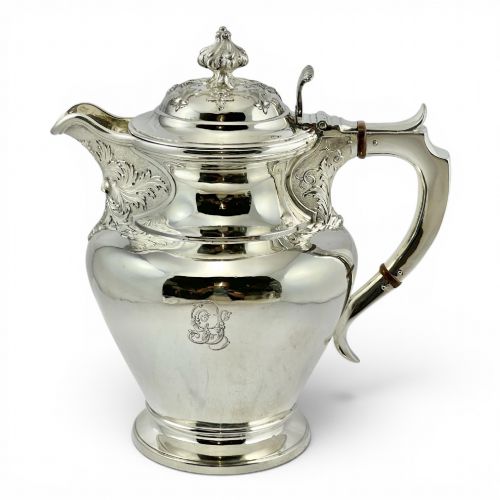
The distinction between standard examples and finer items rests in the weight of the silver, the clarity of the provincial or city hallmarks, and the integration of secondary materials like horn or agate. Heavier pieces, such as water jugs and substantial serving spoons, display greater substance in the hand.
Design detail and provenance also divide the range, with private die spoons and marked provincial pieces demonstrating specific regional craftsmanship. The condition of fitted glass, wood, and organic handles relative to the silver mounts influences the overall integrity of the piece.
William Ferguson·John McDonald·R Grey·Catherine L Charles
The Scottish Silver Server Glossary
- Provincial silver
- Items made outside the main assay towns of Edinburgh and Glasgow, marked with local maker stamps. These regional pieces carry distinct local character.
- Private die
- A custom stamp commissioned by a family or institution to mark their own silver flatware. This feature identifies specific original ownership.
- Toddy ladle
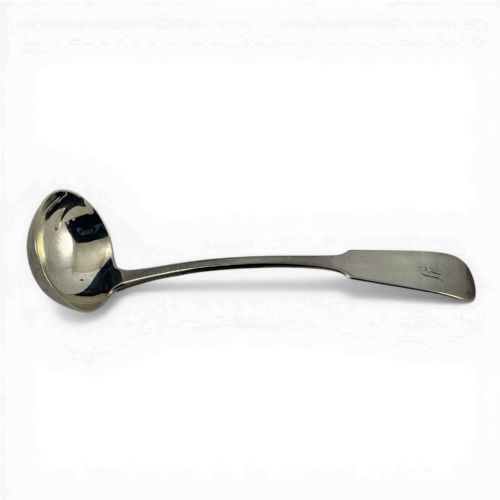
- A small ladle used for serving hot whisky toddy from a bowl into glasses. They often feature twisted whalebone or wooden handles.
- Whisky noggin
- A small vessel or pitcher used for pouring whisky, typically mounted in silver with a glass body. They date frequently to the Edwardian period.
Scottish Silver Server: Frequently Asked Questions
What is a Scottish silver server?
A Scottish silver server encompasses functional dining items made in Scotland, ranging from ladles and serving spoons to water jugs and chocolate pots.
These pieces showcase the work of regional silversmiths and major assay offices across different historical periods.
How do I date a Scottish silver piece?
Dating relies on reading the hallmarks, town marks, and maker stamps stamped directly onto the silver.
Stylistic cues such as Georgian forms or Edwardian shapes also help place the item within a specific era.
What materials are used besides silver?
Silversmiths combined sterling silver with organic elements like horn, whalebone, wood, mother of pearl, and agate.
Glass was also utilised for items such as whisky noggins and cheese dish covers.
What is provincial Scottish silver?
Provincial silver refers to pieces manufactured outside the major urban assay offices of Edinburgh and Glasgow.
These items often display unique maker marks specific to towns like Elgin or Arbroath.