


Scottish Pebble Pin
A Scottish pebble pin brings Highland heritage to your lapel through natural hardstones set in solid silver.
Scottish Pebble Pin
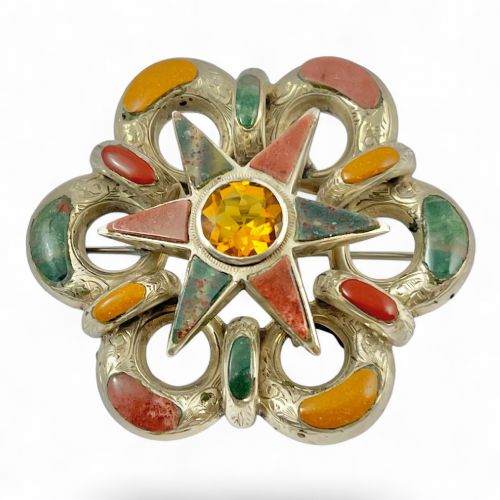
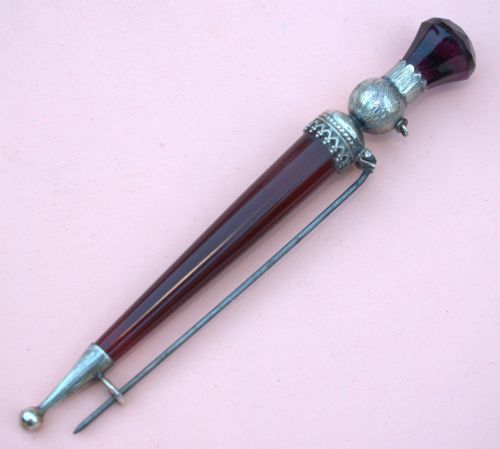
A Scottish pebble pin combines traditional Highland forms like dirks, broadswords, shields, and bows with functional fastening. You will most frequently meet Victorian examples dating from the mid-nineteenth century through to 1900, reflecting the height of the Scottish Revival.
Makers of these pieces drew inspiration directly from northern landscapes and weaponry, translating broadswords and dirks into wearable silver ornaments. These jewels served both practical purposes on plaid garments and ornamental roles as fashionable dress accessories.
Materials and Construction
Silversmiths constructed the foundational mounts using sterling or provincial silver, often shaping the metal into intricate basket-hilts, broadswords, or braided plaid motifs. These mounts were designed to securely house varied collections of hardstones.
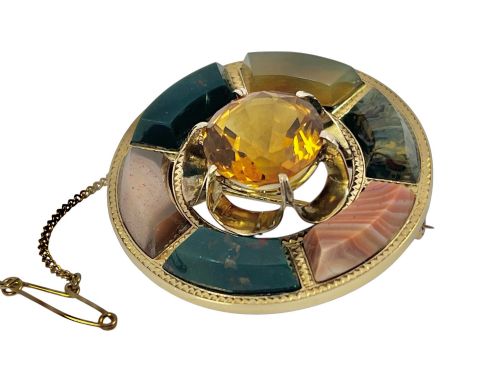
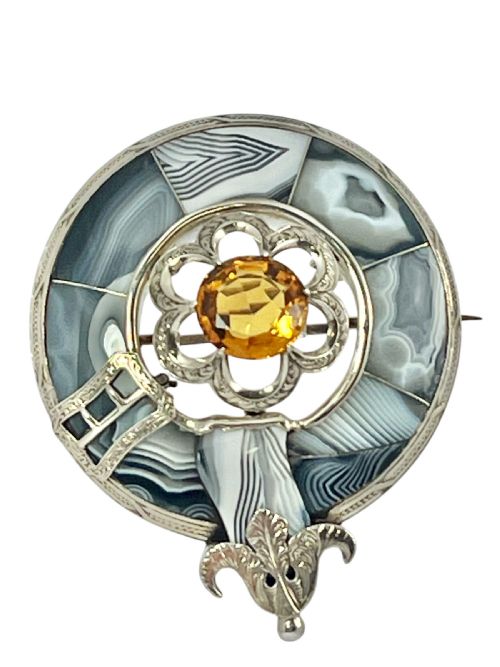
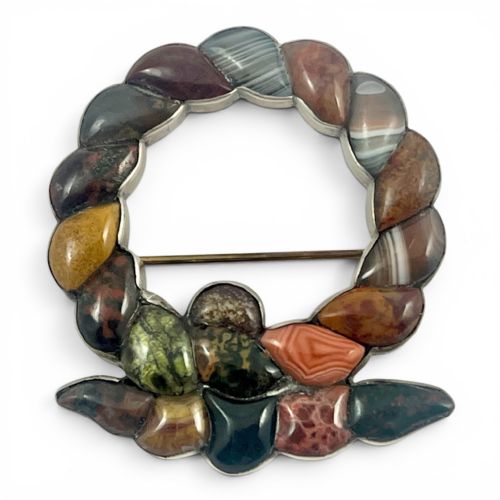
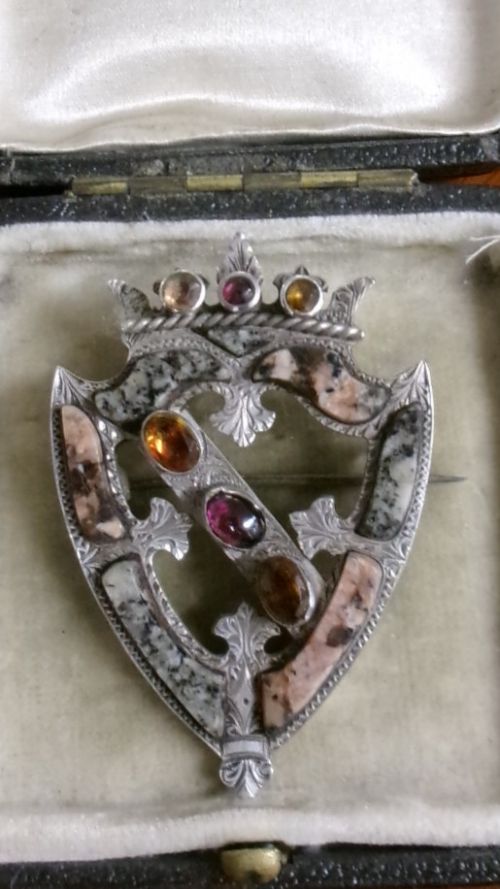
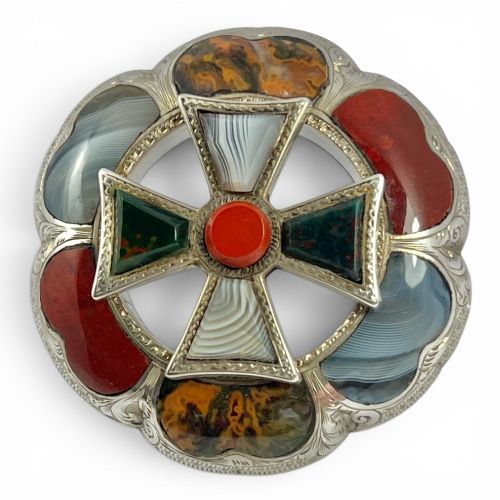
Lapidaries cut and polished native minerals including agate, Montrose agate, jasper, bloodstone, granite, and citrine to fit specific bezels within the silver work. Selected specimens display natural banding and colour variations characteristic of Scottish geology.
Materials documented across the current selection include sterling silver, agate, Montrose agate, jasper, citrine, bloodstone, and granite.
Quality Variations
The standard of lapidary work dictates much of the distinction between pieces, particularly the precision with which hardstones are cut, fitted, and polished to follow the contours of the silver mount. Superior examples display stones with striking natural banding and secure, flush settings.
The complexity and scale of the silver smithing also separate the range, with larger items like dirk brooches and broadswords demanding intricate metalwork, chased detailing, and robust pin mechanisms that withstand regular use on heavy woollen fabrics.
The Scottish Pebble Pin Glossary
- Agate
- A form of chalcedony displaying distinct natural banding or concentric rings. Lapidaries prized these hardstones for their durability and varied earthy colours.
- Dirk pin
- A brooch shaped to resemble a traditional Scottish dagger or dirk. These pieces frequently incorporate mounted hardstones along the hilt and scabbard.
- Montrose agate
- A specific regional variety of chalcedony sourced from the Angus coast. It is recognised by its particular patterning and association with nineteenth-century Scottish jewellery.
- Plaid brooch
- A large circular fastening designed to secure heavy woollen plaids across the shoulder. They typically feature prominent central stones surrounded by concentric circles of smaller hardstones.
- Specimen brooch
- An item featuring a curated selection of distinct mineral samples gathered from different locations. These pieces highlight the geological diversity of the region within a single silver frame.
Scottish Pebble Pin: Frequently Asked Questions
What is a Scottish pebble pin?
A Scottish pebble pin is a nineteenth-century silver brooch or kilt fastener set with native hardstones such as agate, jasper, and citrine. These ornaments emerged during the Victorian Scottish Revival and draw heavily on traditional Highland weaponry and symbols.
Craftsmen shaped the silver into forms including broadswords, dirks, shields, and bows. Each piece showcases the natural colours and patterns of Scottish minerals polished smooth within metal settings.
How were these pins worn historically?
Historically, people wore these pieces to secure heavy woollen plaids, shawls, and tartan garments across the shoulder or chest. Their substantial construction provided the necessary weight and strength to hold thick fabrics firmly in place.
Over time, they transitioned from utilitarian Highland fastenings into fashionable everyday dress accessories worn by both men and women across Britain.
How do I date a Victorian pebble pin?
Dating these items involves examining the overall style, hallmarks where present, and the specific form of the silver mount. Pieces from the mid-nineteenth century often reflect early Victorian revival aesthetics, while later examples approach the turn of the twentieth century.
Makers frequently utilised specific geometric layouts and weapon motifs that shifted subtly across the decades. Comparing the stone cutting and silver chasing helps narrow down the period of production.
Which stones appear most often?
Agate is the most common stone found in these pieces, appearing in shades of grey, brown, red, and yellow with natural banded patterns. Montrose agate and various jaspers also occur regularly across surviving inventory.
Bright yellow citrine frequently forms the central focal point of larger brooches, accompanied by dark green bloodstone or grey granite in contrasting geometric sections.