



Scottish Cutlery
Scottish antique cutlery comprises silver flatware, serving implements, and trays fashioned across the eighteenth and nineteenth centuries by regional and Edinburgh makers.
Scottish Cutlery
Scottish antique cutlery spans from Queen Anne tablespoons and George I rat tail designs through Georgian provincial basting spoons to Victorian naturalistic rests and agate-handled pieces. The forms on this page include spoons, serving spoons, hash spoons, toddy ladles, cutlery trays, and cutlery rests. Makers working in Edinburgh and provincial towns produced these silver and wooden items across various historical periods.
The regional provincial output forms a distinct part of these listings, featuring makers working outside the capital in centres such as Inverness. Provincial pieces carry specific town marks and maker initials that distinguish them from Edinburgh-assayed silver. Collectors encounter these regional spoons alongside larger Edinburgh-marked items and nineteenth-century dining accessories.
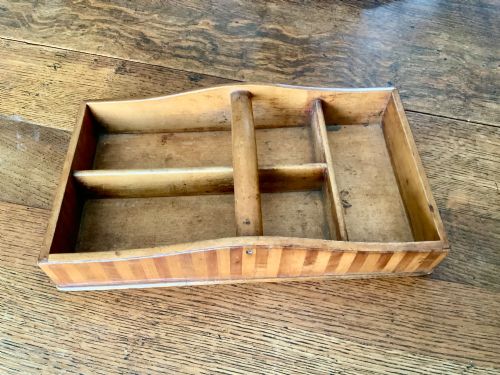
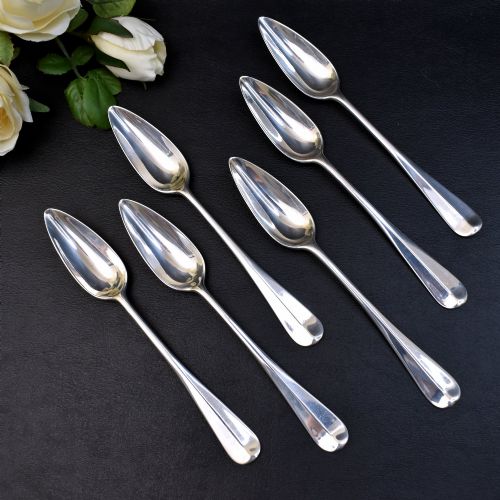
Wooden cutlery trays in pine, sycamore, and fruitwood appear alongside the silver flatware to form the complete dining ensemble. Victorian additions include specialised pieces like grapefruit spoons and cast silver cutlery rests shaped with naturalistic motifs. These items reflect the changing dining habits and table service traditions of Scottish households over two centuries.
Materials and Techniques
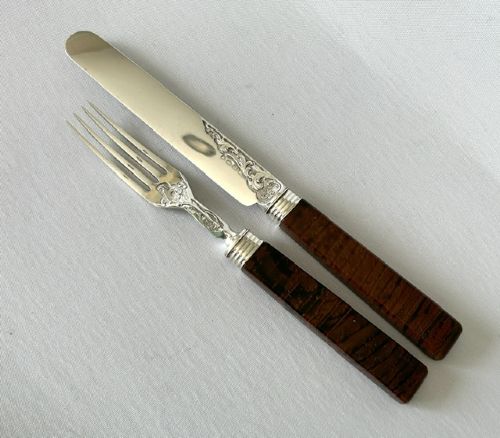
Silversmiths hammered and shaped sterling silver ingots into flatware blanks, forming bowls and handles by hand before applying punch marks. Rat tail spoons feature a distinct reinforced tongue welded or hammered down the reverse of the bowl for added strength. Agate handles on knives and forks display shaped stone secured to silver mounts.
Wooden cutlery trays utilise pine, sycamore, and fruitwood joined with traditional carpentry methods to house flatware sets. Silversmiths engraved crests, initials, and linear decoration onto spoon handles by hand using gravers. Assay office punches applied town marks, maker marks, and duty marks directly onto the silver surface.
Scottish Cutlery Retail Price Guide 2026
Typical asking prices for scottish cutlery among the pieces listed under this phrase on Sellingantiques today, from the lower quarter to the upper quarter. They describe what is for sale here now, not the wider market.
Early eighteenth-century tablespoons carry rat tails on their bowls, providing structural strength and a distinct tactile ridge for dinner guests.
Factors of Quality
For fitted pieces like agate-handled knives and forks, the integration of stone and metal determines the finesse of the object. Wooden trays display quality through timber selection and the preservation of original surface finishes. The legibility of hallmarks provides crucial evidence of origin and period integrity.
Hamilton and Inches·James Tait·Robert Gordon·Richard Rae·Alexander Henderson
The Scottish Cutlery Glossary
- Rat tail
- A tapering tongue of metal extending down the back of a spoon bowl from the handle base. This feature strengthens the joint between handle and bowl on early flatware.
- Basting spoon
- A large spoon used in food preparation and serving during the eighteenth and nineteenth centuries. These items measure considerably longer than standard table spoons.
- Hash spoon
- An exceptionally large serving spoon designed for deep-dish stews and communal dining. They represent some of the heaviest flatware items produced by period silversmiths.
- Toddy ladle
- A small drinking spoon with a twisted whalebone or silver handle, used for serving punch or whisky toddy. The bowls frequently incorporate coins or inset stones.
- Cutlery rest
- A small support placed on the table to keep carving knives and forks elevated between courses. Victorian examples often adopt naturalistic or cast plant and animal forms.
Scottish Cutlery: Frequently Asked Questions
How are rat tail spoons identified?
Rat tail spoons feature a distinct raised tongue of metal extending from the base of the handle down the reverse of the bowl. This structural element provides reinforcement to the joint.
This form appears frequently on early eighteenth-century pieces and indicates a specific period of flatware construction.
What was a hash spoon used for?
Hash spoons are substantial serving implements created to dish up heavy stews and meat dishes at large dining tables. Their massive size distinguishes them from standard table or dessert spoons.
These pieces date primarily to the eighteenth century and represent the heavier end of domestic silver output.
How do you date Scottish silver?
Scottish silver is dated by examining the system of assay marks, maker punches, and duty stamps impressed into the metal. Edinburgh hallmarks utilise specific letter date codes alongside the castle mark.
Provincial pieces rely more heavily on identified maker punch marks and stylistic evolution due to the absence of systematic town assay records.