



Scottish Agate Silver
When you search for scottish agate silver, you find nineteenth-century brooches, snuff boxes and desk items set with banded stones.
Scottish Agate Silver
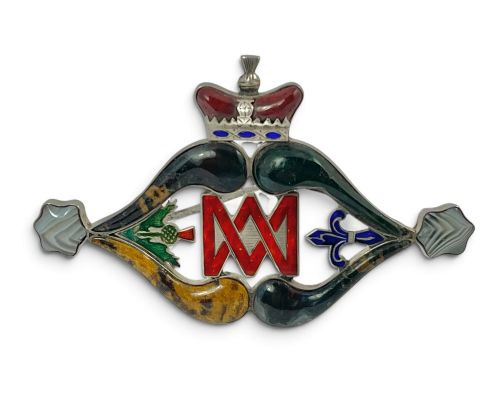
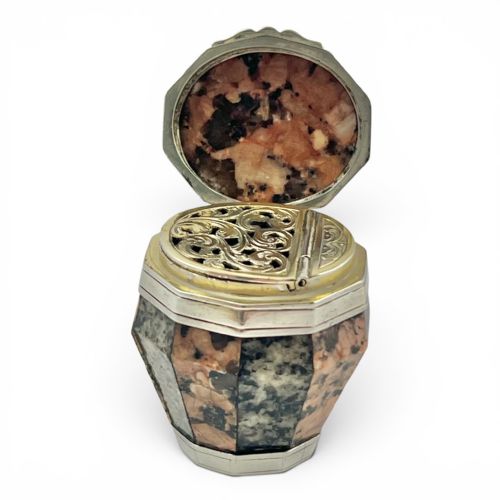
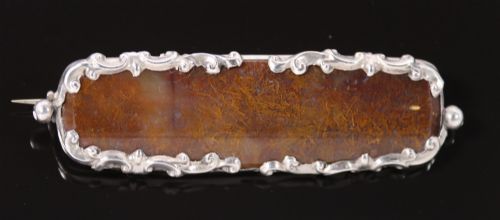
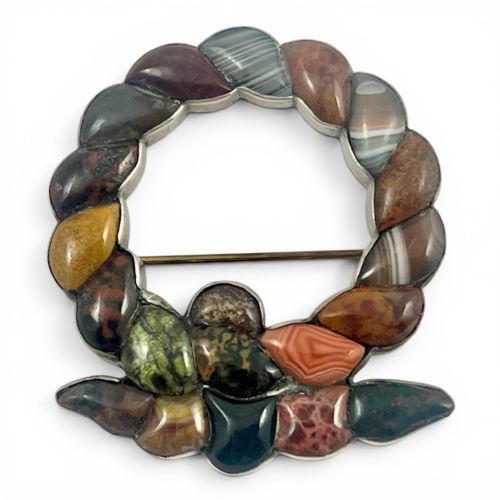
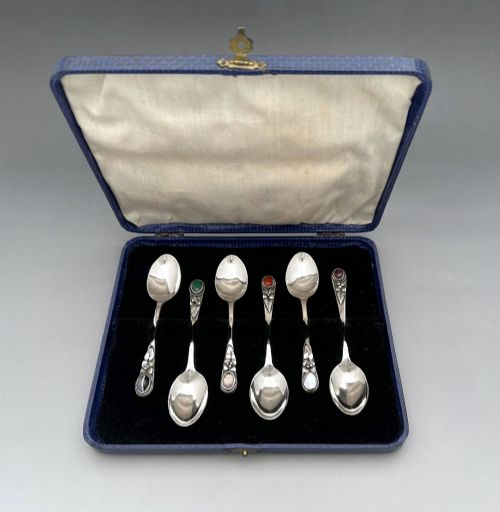
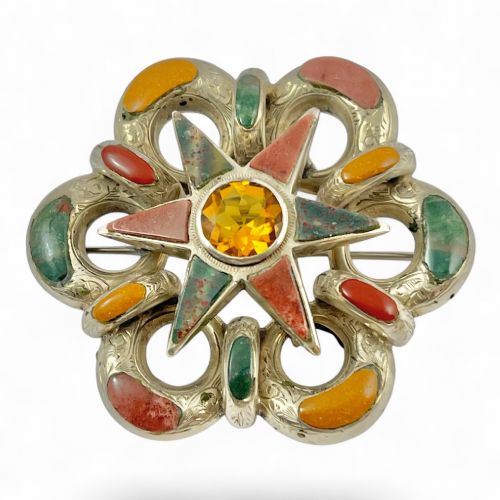
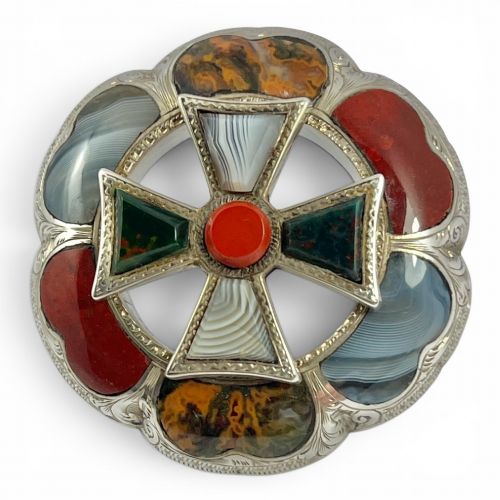
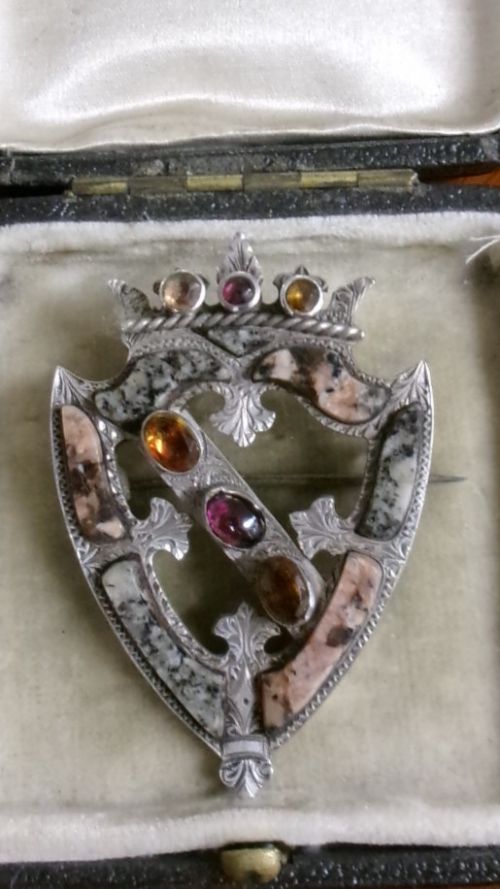
Pieces carrying the search phrase scottish agate silver are predominantly Victorian brooches, kilt pins, vinaigrettes and snuff boxes produced during the nineteenth-century Scottish Revival. These items combine polished native hardstones with sterling silver or silver gilt mounts, reflecting romantic interest in Highland traditions. The most common form encountered on this page is the pebble brooch, often shaped as a sword, shield, dirk or cross.
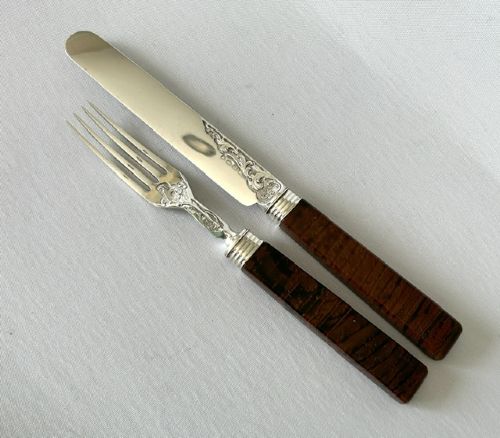
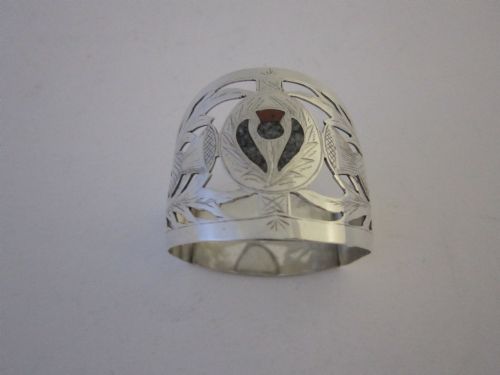
Beyond personal adornment, the category includes functional objects such as silver bookmarks, napkin rings, cutlery sets and horn snuff mulls mounted in silver. While Georgian examples exist from the early nineteenth century, the vast majority date from the Victorian era between the eighteen-fifties and eighteen-eighties. Later twentieth-century interpretations from the Arts and Crafts period also appear.
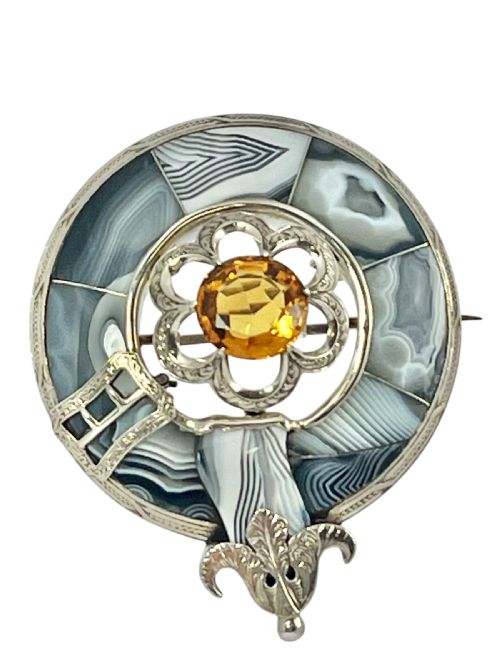
The stones used are genuine mineral specimens gathered in Scotland and beyond, including Montrose agate, moss agate, jasper, bloodstone and granite. These are cut, banded and polished before being set tightly into heavy silver frames. Collectors encounter everything from tiny charm pendants to large plaid brooches designed to fasten heavy woollen garments.
How They Were Made
Silversmiths constructed mounts from sterling silver, sometimes applying silver gilt or yellow metal to create contrasting warmth against the cool stones. Frames often take the form of intricate Celtic Revival motifs, buckles, braided ribbons, or traditional weapons like broadswords and dirks. The metalwork acts as a sturdy structural cage to hold multiple hand-cut stone facets in close alignment.
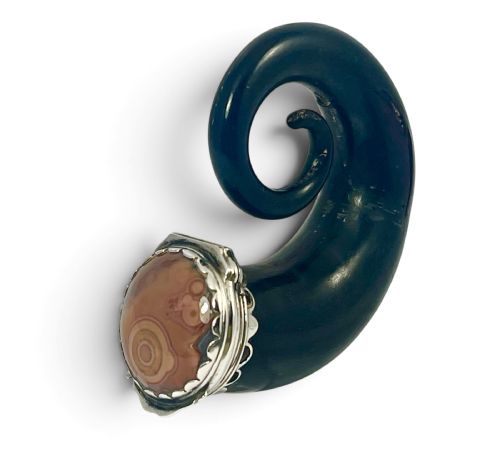
Lapidaries sliced and polished natural minerals such as banded chalcedony, bloodstone and granite into precise geometric profiles or smooth cabochons. Each stone section was meticulously fitted flush into individual silver bezels without modern adhesives, relying entirely on tight metal cold-working and precise friction. Horn elements in snuff mulls were shaped by heat and pressure before receiving silver mounts and inlaid agate lids.
Scottish Agate Silver Retail Price Guide 2026
Typical asking prices for scottish agate silver among the pieces listed under this phrase on Sellingantiques today, from the lower quarter to the upper quarter. They describe what is for sale here now, not the wider market.
Listings feature Victorian, Georgian and Edwardian periods alongside Arts and Crafts examples, utilising silver, granite, bloodstone and citrine.
What Varies in Quality
Quality rests significantly on the selection, variety and cutting of the mineral specimens within the silver mount. Superior pieces display stones with sharp, high-contrast natural banding, rich colour saturation, and complete absence of dull patches or surface pitting. The lapidary work must be uniform, with every individual stone flush to its neighbour and securely held by the surrounding metal bezels.
The ambition of the silversmithing work also separates ordinary production from exceptional items. Elaborate dimensional forms like three-dimensional dirks, broadswords, shields and articulated cages require advanced metallurgical skill compared to simple geometric brooches. Maker marks, provincial assay town stamps and clear hallmarks provide additional distinction for serious collectors.
Crisford & Norris·Hilliard & Thomason·Robert Allison & Sons·Ward Brothers
The Scottish Agate Silver Glossary
- Agate
- A form of cryptocrystalline quartz displaying distinct natural bands of colour. Lapidaries slice this durable mineral to expose intricate concentric patterns within jewellery and boxes.
- Vinaigrette
- A small ornamental container housing a perforated interior grille soaked in aromatic vinegar. These portable silver boxes date largely from the Georgian and Victorian eras.
- Snuff mull
- A traditional Scottish receptacle used for holding powdered tobacco, typically fashioned from a ram's horn. Artisans fit these organic forms with hinged silver lids and decorative stone inlays.
- Dirk brooch
- A large fastening pin modelled after the traditional Highland dagger. These substantial silver items frequently incorporate cairngorms, citrines and multiple varieties of agate.
- Montrose agate
- A specific regional variety of Scottish mineral prized for distinctive coloration and clarity. It appears frequently in mid-Victorian brooches originating from northeastern workshops.
- Cabochon
- A gemstone shaped and polished with a smooth, convex upper surface rather than faceted edges. This classic cutting style highlights the natural patterns found in banded hardstones.
Scottish Agate Silver: Frequently Asked Questions
What is a Scottish plaid brooch?
A plaid brooch is a large circular fastener historically used to pin heavy woollen tartans and plaids across the shoulder. These robust silver pieces typically feature substantial concentric circles of banded agates and jaspers surrounding a central citrine or cairngorm.
Due to their size and weight, they required strong pin stems and secure catches. Victorian makers adapted these functional Highland accessories into fashionable accessories for everyday civilian wear.
How do I care for silver and agate jewellery?
Agate is a hard form of quartz, but the silver mounts and organic components require gentle handling. Clean the metal components with a soft microfibre cloth while avoiding harsh chemical dips that can damage cemented stone settings or discolour natural stones.
Store pieces individually in soft pouches to prevent scratching between items. Keep antique horn mulls and vinaigrettes away from excessive moisture and direct heat sources.
Are these pieces marked with silver hallmarks?
Many nineteenth-century items bear British silver hallmarks indicating the assay office, standard and date letter. Common assay marks include Edinburgh, Glasgow, Birmingham and Chester depending on the maker's location.
Smaller items and provincial pieces sometimes feature maker stamps or simple silver designations without full date letters. Unmarked mounts remain common in older Scottish tourist jewellery produced in remote areas.
What is the difference between an agate and a jasper?
Agate is a translucent or semi-translucent variety of microcrystalline quartz characterised by distinct colour bands. Jasper is an opaque form of the same mineral family featuring solid earth tones or intricate mottled patterns.
Victorian jewellers frequently combined both stones within a single piece to create contrasting visual textures. Both minerals offer high durability for daily wear in rings, bracelets and brooches.