

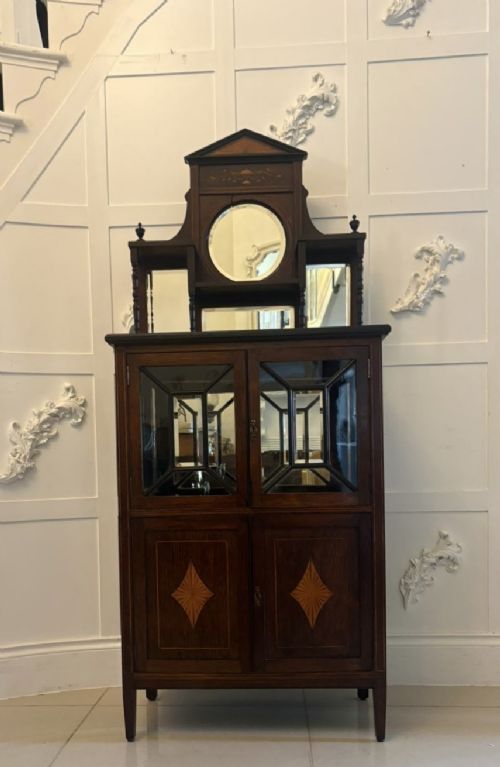


Satinwood Wood Mirror
A satinwood wood mirror brings pale, reflective warmth to a room, caught most often in Edwardian wall mounts and Victorian dressing pieces.
Satinwood Wood Mirror
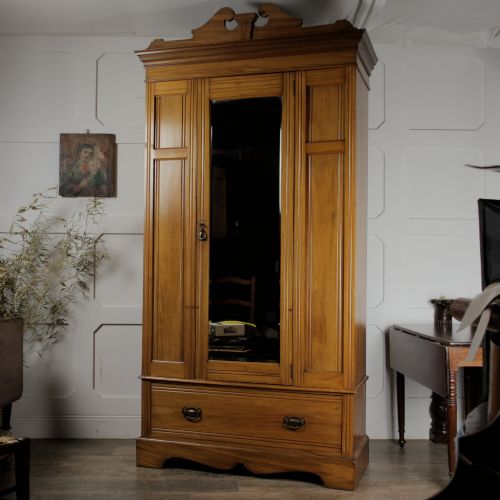
A satinwood wood mirror brings together pale, figured timber and clear glass, appearing frequently in Edwardian and Victorian forms. These objects range from compact wall hangings to substantial cheval and dressing table mirrors designed for the bedroom.
Most examples originate from the late nineteenth and early twentieth centuries, reflecting the high period of decorative cabinet making. They serve both functional dressing purposes and decorative roles in traditional and transitional interiors.
Assessing quality and craftsmanship
Quality rests upon the selection of timber figures and the precision of the inlay work embedded in the frame. Finer examples show tight, luminous grain patterns matched cleanly at the mitres, alongside well-preserved original mirror plates.
Structural integrity separates standard production items from exhibition or cabinet-maker pieces. Solid framing, original brass mounts, and stable backing boards indicate superior workshop origin.
Satinwood Wood Mirror Retail Price Guide 2026
Typical asking prices for satinwood wood mirror among the pieces listed under this phrase on Sellingantiques today, from the lower quarter to the upper quarter. They describe what is for sale here now, not the wider market.
Materials recorded across current pieces include satinwood, satin birch, mahogany, brass, and glass.
Waring & Gillows·Harry and Lou Epstein·John Taylor of Edinburgh·Maples & Co
The Satinwood Wood Mirror Glossary
- Satinwood
- A dense, lustrous tropical timber known for its pale yellow colour and natural sheen. It takes a high polish and forms the primary surface veneer on fine antique furniture.
- Cheval mirror
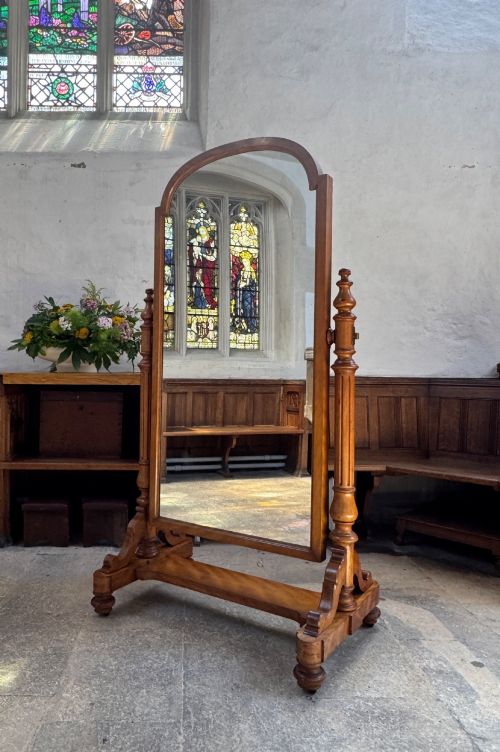
- A full-length plate glass mirror suspended within a movable frame on a freestanding stand. This form allows the glass to tilt for viewing.
- Overmantel mirror
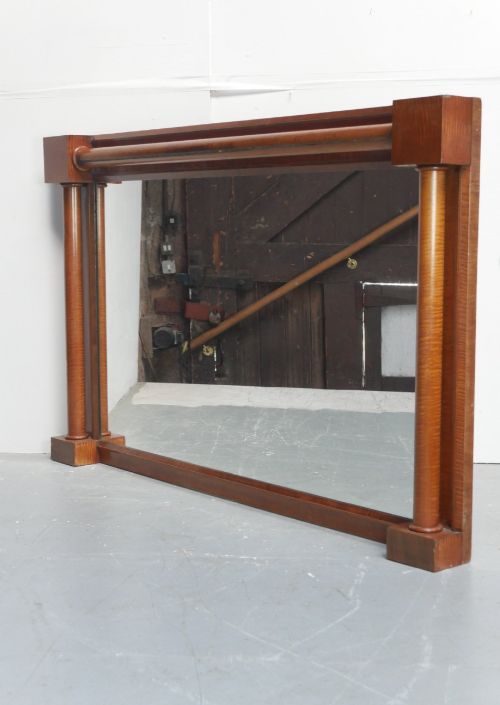
- A large decorative looking-glass designed to hang directly above a fireplace mantelpiece. These pieces often feature architectural framing or carved crests.
- Marquetry
- The art of applying pieces of veneer to a structure to form decorative patterns and pictures. Craftsmen use varied woods to create tonal contrast on mirror frames and cabinets.
- Toilet mirror
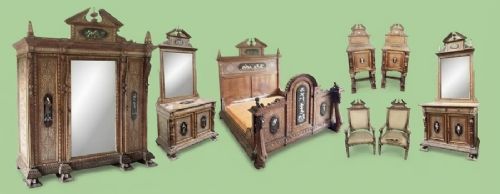
- A smaller looking-glass mounted on a box base or small chest containing drawers. Also known as a dressing table mirror, it sits upon a surface.
Satinwood Wood Mirror: Frequently Asked Questions
How do I clean a satinwood frame?
Dust the timber regularly with a soft, dry cloth to prevent grime accumulation on the veneer. Avoid using modern aerosol polishes or moisture, which can damage the polished surface over time.
Apply a traditional beeswax sparingly if the timber appears dry, buffing gently to maintain the natural sheen. Keep antique mirrors away from direct sunlight and damp environments to protect the wood and silvering.
Where should I hang an overmantel mirror?
Position the mirror securely above a fireplace mantelpiece to reflect light and anchor the room visually. Ensure the wall fixings match the weight of the timber frame and glass plate.
Consider the height of surrounding furniture so the piece balances the proportions of the wall. Natural light from nearby windows will enhance the luminous quality of the satinwood.
What is the difference between satinwood and satin birch?
Satinwood is a dense tropical hardwood prized for its natural golden lustre and fine grain. Satin birch is a European timber selected for its similar shimmering appearance and lighter weight.
Cabinet makers in the nineteenth century often utilised satin birch as an alternative to true satinwood for larger bedroom suites and wardrobes.
How do I date a Victorian mirror?
Examine the construction of the backboards, screws, and mirror plate edges for signs of period manufacturing techniques. Victorian pieces often feature hand-planed timbers and older fixing methods.
Stylistic cues such as Aesthetic Movement influences or Sheraton Revival motifs help narrow down the decade of production alongside the timber selection.