

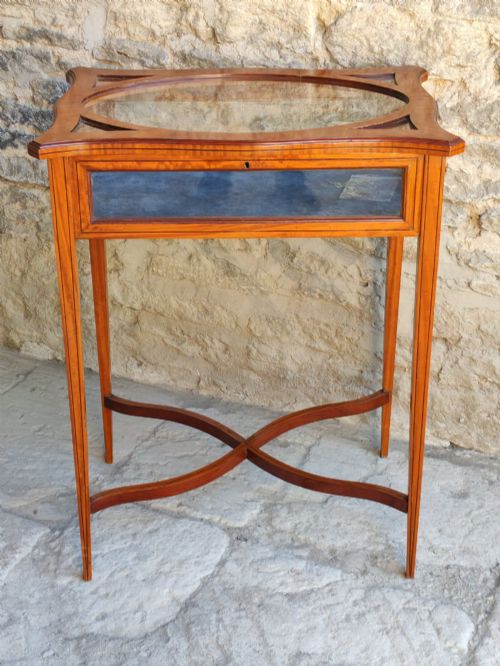


Satinwood Jewellery Table
These satinwood jewellery table pieces combine display surfaces with timber cabinetry to hold small treasures, offering elegance for any interior.
Satinwood Jewellery Table
A satinwood jewellery table takes forms such as bijouterie tables, display cabinets, and tabletop boxes designed to showcase small valuables. These items appear across periods including the Regency era, Victorian epoch, and Edwardian years.
The versions most commonly met on this page include Edwardian inlaid display tables and kidney-shaped cabinets. Alongside these, examples range from octagonal forms dating to eighteen eighty up to nineteenth-century marquetry showcases.
Makers utilised diverse structures such as occasional tables and vitrines to present decorative objects. The fundamental purpose remains combining surface utility with glazed display compartments for precious items.
Materials and construction methods
Craftsmen built these pieces primarily using satinwood, mahogany, and walnut timbers. Many examples feature delicate marquetry and contrasting inlay work across the primary surfaces.
Glazing forms a central element for the display function, paired with brass and ormolu mounts. Interior compartments frequently incorporate velvet or other fabrics to cushion delicate objects.
Structural designs span various formats, from freestanding occasional tables to tabletop cabinets. Cabinetmakers combined timber framing with glass panels to permit all-round visibility of the contents.
Satinwood Jewellery Table Retail Price Guide 2026
Typical asking prices for satinwood jewellery table among the pieces listed under this phrase on Sellingantiques today, from the lower quarter to the upper quarter. They describe what is for sale here now, not the wider market.
Assessing the grade of a piece
Quality rests upon the precision of the timber inlay and the crispness of the marquetry details. Finer examples display meticulous wood selection and seamless integration of contrasting veneers.
The refinement of metal mounts, such as brass and ormolu, distinguishes superior items from simpler utilitarian boxes. Hardware that fits flush and retains original finishing contributes to overall merit.
Structural complexity, including curved kidney shapes or multi-sided octagonal geometries, marks out ambitious cabinetmaking. The clarity of the glass and the neatness of the fabric lining further separate standard productions from exceptional items.
The Satinwood Jewellery Table Glossary
- Satinwood
- A hard, yellow timber valued for its lustrous sheen and smooth grain. It forms the primary visible surface for many fine decorative cabinets.
- Bijouterie table
- A specialised display table featuring a glass-topped compartment specifically designed for holding jewellery and small trinkets. These items often stand on slender legs.
- Marquetry
- Decorative patterns formed by fitting small pieces of veneer into a timber backing. This technique creates elaborate pictorial or geometric designs on tabletops and cabinet doors.
- Ormolu
- Gilded bronze ornamentation applied to furniture mounts and feet. It provides a bright metallic contrast against dark or polished woods.
- Vitrine
- A glass-fronted cabinet or display case used for exhibiting objects of vertu. In this context, it functions as a table-height showcase.
Satinwood Jewellery Table: Frequently Asked Questions
What is a satinwood jewellery table?
It is a specialised display furniture piece built from satinwood or featuring satinwood veneers, designed to showcase small valuables under glass.
These items range from Edwardian kidney-shaped tables to nineteenth-century tabletop cabinets.
How were these tables used?
Owners used them in drawing rooms and boudoirs to exhibit personal ornaments, medals, and small precious collections safely.
The glass top allowed guests to admire the contents without handling them directly.
How do I date a piece?
Dating relies on stylistic markers such as Edwardian inlaid motifs or earlier Regency and Victorian proportions.
Materials like brass, ormolu, and specific secondary timbers also help establish the era of manufacture.
Where should I place one?
They suit reception rooms, studies, or bedrooms where their glazed compartments can catch natural light.
Keep them away from direct heat sources to protect the delicate timber veneers and interior fabrics.