


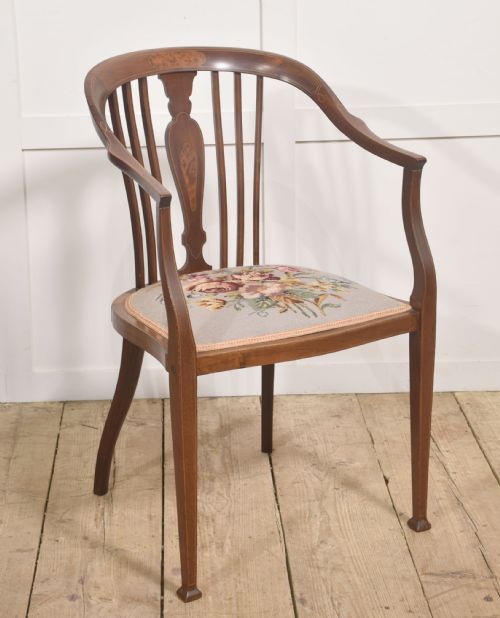


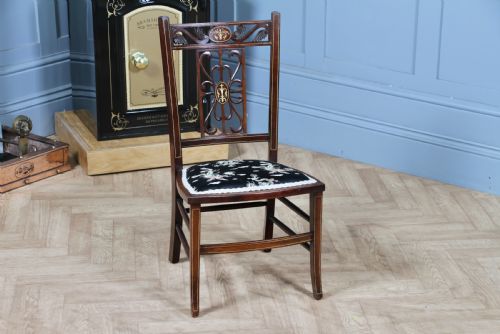

Satinwood Inlay Chairs
Satinwood inlay chairs combine mahogany frames with pale contrasting timber, bringing light and refined neoclassical pattern to seating.
Satinwood Inlay Chairs
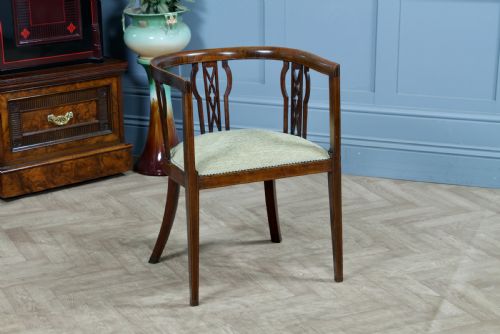
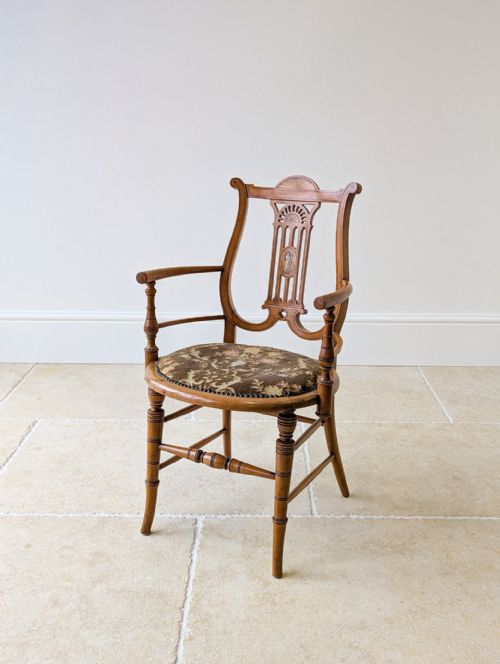
When searching for satinwood inlay chairs, buyers encounter seating primarily from the Edwardian and Victorian periods, alongside specific revival designs. The forms span dining chairs, armchairs, desk chairs, salon chairs, occasional chairs, and settees.
Edwardian mahogany examples with string inlay and Sheraton Revival details dominate the selection. These pieces frequently incorporate upholstered elements, ranging from silk and velvet to fabric and leather pads.
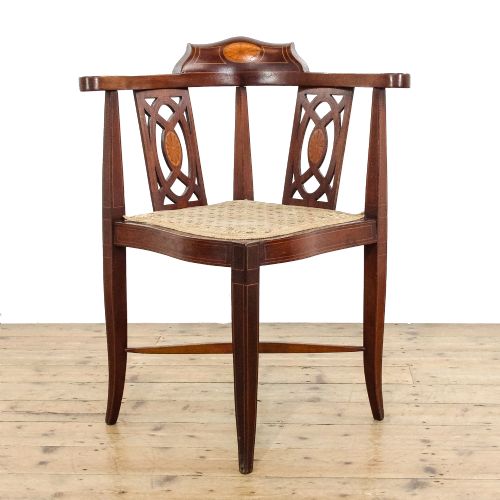
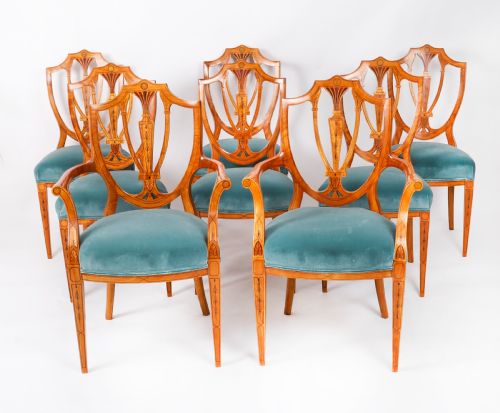
The assortment includes single pieces, pairs, and larger sets suited for drawing rooms, bedrooms, and dining spaces. Variations range from simple corner and tub chairs to complex shieldback dining suites and swivelling ships chairs.
How they were made
Carpenters built the primary frames using mahogany or walnut, shaping them into arms, backs, and legs appropriate for dining, lounge, or desk use. Satinwood was applied as veneer or stringing to create decorative motifs and contrasting borders against the darker timber.
Inlay techniques involved cutting precise recesses into the base wood to fit contrasting pieces of satinwood and other decorative elements. Brass hardware, alongside silk, velvet, fabric, and leather upholstery, completed the construction of seats, backs, and arms.
Satinwood Inlay Chairs Retail Price Guide 2026
Typical asking prices for satinwood inlay chairs among the pieces listed under this phrase on Sellingantiques today, from the lower quarter to the upper quarter. They describe what is for sale here now, not the wider market.
Periods represented span from the Georgian era through Victorian times into the Edwardian decades and the nineteen twenties.
What varies in quality
The precision of the inlay work distinguishes standard items from superior examples. Sharp, flush joints between the mahogany ground and the satinwood details indicate careful workshop practice.
Frame construction and timber selection also define the tier of a piece. Denser mahogany, robust joinery, and well-preserved original upholstery materials mark the upper end of the range.
Cowtan & Sons·Shoolbred
The Satinwood Inlay Chairs Glossary
- Satinwood inlay
- A decorative technique where pale satinwood is inset into a contrasting wood ground. This method creates geometric borders or classical motifs.
- Sheraton Revival
- A late nineteenth and early twentieth century style drawing on eighteenth century neoclassical designs. It is characterised by slender tapered legs and delicate stringing.
- String inlay
- Narrow lines of contrasting timber set flush into the surface of a furniture frame. This linear decoration frames panels and outlines structural members.
- Bergere
- An enclosed upholstered armchair with exposed wooden framing and woven cane or upholstered sides. These pieces often incorporate mahogany structures.
- Lyre-back
- A chair back featuring an open splat shaped in the form of a classical lyre instrument. This design frequently appears on desk and salon chairs.
Satinwood Inlay Chairs: Frequently Asked Questions
What periods do these chairs date from?
The listings span the Victorian, Edwardian, and Georgian eras, with the majority originating around nineteen hundred.
Revival styles such as Sheraton and Hepplewhite heavily influence the design vocabulary across these decades.
Are these chairs suitable for daily dining?
Dining chairs and sets within the selection provide sturdy seating designed for regular household use.
Buyers should verify the stability of joints and the condition of the upholstery before selecting chairs for daily meals.
What is the difference between salon and occasional chairs?
Salon chairs were traditionally manufactured in matching sets to furnish formal drawing rooms and reception spaces.
Occasional chairs were built as individual pieces to be moved around a home for supplementary seating.