

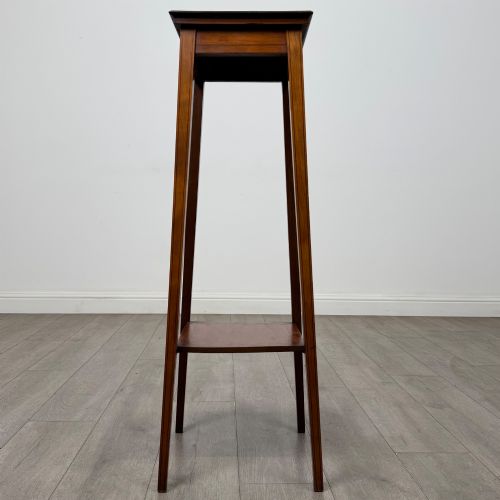
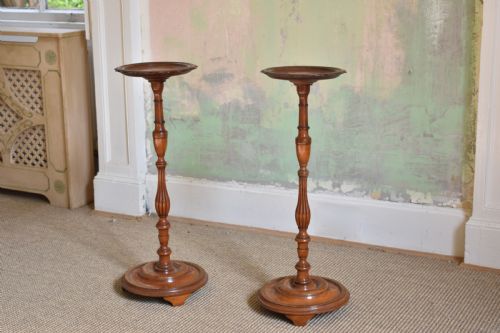
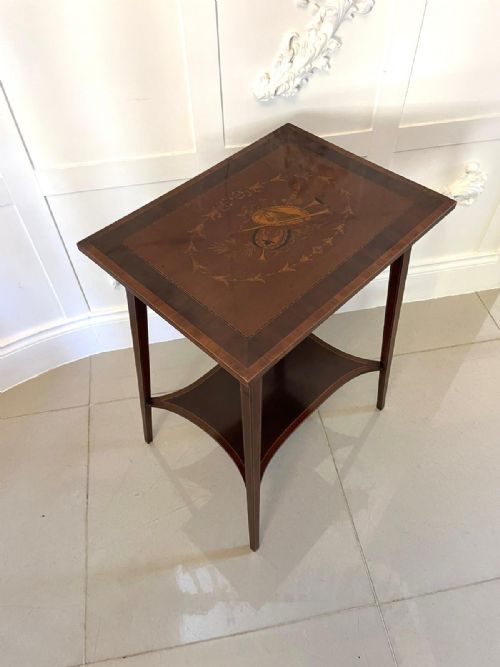


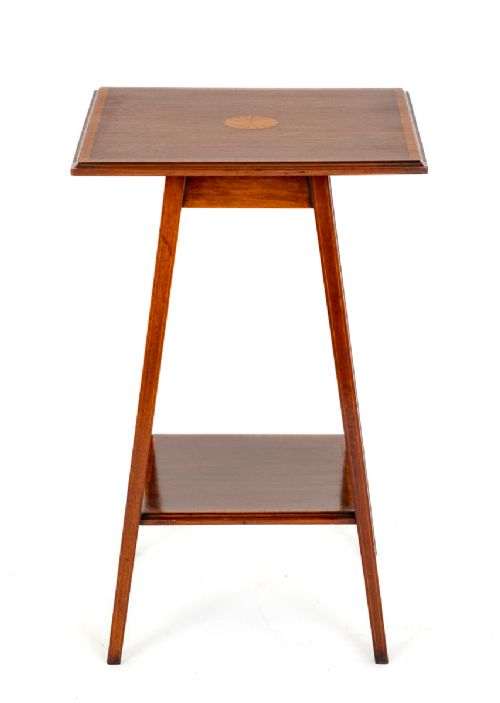
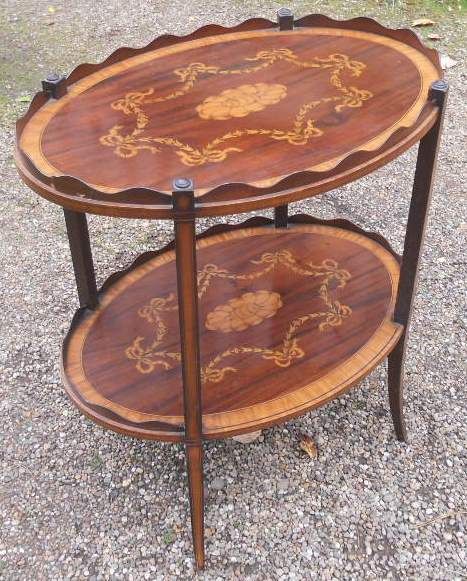
Satinwood Inlaid Plant Stand
A satinwood inlaid plant stand brings refined botanical display indoors, offering polished timber surfaces and delicate contrasting stringing for any corner.
Satinwood Inlaid Plant Stand
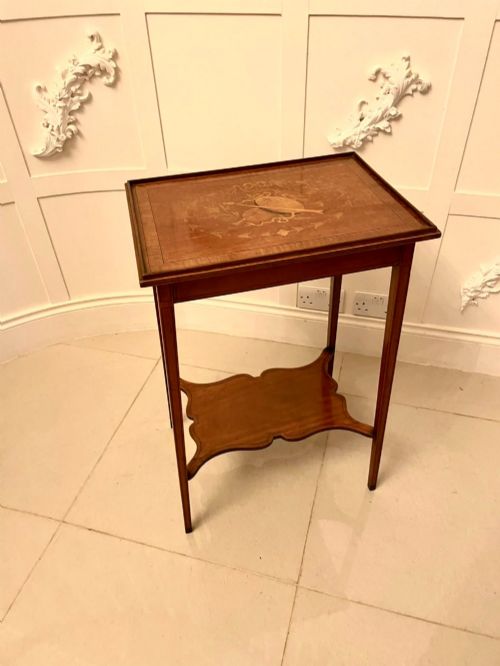
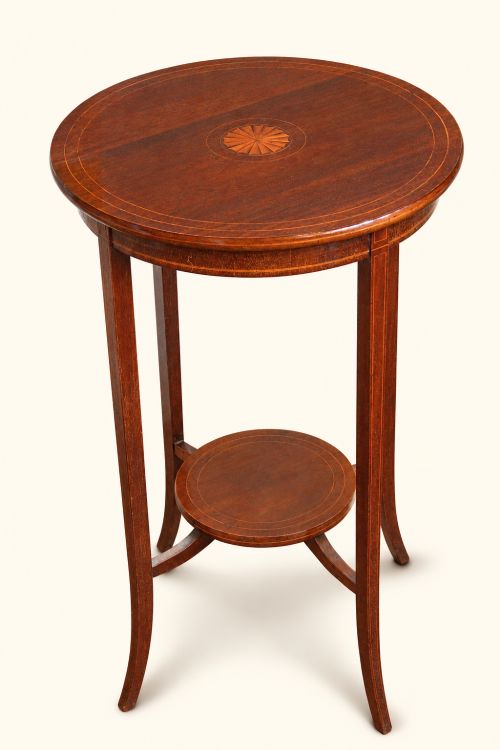
A satinwood inlaid plant stand is a decorative support designed for elevating botanical specimens and jardinières within domestic interiors. These pieces appear frequently in Edwardian formats and Sheraton Revival designs, utilising timber frames built to hold heavy pots.
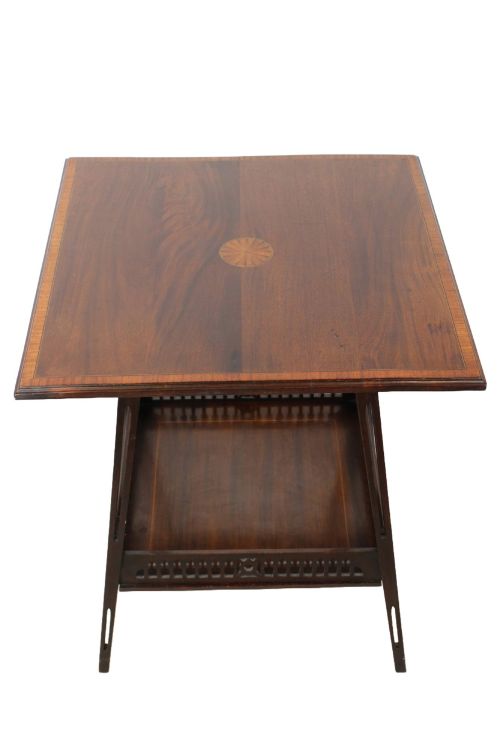
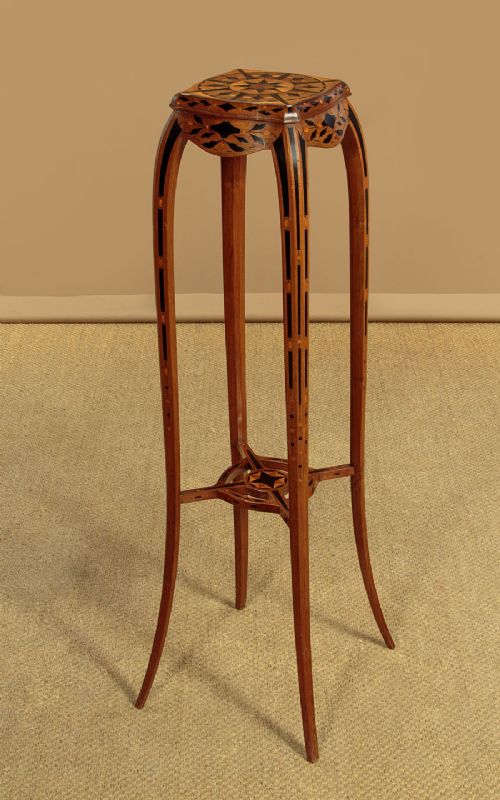
Makers shaped these stands as tall wine tables, occasional tables, and specific planters across the Victorian, Edwardian, and Georgian periods. The forms range from simple square and oval surfaces to grander octagonal centre tables and French satin walnut planters.
Buyers selecting a satinwood inlaid plant stand will encounter numerous Edwardian examples alongside pieces carrying nineteenth century influence. The combination of structural mahogany or satin walnut with lighter satinwood veneers defines the core of this category.
Materials and construction methods
Cabinetmakers built the primary carcase of these stands using mahogany, satin walnut, and occasional hardwoods. They applied fine satinwood veneers over these sturdy foundations to create bright, reflective top surfaces.
Decoration relied heavily on contrasting stringing and marquetry executed in ebony, boxwood, and rosewood. Selected examples also integrated brass fittings or ormolu mounts to secure joints and frame the planting areas.
Satinwood Inlaid Plant Stand Retail Price Guide 2026
Typical asking prices for satinwood inlaid plant stand among the pieces listed under this phrase on Sellingantiques today, from the lower quarter to the upper quarter. They describe what is for sale here now, not the wider market.
Listings feature pieces spanning the Georgian, Victorian, and Edwardian periods, constructed primarily from satinwood, mahogany, and rosewood.
Assessing craftsmanship and execution
The precision of the marquetry and stringing separates standard production from superior cabinet work. Crisp edges along the ebony and boxwood inlay indicate careful hand-cut joinery rather than rushed assembly.
Timber selection dictates the overall visual impact of the piece. Vibrant grain patterns in the satinwood paired with dense mahogany or rosewood signify higher grade material selection by the maker.
Trevor Page & Co
The Satinwood Inlaid Plant Stand Glossary
- Satinwood
- A hard, yellowish timber native to Ceylon and India known for its lustrous, reflective grain. It serves as the primary decorative veneer on classical and revival tables.
- Marquetry
- The art of applying pieces of veneer to a structure to form decorative patterns and pictures. Craftsmen utilise contrasting woods like rosewood and ebony within these designs.
- Jardinière
- A ornamental pot or stand designed specifically for holding living flowers or plants. These vessels often feature waterproof liners or brass containers.
- Sheraton Revival
- A late nineteenth and early twentieth century design movement that reinterprets eighteenth century neoclassical furniture forms. It frequently employs light satinwood inlay on dark mahogany.
- Torchere
- A tall, slender stand originally built to support a candle or torch. In later periods, makers adapted these tall forms to display sculptural plants and vases.
Satinwood Inlaid Plant Stand: Frequently Asked Questions
What is a satinwood inlaid plant stand?
A satinwood inlaid plant stand is a decorative piece of furniture designed to hold potted plants and floral arrangements off the floor. These items typically feature contrasting wood veneers and stringing across polished timber surfaces.
Most options date from the Edwardian era and the late nineteenth century, reflecting classical revival styles. They function as both practical plant holders and decorative corner accents.
How do I care for satinwood furniture?
Satinwood requires gentle cleaning with a soft, dry cloth to remove dust without harming the delicate veneer. Avoid placing these stands in direct sunlight or near heat sources to prevent timber cracking.
Using protective saucers beneath flower pots prevents moisture from damaging the polished wooden top during watering.
Can these stands hold heavy pots?
Most stands are built with sturdy hardwood frames of mahogany or satin walnut designed to support domestic plant weights. However, the exact capacity depends on the specific leg structure and overall proportions of the piece.
Tall wine tables and slender occasional stands suit lighter botanical displays, whilst robust jardinières accommodate heavier soil loads.
How do I distinguish Edwardian from Georgian styles?
Edwardian revival pieces often utilise lighter machine-sawn veneers and crisp marquetry assembled around the turn of the twentieth century. Genuine Georgian items exhibit older construction methods and heavier patination developed over centuries of use.
Revival pieces built in the Sheraton style copy the classical proportions of the eighteenth century but utilise Edwardian hardware and timber preparation techniques.