



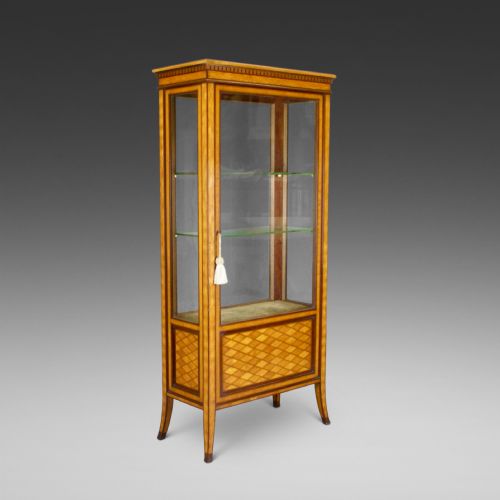
Satinwood Glass Door Cabinet
These satinwood glass door cabinet pieces combine pale timbers and fine glazing to display books and porcelain with quiet elegance.
Satinwood Glass Door Cabinet
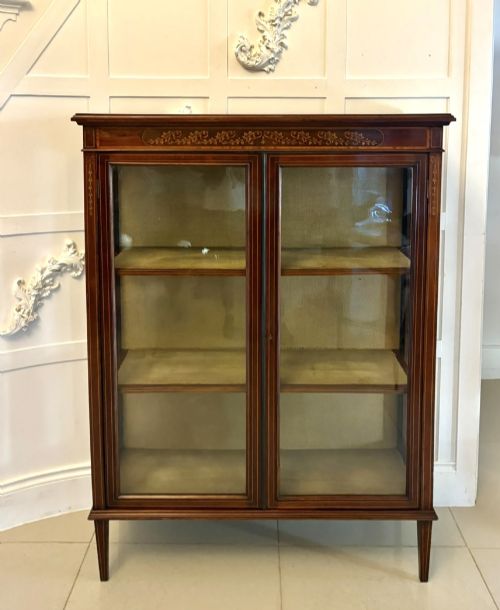
A satinwood glass door cabinet serves primarily as a display piece or refined bookcase for the drawing room, holding prized possessions behind clear glass panels. When you search for this phrase, you encounter forms ranging from compact corner cabinets and pier cabinets to large breakfront bookcases and tall single-door display pieces.
The material identity shifts between solid satinwood, mahogany or kingwood carcasses overlaid with satinwood veneers, and painted or marquetry-decorated surfaces. Edwardian and Sheraton Revival examples predominate alongside late Victorian pieces, bringing light figured timber into domestic interiors.
How they were made
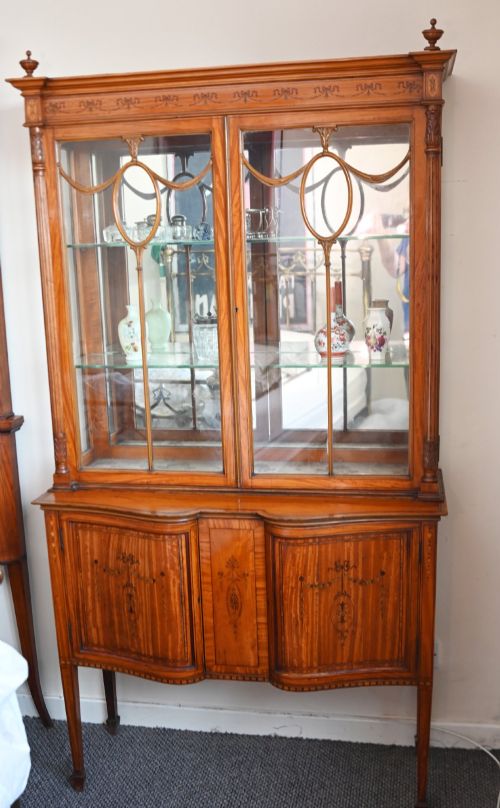
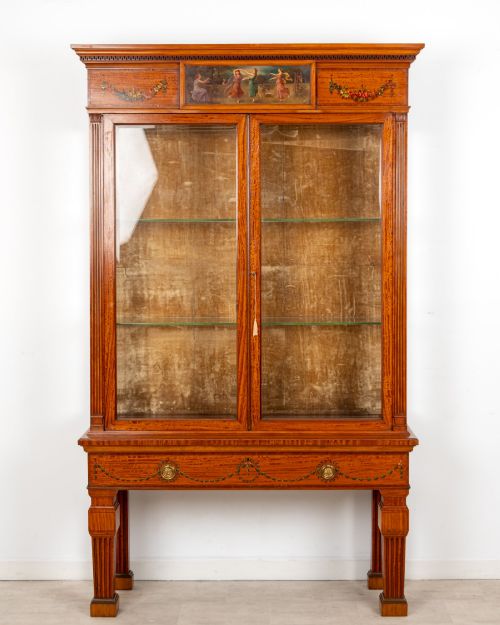
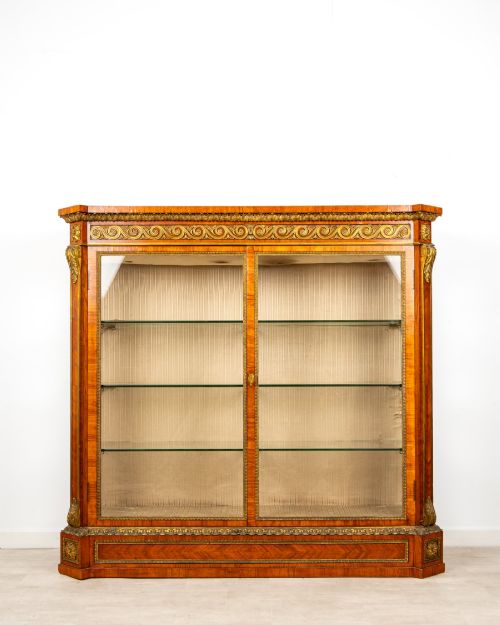
Cabinet makers utilised satinwood veneers applied over secondary timbers like mahogany, often enhancing the natural grain with intricate marquetry, parquetry, or painted decoration. Brass fittings secure the doors and internal shelving, while gilt-bronze mounts sometimes accent the grander revival pieces.
Glazing bars divide the glass door panels into geometric or arched patterns typical of the Sheraton Revival and Edwardian periods. Fabric linings occasionally back the interiors, providing a contrasting backdrop for displayed ceramics and glassware.
Satinwood Glass Door Cabinet Retail Price Guide 2026
Typical asking prices for satinwood glass door cabinet among the pieces listed under this phrase on Sellingantiques today, from the lower quarter to the upper quarter. They describe what is for sale here now, not the wider market.
Listings feature satinwood, mahogany, kingwood, and rosewood, spanning periods from Georgian and Victorian to Edwardian and the 1930s.
What varies in quality
The distinction between standard domestic furniture and exceptional cabinet work lies in the choice of timber figure and the precision of the marquetry or painted details. Elaborate parquetry patterns and hand-painted floral motifs elevate certain examples well beyond simple veneered storage.
Proportion and architectural presence separate simpler corner cupboards from grand breakfront bookcases or signed maker pieces. The crispness of the inlay work and the quality of the brass or gilt-bronze mounts determine the overall refinement of the cabinet.
Hampton and Sons London·Edwards and Roberts·H J Hatfield and Sons
The Satinwood Glass Door Cabinet Glossary
- Satinwood
- A hard, yellowish timber with a lustrous sheen, highly prized for fine cabinet making and decorative veneer work. It forms the primary visual surface on many late Victorian and Edwardian display pieces.
- Marquetry
- The art of applying decorative pieces of veneer to a structure to form intricate pictorial or geometric designs. Craftsmen use various tinted woods to create contrasting patterns on cabinet doors.
- Parquetry
- A geometric mosaic of wood pieces used for decorative floors or cabinet surfaces. It relies on precise angles and contrasting grain directions.
- Breakfront
- A cabinet design where the central section projects forward from the flanking wings. This architectural form adds depth and presence to larger bookcases.
- Sheraton Revival
- A late nineteenth and early twentieth century design movement inspired by the neoclassical furniture of George Sheraton. It favours light timbers, slender proportions, and classical inlay motifs.
Satinwood Glass Door Cabinet: Frequently Asked Questions
Where should I place a satinwood cabinet?
These cabinets suit drawing rooms and studies where natural light catches the pale grain of the satinwood. Keep them away from direct sunlight to protect the polished timber and any interior fabric linings.
Allow sufficient clearance for the glass doors to swing open fully without striking adjacent furniture or walls.
How do I distinguish Edwardian from Victorian cabinets?
Edwardian examples tend to feature lighter proportions and restrained Sheraton Revival inlay work, reflecting a taste for airy, luminous interiors. Victorian pieces often display heavier timber surrounds and denser marquetry or parquetry.
The transition between the eras shows in the evolution of the brass hardware and the crispness of the painted floral decorations.
Can these cabinets hold heavy books?
While many pieces double as bookcases, single-door display cabinets are generally constructed for porcelain, glassware, and lighter decorative objects. The adjustable wooden shelves suit delicate items better than dense rows of heavy volumes.
Heavier breakfront bookcases provide more robust structural support for extensive library collections.
What is the difference between a pier cabinet and a display cabinet?
A pier cabinet is traditionally designed to fit the narrow wall space between windows, often featuring a mirror back and a single glazed door. General display cabinets and bookcases are built for wider wall placements and feature more expansive glass viewing areas.
Both forms utilise the same satinwood veneers and decorative inlay techniques characteristic of the period.