





Satinwood Foldover Table
A satinwood foldover table brings polished timber and clever mechanics together to give any room a touch of classic polish.
Satinwood Foldover Table
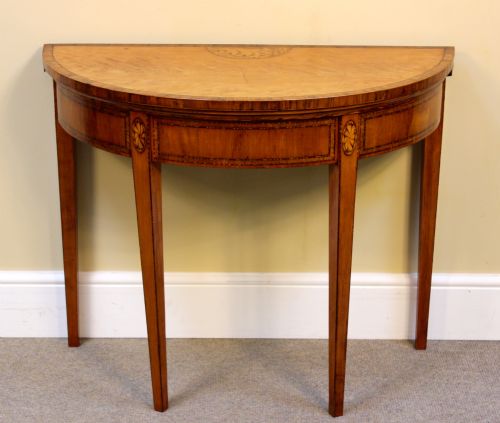
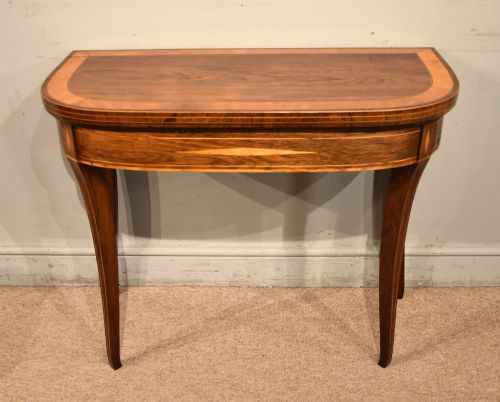
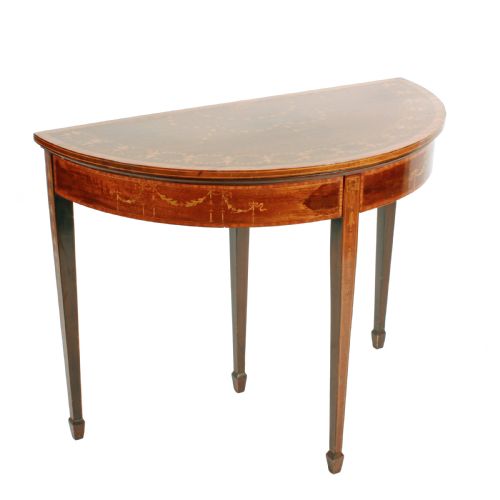
A satinwood foldover table is a dual-purpose piece designed to transform from a compact console or side stand into a larger surface for cards, tea, or writing. Buyers searching for a satinwood foldover table will encounter forms spanning the eighteenth century, the Regency era, and later Victorian and Edwardian revivals. These tables primarily appear as card tables, tea tables, and games tables, often taking demi-lune or rectangular shapes that suit smaller spaces.
The materials recorded in these listings show a strong preference for satinwood, frequently paired with mahogany, rosewood, and boxwood details. Styles range from George III and Sheraton designs to later Georgian and Sheraton revivals, reflecting both formal eighteenth-century aesthetics and nineteenth-century interpretations. Whether arranged against a wall or opened for use, these items combine practical function with decorative woodwork.
How they were made
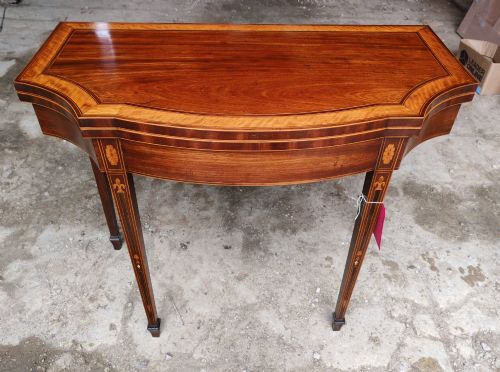
The construction of these pieces relies on careful timber selection, joining satinwood veneers with structural woods like mahogany and rosewood. Craftsmen utilised intricate inlaid wood, marquetry, parquetry, and painted decoration to create detailed surface patterns across the tops and borders. Boxwood stringing frequently defines the edges, adding geometric contrast to the golden sheen of the primary satinwood.
Hinges, pivoting mechanisms, and sometimes brass fittings allow the timber top to fold neatly over or swing open to reveal a baize-lined interior or a polished writing surface. The bases vary from slender tapering legs to central pedestals, depending on whether the piece originates from the Georgian period or later nineteenth-century revivals.
Satinwood Foldover Table Retail Price Guide 2026
Typical asking prices for satinwood foldover table among the pieces listed under this phrase on Sellingantiques today, from the lower quarter to the upper quarter. They describe what is for sale here now, not the wider market.
Listings feature pieces spanning the eighteenth century through to the Edwardian era, incorporating materials like satinwood, mahogany, rosewood, and painted finishes.
What varies in quality
The quality of a satinwood foldover table rests on the crispness of its marquetry and the precision of its inlays. Superior examples display tightly fitted boxwood stringing and balanced parquetry panels that sit flush with the surrounding grain, whereas simpler versions rely on painted decoration or plain timber surfaces. The complexity of the timber contrast between satinwood and darker woods such as rosewood or mahogany dictates the visual depth of the piece.
Mechanics also separate the standards of manufacture, as better tables feature smooth pivoting tops and sturdy structural joints that support the weight of the hinged leaf. The choice of base, from elegant tapering legs to a solid pedestal, influences the overall proportion and stability of the item.
The Satinwood Foldover Table Glossary
- Demi-lune
- A half-moon shape commonly used for the tops and frames of console and card tables designed to stand flat against a wall. This profile became particularly popular during the late eighteenth century.
- Marquetry
- A decorative technique where small pieces of coloured wood veneer are assembled into pictorial or geometric patterns on a surface. It differs from inlay by covering the entire background.
- Parquetry
- A geometric mosaic of wood pieces used for decorative floors and table tops, creating regular patterns like cubes or herringbone. It demonstrates high levels of joinery skill.
- Stringing
- Thin strips of contrasting wood inlaid into channels cut into the surface of a piece to create linear borders and frames. Boxwood was a frequent choice for this contrasting detail.
- Sheraton Revival
- A late nineteenth-century design movement that copied or reinterpreted the light, neoclassical furniture forms of the eighteenth-century designer Thomas Sheraton. These pieces often feature painted satinwood and delicate inlays.
Satinwood Foldover Table: Frequently Asked Questions
What is a satinwood foldover table used for?
These tables served primarily as versatile furniture for entertaining guests, functioning as side or console tables when closed and expanding for card games, tea, or writing when opened.
Their dual nature made them useful in principal rooms where space was managed carefully and surfaces needed to adapt to different social activities.
How do I tell Georgian from Edwardian tables?
Georgian pieces generally date from the eighteenth or early nineteenth centuries, showing period construction methods and authentic proportions typical of Sheraton or George III workshops.
Edwardian items often belong to later revival periods, adopting eighteenth-century styles while utilising slightly different manufacturing techniques and timbers associated with the turn of the twentieth century.
How should I care for satinwood furniture?
Satinwood benefits from being kept away from direct sunlight and steady heat sources to prevent the light timber and delicate veneers from drying out or fading.
Regular dusting with a soft, dry cloth maintains the finish without the need for heavy modern polishes that can build up over time.
What woods are combined with satinwood?
Mahogany and rosewood frequently appear alongside satinwood to provide structural strength and contrasting dark borders that frame the lighter golden grain.
Boxwood is also common for fine stringing lines, while painted decoration occasionally adds colour directly onto the wooden surface.