


Sapphire Cluster Band Ring
A sapphire cluster band ring brings together rich blue stones and sparkling diamonds in a compact setting designed for everyday wear.
Sapphire Cluster Band Ring
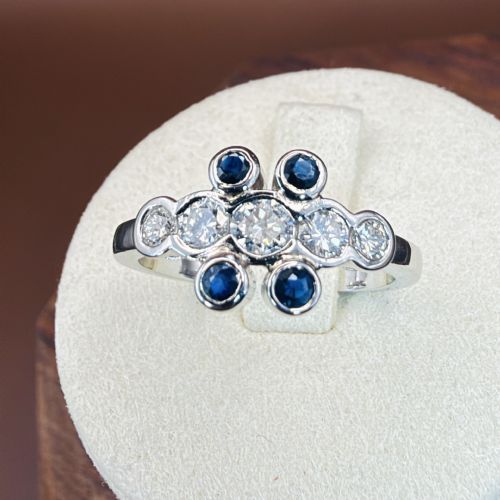
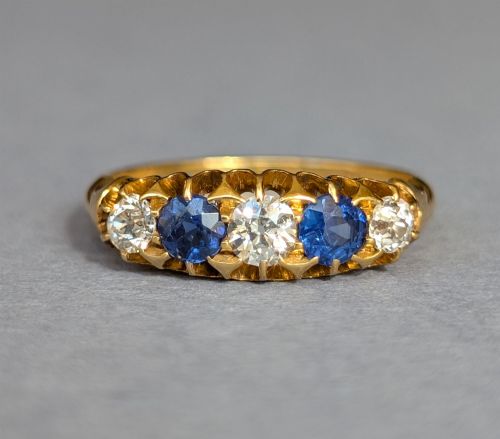
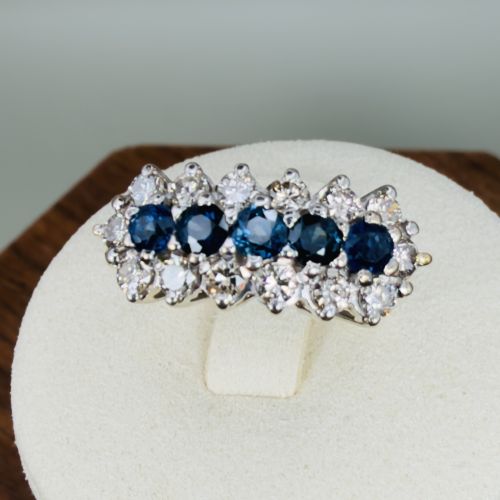
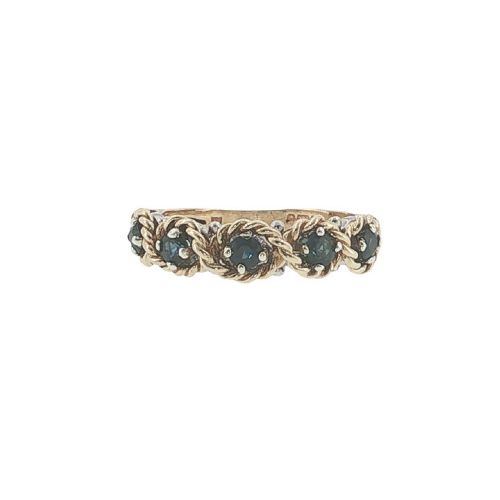
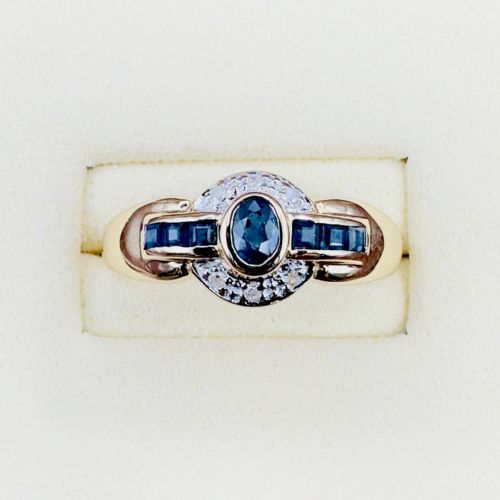
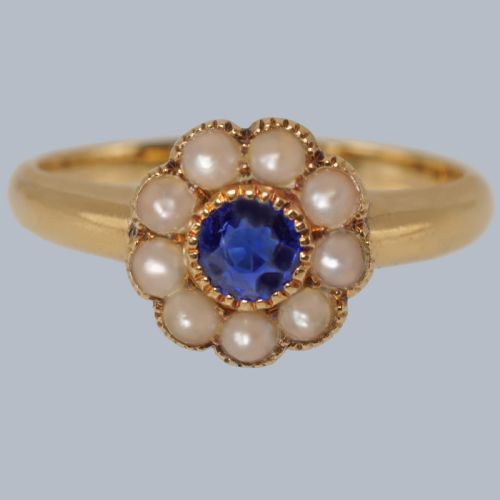
A sapphire cluster band ring combines central blue sapphires with diamond accents across periods ranging from Victorian and Edwardian examples to mid-century and later pieces. The sapphire cluster band ring configuration often takes the form of boat rings, five-stone arrangements, or tight clustered settings.
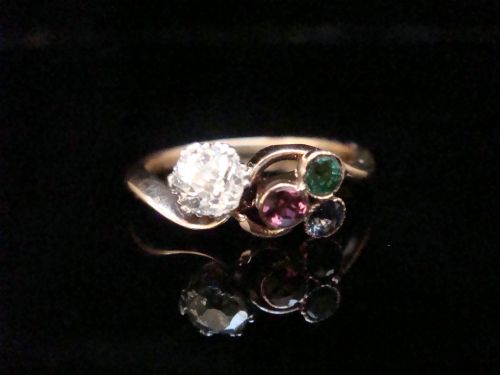
The materials span platinum and various gold purities, including 18ct yellow gold, 18ct gold, and 14ct gold, alongside alternative gems like emerald, tourmaline, and split pearl. Buyers encounter styles labelled as Art Deco, vintage, French, and Edwardian, reflecting a wide chronological spread from the late nineteenth century through to the 1970s.
How they were made
Goldsmiths set sapphires and diamonds into durable mountings of platinum and 18ct or 14ct gold, using precise claw, rubover, and cluster formations. The integration of old cut diamonds alongside princess, oval, and baguette cut sapphires demonstrates varied bench techniques across the decades.
Metalwork involved shaping heavy yellow and white gold bands to securely frame multi-stone layouts like the classic boat ring silhouette. Structural integrity was achieved by balancing robust platinum or gold shanks with intricate gemstone arrangements.
Materials recorded across the selection include platinum, 18ct yellow gold, 14ct gold, diamonds, sapphires, emeralds, and split pearls.
What varies in quality
Quality rests on the depth of colour in the sapphire, the brilliance of the diamonds, and the crispness of the surrounding metalwork. Superior examples display well-matched stones and precise gemstone cuts that sit harmoniously within the band.
The weight and stability of the gold or platinum chassis also dictate the tier of a piece, with heavier metal proportions and secure stone settings marking out the finer specimens.
The Sapphire Cluster Band Ring Glossary
- Cluster ring
- A ring featuring a central gemstone surrounded by a group of smaller stones. This layout maximises visual impact on the finger.
- Boat ring
- A ring setting shaped like an elongated boat, curving gently across the finger. It is typical of Victorian and later designs.
- Old cut diamond
- A diamond cut by hand before modern machinery, featuring a smaller table and wider facets. These stones exhibit a softer glow under candlelight.
- Platinum
- A dense, white precious metal used frequently for secure stone settings. It provides high durability without losing colour.
- Rubover setting
- A mounting style where a thin collar of metal surrounds the edge of the gemstone to hold it in place. This technique creates a smooth profile.
Sapphire Cluster Band Ring: Frequently Asked Questions
How do I wear a sapphire cluster band ring daily?
These rings suit daily wear thanks to sturdy gold and platinum bands, though harder knocks should be avoided.
Removing the ring during heavy manual tasks protects the stone settings and precious metal over time.
What is an Edwardian sapphire ring?
Edwardian rings date from the reign of King Edward VII, typically showcasing delicate platinum and gold work.
They often pair sapphires with diamonds in light, airy mountings characteristic of the early twentieth century.
How do I tell a Victorian ring apart from a 1950s piece?
Victorian examples often feature heavier gold work, split pearls, or distinct boat shapes from the late nineteenth century.
Mid-century pieces tend to utilise cleaner geometric lines and different claw settings for oval or princess cut stones.
Are diamonds always used with sapphires?
Diamonds frequently accompany sapphires to highlight the deep blue central stones in a contrasting sparkle.
Some configurations also incorporate alternative gems such as emeralds, tourmalines, or split pearls depending on the period.