
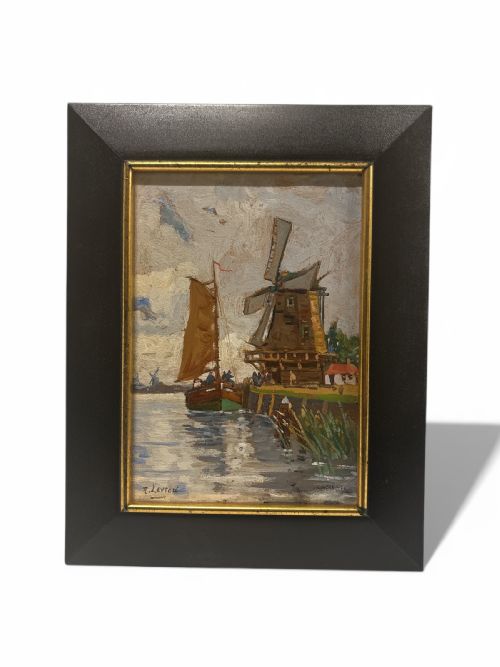

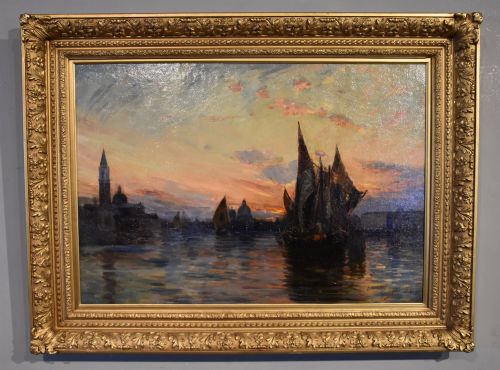


Sailboat Impressionist Oil Painting
A sailboat impressionist oil painting captures light and water on canvas, bringing a quiet maritime atmosphere directly into a room.
Sailboat Impressionist Oil Painting
A sailboat impressionist oil painting typically depicts harbours, coastal scenes, and open water captured through loose brushwork and vibrant light effects. These works span from the Edwardian era through the mid-20th century, encompassing British and French regional schools.
Buyers encounter subjects ranging from moonlit seascapes and Venetian waterways to French coastal harbours and quiet river landscapes. The forms vary from intimate framed panels to large canvas compositions created across several decades of the twentieth century.
The aesthetic focuses on atmospheric conditions rather than precise architectural or maritime draftsmanship. Painters of this genre prioritise the play of sunlight on water and the movement of sails over rigid detail.
Materials and construction
Artists painted primarily with oil paint upon stretched canvas or wooden panels, utilising thick impasto applications in certain works to build texture in sails and water. The physical substance of the paint is handled to catch light directly across the surface.
Frames are constructed from wood, often finished with gesso and gilt details that complement the palette of the canvas. These surrounds range from simple moulded profiles to ornate gilded framing typical of the period.
Listings feature oil paint on canvas and wood across Edwardian, French, and mid-century impressionist movements.
Qualities of distinction
Quality rests upon the confidence of the brushwork and the artist's command of light and atmosphere across the canvas. Stronger examples demonstrate a fluid handling of pigment that suggests movement and air without relying on heavy outlines.
The integration of the frame with the painting adds cohesion, where period wooden and gilt surrounds enhance the visual depth of the maritime scene. Provenance and attribution to recorded painters elevate certain works above anonymous school pieces.
R Leyton·Thomas Hodgson Liddell·Elisabeth Bardon·Louis Suire·Fred Pailhes·Norman Lloyd·Edward Seago·Antonio Godoy·Bertram Priestman·John William Gilroy
The Sailboat Impressionist Oil Painting Glossary
- Impressionism
- A nineteenth and twentieth century painting style focusing on accurate depiction of light in its changing qualities. Practitioners avoided laboured detail in favour of rapid, visible brushstrokes.
- Impasto
- Paint applied thickly to a canvas, standing out from the surface in relief. This technique allows the physical texture of the paint to catch light.
- Gesso
- A plaster mixture used as a smooth base for painting or applied to wooden frames before gilding. It provides a solid foundation for decorative finishes.
- Seascape
- A work of art depicting the sea, coastal views, or marine activity. These subjects formed a central focus for maritime impressionist painters.
Sailboat Impressionist Oil Painting: Frequently Asked Questions
How should I hang an oil painting?
Hang the piece on an interior wall away from direct sunlight and sudden temperature shifts. This protects the canvas and the wooden frame from environmental stress.
Ensure the fixing matches the weight of the framed canvas. Secure it firmly to a stud or utilise appropriate wall anchors.
What periods do these paintings cover?
The available works span from the Edwardian era through the mid-twentieth century, including pieces dated from nineteen hundred to nineteen sixty.
Each decade brings subtle shifts in palette and handling, reflecting the evolution of impressionist and post-impressionist marine painting across Britain and France.
Are these paintings signed by artists?
Many examples feature signatures or inscriptions from recorded painters, while others represent the broader output of British and French regional schools.
Signed works often provide a direct link to a known artistic career, whereas unsigned paintings rely purely on stylistic execution.
What is impasto paint technique?
Impasto involves laying oil paint thickly onto the canvas so that it stands proud of the surface. Artists utilised this method to render textured sails and churning water.
This technique creates physical depth, allowing the painted surface to interact directly with room lighting.