



Sailboat Canvas Painting
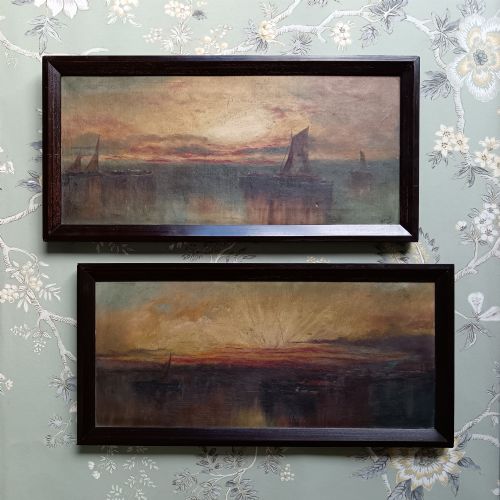
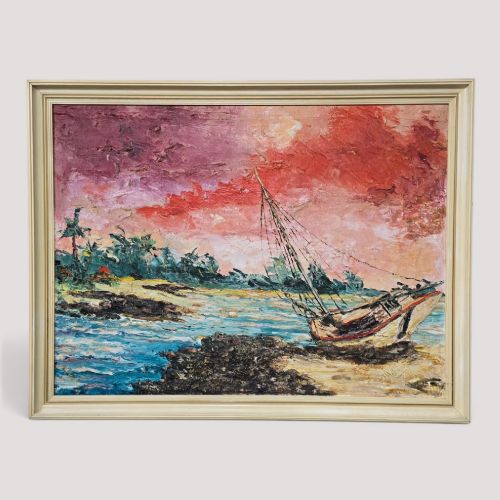
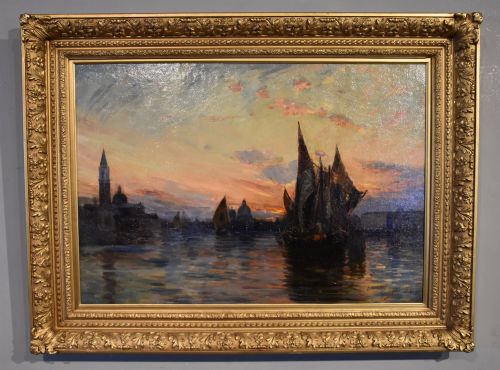
Sailboat canvas painting captures maritime movement and coastal light through oil paint applied to woven fabric.
Sailboat Canvas Painting
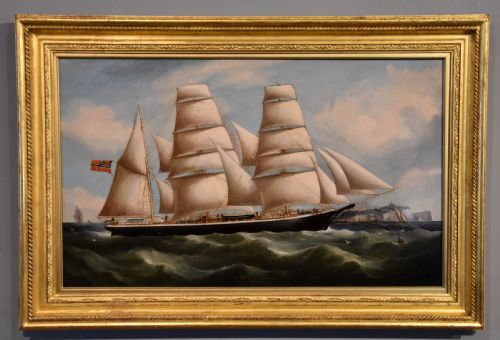
A sailboat canvas painting depicts maritime scenes, coastal harbours, and open water using oil paint on a woven support. The selection spans the nineteenth century through the mid twentieth century, encompassing British Impressionism, Post Impressionism, and traditional marine styles.
Most examples originate from British and European hands, showing vessels ranging from working fishing boats and grand barques to elegant leisure yachts. Alongside flat works, the selection includes physical model boats and large scale pond yachts framed in wood.
Framed works frequently utilise period frames in giltwood or gold leaf, accentuating the maritime subjects captured by named artists and anonymous school painters alike.
How they were made
These works rely primarily on oil paint applied to stretched canvas, utilising the texture of the fabric to catch impasto brushwork and fluid glazes. Painters built up coastal scenes and water reflections by layering pigments to achieve depth in sky and sea.
Frames are constructed from wood, frequently finished with gilt or gold leaf to complement the palette of the marine subject. Model boats employ traditional woodworking techniques to shape hulls and rig miniature sails.
Object types include oil paintings, fine art painting, wall art, and physical model pond yachts.
What varies in quality
Quality rests in the handling of light, atmosphere, and the convincing depiction of water movement. Superior pieces demonstrate confident brushwork and accurate vessel rigging, whereas lesser works rely on stiff repetition and flat colour planes.
The integration of the frame matters greatly, as original giltwood mouldings enhance the visual weight of an oil painting. Condition of the canvas surface, minimal restoration, and strong provenance separate standard decorative marine works from notable artistic achievements.
Thomas Hodgson Liddell·Richard B. Spencer·Elisabeth Bardon·Louis Suire·Fred Pailhes·Adrian Van Porten·Edward Seago·Hendrik Willebrord Jansen·Jane Vivian·George Henry Knight·John Callow·Gustave De Breanski·Paul Jean Clays·Antonio Godoy·Charles Euphrasie Kuwasseg·Johan Jens Neumann·Bertram Priestman·John William Gilroy
The Sailboat Canvas Painting Glossary
- Impasto
- Paint applied thickly to a canvas, leaving visible brush or palette knife marks that catch the light. This technique adds tactile dimension to waves and sails.
- Giltwood
- Wood carved and coated with a thin layer of gold leaf or metallic paint. It provides traditional framing for nineteenth and twentieth century oils.
- Marine painting
- Artwork depicting ships, shipping, coastal views, and the sea. This genre encompasses both calm harbours and turbulent open ocean scenes.
- Barque
- A sailing vessel with three or more masts having square sails on the fore and main masts and fore-and-aft sails on the mizzenmast. These large ships appear frequently in maritime art.
- Provenance
- The documented history of ownership of an artwork. It helps establish authenticity and attribution to specific painters.
Sailboat Canvas Painting: Frequently Asked Questions
What periods do these paintings cover?
The inventory spans the nineteenth century through the mid twentieth century, capturing evolving artistic movements from Victorian marine art to early twentieth century impressionism.
Works reflect regional schools across Britain, France, and wider Europe during periods of significant maritime commerce and leisure sailing.
How should I care for an oil painting on canvas?
Keep the artwork away from direct sunlight, high humidity, and extreme temperature fluctuations to prevent the canvas from sagging or cracking. Dust the surface gently with a soft, dry brush without applying pressure.
Avoid using water or cleaning solvents on the paint surface, and consult a professional conservator if cleaning becomes necessary.
Are these paintings signed by the artists?
Many works feature signatures or attributions to documented painters, while others represent anonymous output from British or continental schools. Signatures often appear in the lower corners of the canvas.
Unsigned pieces rely on stylistic evidence, subject matter, and framing to indicate their period and origin.
How do I identify a marine painting's style?
Nineteenth century marine works typically focus on detailed vessel rigging and dramatic coastal weather using traditional academic techniques. Impressionist pieces from the early twentieth century emphasise loose brushwork and the play of light on water.
Examining the treatment of waves, clouds, and harbour architecture helps determine whether a work belongs to the Victorian era or later modernist movements.